Showing posts with label henry james. Show all posts

Sunday, August 20, 2023

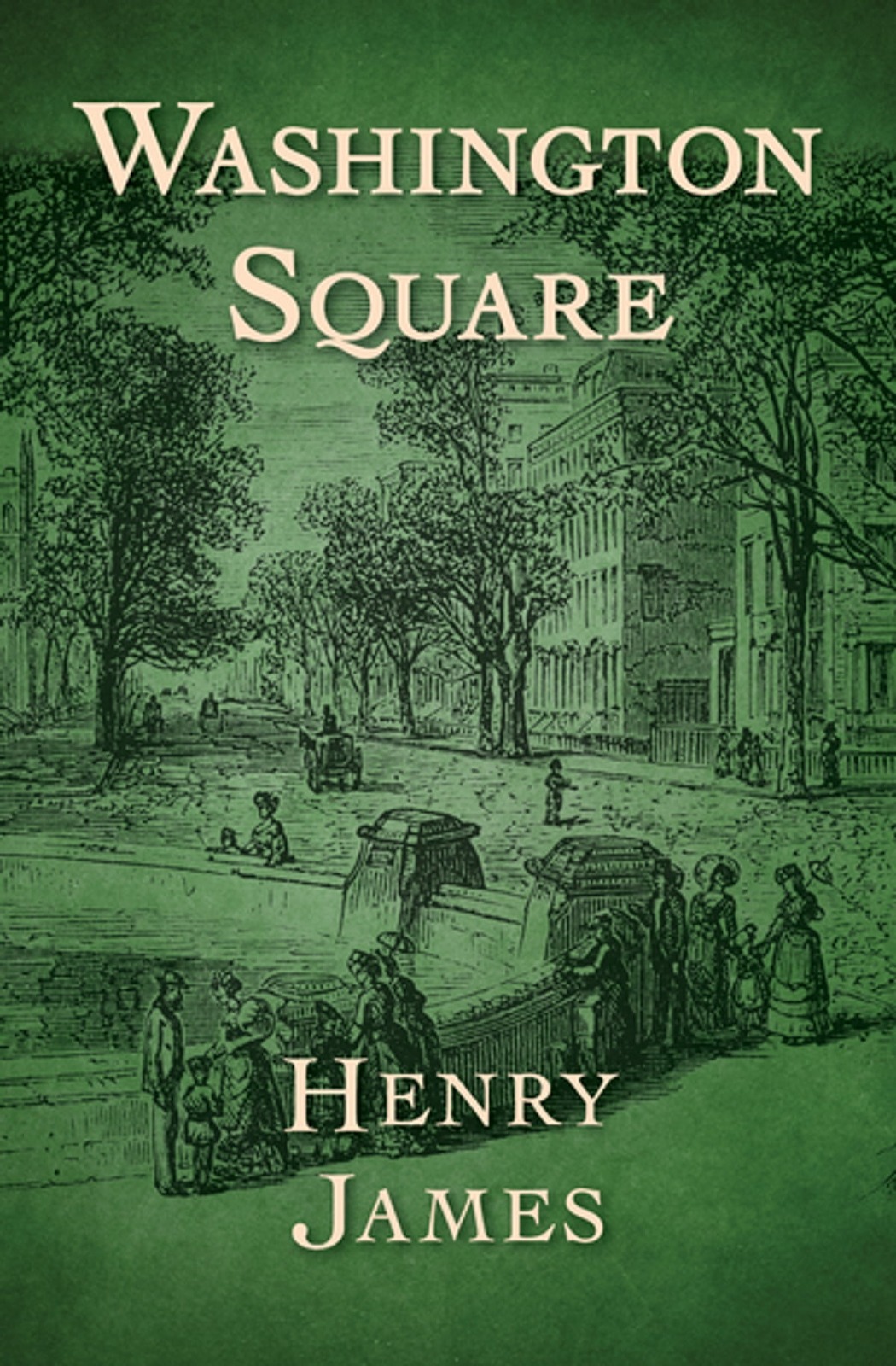
Book Review: WASHINGTON SQUARE By Henry James.

Washington Square, first published in 1880, is Henry James’ least favorite of his own works.

At first glance, it’s hard to see why. It’s one of his most accessible books, it’s highly readable, and the story deals with such heady subjects as greed, overbearing parents, and the plight of women in the 19th century.

The story takes place in 1840s New York City, and focuses on Catherine Sloper, a gentle introvert living with her father, Dr. Austin Sloper, a noted physician, in Washington Square. But her relationship with her father is an uneasy one, as the Doctor does not hold his daughter in high regard, disappointed with what he considers her unremarkable nature.

Enter Morris Townsend, an attractive, charming, and worldly young man, who quickly sets his sights on Catherine. Dr. Sloper quickly opposes the relationship, suspecting Morris of only wanting his daughter for her sizable inheritance. And from that moment on, a battle of wills ensues, with Catherine at the center of it all. It’s a simple, melodramatic premise, with well-drawn characters, and plenty of psychological twists and turns, handled in that elegant and absorbing manner that only James could pull off.

But a closer look into the heart and style of the novel reveals why James hated the book so: It is the cast of characters, an unlikable bunch that all seem to revel in abusing Catherine’s heart and soul. They act and speak in an overwrought, occasionally grating manner, very uncharacteristic of James’ usual writing style. This is James at his least elegant; James not in complete control of his creations. This makes Washington Square one of the few stories that James ever wrote, in which melodrama almost threatens to overwhelm the narrative and drown out James’ usual quiet voice; his elegantly delivered insight into the psychology and inner lives of his characters.

No wonder James himself called the novel “poorish”, describing Catherine Sloper as “the only good thing in the story.” But, in a way, James was being too hard on the novel. Yes, Washington Square is one of his most flawed and cynical works, but it’s also a solid read, which, despite its rudimentary plot, manages to be a page-turner.

One wonders, though, what makes the book one of James’ most popular novels. Is it the readability factor? The uncharacteristic cynicism? The dark pall that hangs over Catherine, and, for that matter, the whole story? James has often been accused of being too restrained, too gentle with his pen, a charge that misses the entire reason why his work lives on. As it is that restraint, that seeming gentleness, which hides beneath it layers upon layers of drama, psychological insight, and storytelling momentum.

I suspect that the reason Washington Square is so popular with modern audiences is that it’s James at his loudest, at his least restrained. This is a book that easily grabs your attention, that demands less of you than, say, Roderick Hudson or The Aspern Papers. But as flawed as it is, it is still a wonderful, absorbing story that has more nuance and storytelling power within its pages, than most novels of its era, or any other era, for that matter.

Video version:


Text © Ahmed Khalifa. 2023.

Ahmed Khalifa is a filmmaker and novelist. He is the writer/director of several short films and a feature, which was released on Netflix, and the author of a number of novels and short stories, including the YA horror novel, Beware The Stranger, available on Amazon. He is also the host of The Dark Fantastic Podcast. Find him on Twitter @AFKhalifa and on Facebook @DFantasticPodcast


The Dark Fantastic is sponsored by VHS Books:


Monday, November 1, 2021

New episode of The Dark Fantastic Podcast, featuring Sherlock Holmes Author/Expert, David Stuart Davies

In this new episode:
  • A.K. talks about the outcry against classic literature, and questions why classic "genre" fiction isn't considered "fine" literature.
  • An interview with Sherlock Holmes expert and best-selling author/editor David Stuart Davies (Sherlock Holmes: The Tangled Skein and Sherlock Holmes: Revenge from The Grave [2022]).
  • Revisiting INNER SANCTUM (1948).

  • Easter Egg: a new short story.

Listen to the episode here:

Listen to "Episode 3: Sherlock Holmes Returns, and A Defense of "Genre". Guest: David Stuart Davies" on Spreaker.

Friday, October 8, 2021

Book Review: RODERICK HUDSON (1875) By Henry James **** out of *****


© Harper Classics

I first discovered Henry James as a teenager. After watching a film adaptation of The Turn of The Screw and becoming fascinated with the story, I bought a cheap TOR paperback copy of the novella, and devoured its prose with ever-increasing joy and awe. It was my first introduction to James, and, in turn, to fine literature. Reading Henry James for the first time is, for people of a certain temperament, an epiphany. His stylistic choices, command of atmosphere, uncanny psychological insight into his characters, and, above all, his restraint, is a marvel to behold.

Roderick Hudson (1875), what Henry James considers to be his first novel (although he'd written a short novel, Watch and Ward four years prior), is a joy to read. It might not be the best introduction to his work (Washington Square, or a collection of his short stories would serve that purpose better), but it is fascinating nonetheless. Reading it, particularly the first version, not the revised one Henry James did for the New York Edition, is akin to watching an artist admirably struggle to hone his craft in front of one's eyes.

At first, Roderick Hudson looks like a simple, even frivolous, tale about the rise and fall of the eponymous young sculptor. But like most of James' work, his book's plot are deceptive, beginning as one thing, and slowly morphing into another. Here, James, like Hudson, keeps refining his sculpture, adding layers, definition, detail. By the end of the book, the characters are fleshed out, their nuances laid bare, and their fates wonderfully unraveled.

Roderick Hudson is somewhat unique in James' oeuvre in that, here, he quite clearly loses control of the novel's tone more than once, veering into melodramatics typical of the era. Even the tragic ending, as effectively shocking as it is, is somewhat abrupt, flawed. In the 1907 preface to the New York revised edition, James criticizes Roderick Hudson, saying it lacks "verisimilitude" and that the "time-scheme" is inadequate. But these blemishes don't take away from the overall effect of the book, which is of a fascinating journey through the minds and hearts of three compelling characters: Hudson; Mallet, Hudson's benefactor; and Christina Light, who would reappear in James work as the Princess Casamassima.

Next, James would go on to write The American (1877), a better, more assured novel, with a splendid third act, and which benefits greatly from the lessons he learned writing Roderick Hudson.

Video version:


Text © Ahmed Khalifa. 2021.

Ahmed Khalifa is a filmmaker and novelist. He is the writer/director of several short films and a feature, which was released on Netflix, and the author of a number of novels and short stories, including the YA horror novel, Beware The Stranger, available on Amazon. Find him on Twitter @AFKhalifa and on Facebook @Dark.Fantastic.AK·Writer

Sunday, September 19, 2021

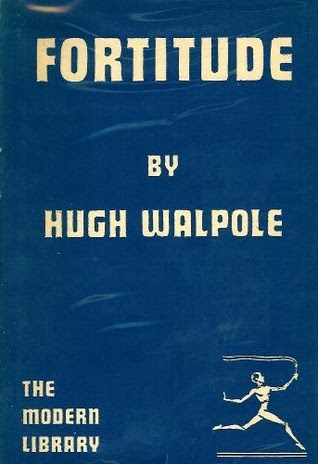
Book Review: FORTITUDE By Hugh Walpole. **** out of *****

Reading Hugh Walpole is a strange and wonderful thing. Sometimes he's brilliant (The Prelude to Adventure), sometimes he's good (Mr. Perrin and Mr. Traill), and sometimes he's barely passable (Jeremy). Fortitude (1913), Walpole's homage to the works and styles of Dickens and Henry James, is nearer to brilliant on that spectrum.

It follows the life of one Peter Westcott, from his boyhood to the onset of middle-age, tracking his attempt at transcending a hard life, including a disturbed, abusive father, poverty, and, ultimately, succeeding as an author. The plot is layered, sprawling, even meandering at times, but Walpole is at his most ebullient here, driving vigorously onwards through a breakneck narrative, pulling the reader with him.

I guess it would be considered sacrilege to call Fortitude as good, or even better than, a lot of Dickens' coming of age tales, but Walpole comes close. He also attempts to mimic James' psychological mastery, but here, he doesn't really succeed, although his characters are interesting enough, some even fascinating. The protagonist, Peter Westcott is a flawed character if ever there was one, and in the hands of a lesser, and less humane, writer, he would have been thoroughly unlikable, but Walpole makes him not only compelling, but sympathetic as well.

Aside from the sheer storytelling joy of Fortitude, with its twists, turns, and occasional forays into hackneyed melodrama, Walpole is aiming for something more, something higher. Like in this exchange between Westcott, after the successful publication of his first novel, and Henry Galleon, arguably a thinly disguised surrogate for Walpole's idol, Henry James. Galleon says to  the young author: "Against all these temptations, against these voices of the World and the Flesh, against the glory of power and the swinging hammer of success, you, sitting quietly in your room, must remember that a great charge has been given you, that you are here for one thing and one thing only ... to listen..." The whole of Galleon's speech, is sublime, in fact; and sublime is what Walpole, in his own flawed way, achieves with this novel.

Fortitude is unputdownable, moving, sensational, unabashedly melodramatic, somber, and, in the most surprising of ways, uplifting. A great book that deserves to be rescued from the shadows of obscurity.

Text © Ahmed Khalifa. 2021.

Video Version:


Ahmed Khalifa is a filmmaker and novelist. He is the writer/director of several short films and a feature, which was released on Netflix, and the author of a number of novels and short stories, including the YA horror novel, Beware The Stranger, available on Amazon. Find him on Twitter @AFKhalifa and on Facebook @Dark.Fantastic.AK·Writer