ZOMBIE BIGFOOT: In a bravura performance, author/narrator Nick Sullivan (@NicktheSullivan), turns a fun, tongue-in-cheek adventure/horror novel, into a wild, hilarious ride, that is sure going to please audiophiles. And is there a sequel? Zombie Billionaire, maybe? #audiobook pic.twitter.com/NajOw2oeFL
— Ahmed Khalifa (@AFKhalifa) December 12, 2021

Film, TV, and Literary History. Written by Ahmed Khalifa
Showing posts with label novel. Show all posts
Showing posts with label novel. Show all posts
Monday, December 13, 2021

Monday, November 29, 2021
Book Review: UNCLE SILAS (1864) by J. S. Le Fanu **** out of *****
 |
| (c) Penguin Classics |
Joseph Sheridan Le Fanu was a master of Gothic horror and suspense. Henry James and M. R. James were both admirers of his work, and his vampire novella Carmilla (1872) is considered one of the most influential horror stories ever written, predating Bram Stoker's Dracula by decades. Most of Le Fanu's work is either forgotten or dismissed now, which is unfortunate, since he was a good prose stylist, and a master of atmosphere.
Uncle Silas (1864) is considered by many, including M. R. James, to be Le Fanu's masterpiece. While that is arguable, Uncle Silas is indeed one of Le Fanu's best, as it features all of the main ingredients of his special brew: a likable heroine; terrifying villains; plenty of intrigue; and an incomparable mastery of atmosphere.
It tells the tale of an adolescent girl named Maud Ruthyn, an heiress living with her reclusive father, Austin Ruthyn, in their mansion at Knowl. After her father's sudden death, she becomes the ward of her uncle, Silas Ruthyn, a once infamous gambler, and who now claims to be a devout Christian, living a quiet, secluded life in his mansion, Bartram-Haugh. But soon after moving in with him, Maud begins to sense that something is amiss, with her uncle Silas behaving strangely, even sinisterly, while Bartram-Haugh, with its history of murder, seems to be haunted by an air of menace and evil.
As is obvious from this synopsis, the plot is typical of the “sensational Gothic” novels of the time. But the plot isn't really the main attraction here, although it is well constructed and intriguing enough. What grips the reader and makes the novel near unputdownable despite its creaky characterizations and often distracting Gothic melodramatics, is Le Fanu's complete command of mood and his uncanny ability to suggest terrifying things with nary a wasted word. Below the surface of this seemingly dated story is plenty of bite. Using the Gothic melodrama as his launching pad, Le Faun touches upon such topics as child abuse, psychological torture, sadism, religious hypocrisy, and absolute evil. Although Maud, and, to a lesser extent, her young cousin Milly, are likable, sympathetic heroines, it is the villains that linger in the memory: Madame de la Rougierre, a despicable, twisted governess who takes pleasure in torturing Maud; and Uncle Silas, a strange, imposing, and almost supernatural figure, whose passive malice is a terrible marvel to behold, as it unfolds chapter after chapter. And, like Dracula in Stoker's classic, Le Fanu keeps his main villain off the page for most of the novel's duration, with each appearance being more disturbing than the one before it.
Then there's the climax, which M. R. James described as one that “can hardly be forgotten.” While I don't agree with Mr. James on the potency of the ending, which I felt was a bit rushed, Le Fanu still makes it work, with a nighttime murder that, despite being hardly surprising, is brutal and disturbing. But again, the plot, including its conclusion, isn't really the thing with Uncle Silas. It is the journey that Le Fanu takes us through, page after page, chapter after chapter, that is darkly enjoyable, like an expertly guided tour of a haunted house. Or a haunted mind.
Text © Ahmed Khalifa. 2021.
Video Version:
Ahmed Khalifa is a filmmaker and novelist. He is the writer/director of several short films and a feature, which was released on Netflix, and the author of a number of novels and short stories, including the YA horror novel, Beware The Stranger, available on Amazon. Find him on Twitter @AFKhalifa and on Facebook @Dark.Fantastic.AK·Writer
Tuesday, November 16, 2021
Book Review: A SECOND COMING (1900) By Richard Marsh. *** and a 1\2 out of *****
Listen to the review here:
Listen to "Book Review: A SECOND COMING (1900) By Richard Marsh" on Spreaker.

It is hard to imagine that A Second Coming (1900) by Richard Marsh, a heartfelt, thought-provoking, and haunting novel about the second coming of The Christ, was written by the same man who gave us the forgettable Gothic-Horror of The Beetle (1897). Where The Beetle was bland, tame, and crudely written, A Second Coming is philosophically challenging, often fiery, and even sporadically elegant.
Marsh takes a fascinating concept, the second coming of Jesus Christ in Victorian England, and uses it as a launching pad to tackle - with searing intelligence and compassion - hypocrisy, corruption, injustice, socialism, and the failure of organized religion. Christ, or The Stranger, as Marsh calls him in the book, arrives suddenly and quietly in London, and soon after, begins to perform one miracle after another, quickly gathering a few disciples. But his arrival, like the last time he came to Man, produces shock waves through British society, as The Stranger's actions and words challenge the way things are, highlighting the hypocrisy and cruelty at the heart of the modern world.
Marsh's take is passionate and angry. He takes Victorian society, and modern society in general, to task, showcasing the contradictory way many people view religion; the arrogance of religious hierarchy; and the anger and selfishness at the heart of almost all ideologies, especially socialism and anarchism, which Marsh skewers.
One wonders why this book, with its timeless philosophical musings and its focus on compassion, isn't more well-known. That's not to say that this is a great novel. It's not. Marsh's almost impressionistic descriptions are too sparse for their own good, with the writing often coming off as myopic, and his tendency to focus on dialogue, gives the book a stagy quality that can be unappealing to some readers. But the novel's strength lies in its readability, its passionate heart, and its affecting portrayal of The Stranger/Jesus Christ.
From its captivating opening chapter to its somber final scene, A Second Coming is an unforgettable, well-told tale, and more timely than ever. Highly recommended.
Text © Ahmed Khalifa. 2021.
Ahmed Khalifa is a filmmaker and novelist. He is the writer/director of several short films and a feature, which was released on Netflix, and the author of a number of novels and short stories, including the YA horror novel, Beware The Stranger, available on Amazon. Find him on Twitter @AFKhalifa and on Facebook @Dark.Fantastic.AK·Writer
Sunday, September 19, 2021
Book Review: FORTITUDE By Hugh Walpole. **** out of *****
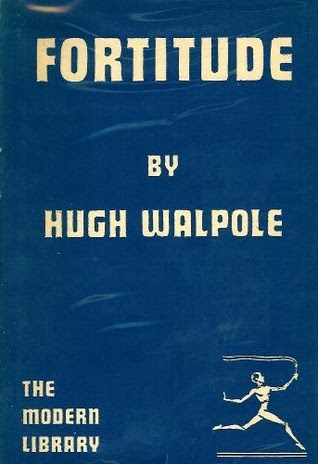
Reading Hugh Walpole is a strange and wonderful thing. Sometimes he's brilliant (The Prelude to Adventure), sometimes he's good (Mr. Perrin and Mr. Traill), and sometimes he's barely passable (Jeremy). Fortitude (1913), Walpole's homage to the works and styles of Dickens and Henry James, is nearer to brilliant on that spectrum.
It follows the life of one Peter Westcott, from his boyhood to the onset of middle-age, tracking his attempt at transcending a hard life, including a disturbed, abusive father, poverty, and, ultimately, succeeding as an author. The plot is layered, sprawling, even meandering at times, but Walpole is at his most ebullient here, driving vigorously onwards through a breakneck narrative, pulling the reader with him.
I guess it would be considered sacrilege to call Fortitude as good, or even better than, a lot of Dickens' coming of age tales, but Walpole comes close. He also attempts to mimic James' psychological mastery, but here, he doesn't really succeed, although his characters are interesting enough, some even fascinating. The protagonist, Peter Westcott is a flawed character if ever there was one, and in the hands of a lesser, and less humane, writer, he would have been thoroughly unlikable, but Walpole makes him not only compelling, but sympathetic as well.
Aside from the sheer storytelling joy of Fortitude, with its twists, turns, and occasional forays into hackneyed melodrama, Walpole is aiming for something more, something higher. Like in this exchange between Westcott, after the successful publication of his first novel, and Henry Galleon, arguably a thinly disguised surrogate for Walpole's idol, Henry James. Galleon says to the young author: "Against all these temptations, against these voices of the World and the Flesh, against the glory of power and the swinging hammer of success, you, sitting quietly in your room, must remember that a great charge has been given you, that you are here for one thing and one thing only ... to listen..." The whole of Galleon's speech, is sublime, in fact; and sublime is what Walpole, in his own flawed way, achieves with this novel.
Fortitude is unputdownable, moving, sensational, unabashedly melodramatic, somber, and, in the most surprising of ways, uplifting. A great book that deserves to be rescued from the shadows of obscurity.
Text © Ahmed Khalifa. 2021.
Video Version:
Ahmed Khalifa is a filmmaker and novelist. He is the writer/director of several short films and a feature, which was released on Netflix, and the author of a number of novels and short stories, including the YA horror novel, Beware The Stranger, available on Amazon. Find him on Twitter @AFKhalifa and on Facebook @Dark.Fantastic.AK·Writer
Saturday, May 29, 2021
Book Review: THE SHADOW : CITY OF CRIME By Walter B. Gibson ** out of *****

Underwhelming and incoherent The Shadow tale, with repetitive action sequences and a weak plot revolving around corruption and political intrigue in a small city. One of the dullest The Shadow stories. Avoid.
Text © Ahmed Khalifa. 2021.
Ahmed Khalifa is a filmmaker and novelist. He is the writer/director of the feature film Wingrave, released on Netflix, and the author of a number of novels and short stories, including the YA horror novel, Beware The Stranger, available on Amazon. Find him on Twitter @AFKhalifa and on Facebook @Dark.Fantastic.AK·Writer
Saturday, May 15, 2021
Book Review: A HOLOGRAM FOR THE KING By Dave Eggers ** out of *****

Literary fiction is a genre that is hard to pin down, as it is almost always swaying with the force of current intellectual and political winds. One way to look at it is that literary fiction is the opposite of punk-rock, which, by its very nature, goes against the tide, with the artist following his own vision, heart, and worldview, no matter what anybody thinks. Or, at least, that's what punk-rock used to be. It's hard to tell now, with literature, music, and almost all of art passing through numerous filters, gatekeepers, and intellectual bleach before it is made widely available to the public.
Dave Eggers's novel, A Hologram For The King, is, by golly, a piece of literary fiction so literary, it is almost bursting with existential ache. The story, which is gossamer-thin, follows Alan Clay, a failing salesman who believes in capitalism and the American dream, and whose only chance to get out from under approaching bankruptcy is to convince the King of Saudi Arabia to buy a new hologram technology that Clay is selling on behalf of a big tech company back in America. What follows is a series of "incidents" that reveal Saudi Arabia to be a den of contradictions, with veiled woman hooking-up in secret, where expatriates smuggle contraband moonshine named "صديقى" or "friend" in English, and where chauffeurs make references to American popular culture. Interspersed with all this "whimsy" and "insight", are flashbacks to Alan's past, which reveal how sad and hollow his life is, culminating in him remembering the time he took his daughter to NASA to watch a shuttle launch, and saying to himself: "I sold capitalism to communists!" in sheer, orgasmic pride.
It's all well-written, in clear, smooth prose. But it's also all pretentious, self-important nonsense. None of the characters come off as very real, especially Eggers's depiction of Saudis, who all talk like sardonic Americans. And the main character, Alan Clay, is basically set-up from the get-go as a tragic figure: hollow, sexually impotent, and lost in his zealous dedication to a corrupt system - capitalism, of course - that has betrayed him and left him with nothing. While taking shots at unbridled capitalism could be an admirable goal if dealt with with nuance, insight, and clarity, Eggers's approach is nothing but a string of cliches and misery-mongering passages, making his point over, and over again without any subtlety or real insight, delivering a book that begins well enough, but slowly devolves into a boring, dour, and ultimately unredeeming tale as hollow as its main character.
But, of course, I could be wrong, as The Boston Globe calls the novel "genius", while The New York Times says that Eggers "spins [a] story that approaches Beckett in its absurdist despair.” Genius? Really? To each his own, I guess.
Text © Ahmed Khalifa. 2021.
Ahmed Khalifa is a filmmaker and novelist. He is the writer/director of the feature film Wingrave, released on Netflix, and the author of a number of novels and short stories, including the YA horror novel, Beware The Stranger, available on Amazon. Find him on Twitter @AFKhalifa and on Facebook @Dark.Fantastic.AK·Writer
Thursday, December 10, 2020
Review: SALEM'S LOT (1995 BBC RADIO DRAMA) *** and 1\2 OUT OF *****

The BBC's attempt at dramatizing Stephen King's classic vampire novel Salem's Lot for radio, is a flawed but enjoyable affair. The actors playing Ben Mears and Mark Petrie are terribly miscast, delivering forgettable, monotonous performances, but the rest of the cast shines, especially Doug Bradley as the vampire master Barlow.
Writer Gregory Evans, who adapted the book for radio, pares the story down to its bare essentials, leaching it of almost all subtext, and so turning it into a simple horror story, but one that is compelling and occasionally thrilling, and which is marred only by uneven pacing. What makes the radio drama work, though, is its atmosphere, helped tremendously by the minimalist electronic score, and the clever intermingling of King's book with elements from Bram Stoker's Dracula.
Fans of King's work, the original novel, or the seminal 1979 TV adaptation, will surely find a lot to enjoy. Recommended.
Text © Ahmed Khalifa. 2020.
Ahmed Khalifa is a filmmaker and novelist. He is the writer/director of the feature film Wingrave, released on Netflix, and the author of a number of novels and short stories, including the YA horror novel, Beware The Stranger, available on Amazon. Find him on Twitter @AFKhalifa and on Facebook @Dark.Fantastic.AK·Writer
Tuesday, April 21, 2020
Book Review: ENEMIES AND ALLIES By Kevin J. Anderson *** and a 1\2 out of *****

Enemies and Allies, Kevin J. Anderson's second novel for DC, after the superbly entertaining The Last Days of Krypton, is a clever, serious story about Batman and Superman's first encounter in 1956.
Taking his cue from the works of Frank Miller and Jeph Loeb, both of whom are thanked in the preface, Anderson creates a tale infused with a paranoid, Cold War feel, with the threat of nuclear annihilation looming over the characters. Anderson's depictions of characters, from Superman, to Batman, to Lois Lane, to Jimmy Olsen, are well-crafted and endearing, and the dialogue always rings true. But the main villain, Lex Luthor, comes off as one-dimensional and somewhat cartoonish, which might have to do with his over-the-top plan for world domination. Which brings me to the main fault of the book. Although Anderson brings a depth and a weight to the historical and technical aspects of the story, they don't gel with the Sci-Fi elements, which feel cliched and underdeveloped. This makes the book uneven in tone, as the broad, "Golden Age" comic book aspects seem in constant battle with the solemn tone that Anderson chooses to tell his tale, making Enemies and Allies less fun than it should be.
But fans of Batman and Superman will find a lot to enjoy here, as both heroes are treated with love and care, and Anderson's short chapters make this a fast page-turner, and a good if not very memorable addition to the DC cannon.
Text © Ahmed Khalifa. 2020.
Ahmed Khalifa is a filmmaker and novelist. He is the writer/director of the feature film Wingrave, released on Netflix, and the author of a number of novels and short stories, including the YA horror novel, Beware The Stranger, available on Amazon.
Ahmed Khalifa is a filmmaker and novelist. He is the writer/director of the feature film Wingrave, released on Netflix, and the author of a number of novels and short stories, including the YA horror novel, Beware The Stranger, available on Amazon.
Monday, February 24, 2020
Book Review: MERCILESS by Richard Montanari *** and a 1\2 out of *****

Merciless, Richard Montanari’s third Byrne and Balzano thriller, begins slowly, almost too slowly, easing our way into an understated but deeply compelling and highly atmospheric mystery. This time around Montanari tones down the supernatural element (Byrne's psychic visions), and instead focuses on the effects of fantasy on our lives, and what happens when we lose our way inside our own imaginations. It is a deeply felt story, written in prose that is both readable and elegant.
Montanari’s skills as a master character-builder are also at full force here, with even the minor characters coming across as memorable and believable, while his dialogue always rings true.
Although Montanari has a tendency to occasionally veer into sentimentality, for the most part this is a masterfully constructed mystery/thriller that uses the police procedural formula to its fullest effect, adding a layer of atmosphere and a level of sure-footedness that are rarely found in this genre. Highly recommended for fans of Monatanri and newcomers alike.
Text © Ahmed Khalifa. 2020.
Saturday, October 22, 2016
Book Review: THE MAGICIANS by Lev Grossman

Endlessly inventive, compelling coming-of-age fantasy, filled to the brim with fascinating details and a hypnotic, elegiac atmosphere. But the aloof, snobbish characters and an unappealing cynical streak mar it significantly. Followed by two sequels.
Text © Ahmed Khalifa. 2016.
Thursday, October 13, 2016
Book Review: GHOSTBUSTERS (1984): The Novelization: By Richard Mueller

Fun, energetic novelization of the comedy classic, with lots of extra tidbits for fans, including some fascinating background info on some of the main characters, especially Venkman (Bill Murray) and Stantz (Dan Aykroyd). It is also interesting to note the myriad difference between this version of the story and the final shooting script, as many of the jokes featured in the film are funnier and more polished. The writing feels a little rushed towards the end, but overall this is guaranteed to provide hours of entertainment for “Ghostheads”.
Text © Ahmed Khalifa. 2016.
Saturday, October 8, 2016
Book Review: SACRIFICIAL GROUND by Thomas H. Cook

I accidentally found a used paperback copy of this hugely impressive novel in a bargain bin and decided to take a chance on it. I am glad I did. Sacrificial Ground by Thomas H. Cook is an original, haunting, compelling mystery/police procedural that is high on style and atmosphere.
Cook's writing is, for the most part, impressively stylish, giving the tired genre a startling dose of energy and originality, with a unique, darkly psychological spin. Despite a tendency to over-stylize the dialogue - most characters speak in a mannered, wistful way that is far from realistic - Cook manages to imbue his plot and characters with enough life, scars, and quirks to make them memorable, while the whole novel is drenched in hypnotically poetic atmospherics. Highly recommended for fans of mystery/thrillers who are looking for something a little different.
Text © Ahmed Khalifa. 2016.
Tuesday, September 20, 2016
Book Review: CELL by Stephen King

One of King's darkest novels in a long time, Cell is a compelling, tense, unsettling read. While apocalyptic novels have been done to death (with King himself penning a few prior to this one), Cell sets itself apart by its unflinching focus on its characters' plights, tragedies, and tenacity. Despite a central premise that is conceptually and scientifically wobbly (a cell phone-transmitted pulse that turns people into violent, senseless beasts), the book works because of the characters, a bunch of superbly drawn, if not always likable, individuals, whose actions are almost always believable and whose fates we truly care about. Cell is also one of King's bleakest and most daring novels since Pet Semetary, with King at his most brutal and graphic. A haunting, disturbing read. Highly recommended.
Text © Ahmed Khalifa. 2016.
Saturday, August 13, 2016
Book Review: THE LEFTOVERS by Tom Perrotta
 |
| Original Book Cover |
Stephen King described it as reminiscent of The Twilight Zone. Well, not quite. The premise of an unexplained mass disappearance of millions of people around the world (the Biblical Rapture, more or less) and how it affects the leftovers, or those who were are behind, is endlessly intriguing, and Perrotta gives us a cast of interesting, if not fascinating, characters to follow. And while his portrayal of religious cults is interesting and the overall atmosphere of the novel somber and hypnotic (his prose is lean and highly readable), there are passages that are annoyingly pretentious, and the hugely anti-climactic ending is a major disappointment. Still, this is an original tale, well-told, even if it's ultimately a bit underwhelming.
N.B. The novel is the basis for the HBO series of the same name, though the series continue the story past the events of the novel.
Text © Ahmed Khalifa. 2015-2016.
Subscribe to:
Posts (Atom)