Powerful, affecting story, about a young woman who has her quiet life turned upside down after her fiance is murdered, and she stumbles upon a plot by an evil billionaire to take by force a piece of forested land near her home.
The Forest of Lost Souls is one of Koontz's best and most thought-provoking books, despite a slow start, and Koontz’s penchant for preaching and cute characters.
Koontz uses a simple premise as a launching pad to delve into the worlds of mythology, righteous violence, totalitarian states, and most importantly, faith.
It features many of Koontz’s usual obsessions (the dark side of technology, the cost of necessary violence, the dilemma of the conscientious in a fallen world), but still feels fresh and full of life, with vivid writing, an accelerating pace, and interesting characters.
And although the ending is somewhat abrupt, his writing here is some of his most transcendent and ebullient; a somewhat remarkable achievement for a writer at this late stage in his career.
The Forest of Lost Souls is a must for Koontz fans, and a great introduction to the author’s work for newcomers.
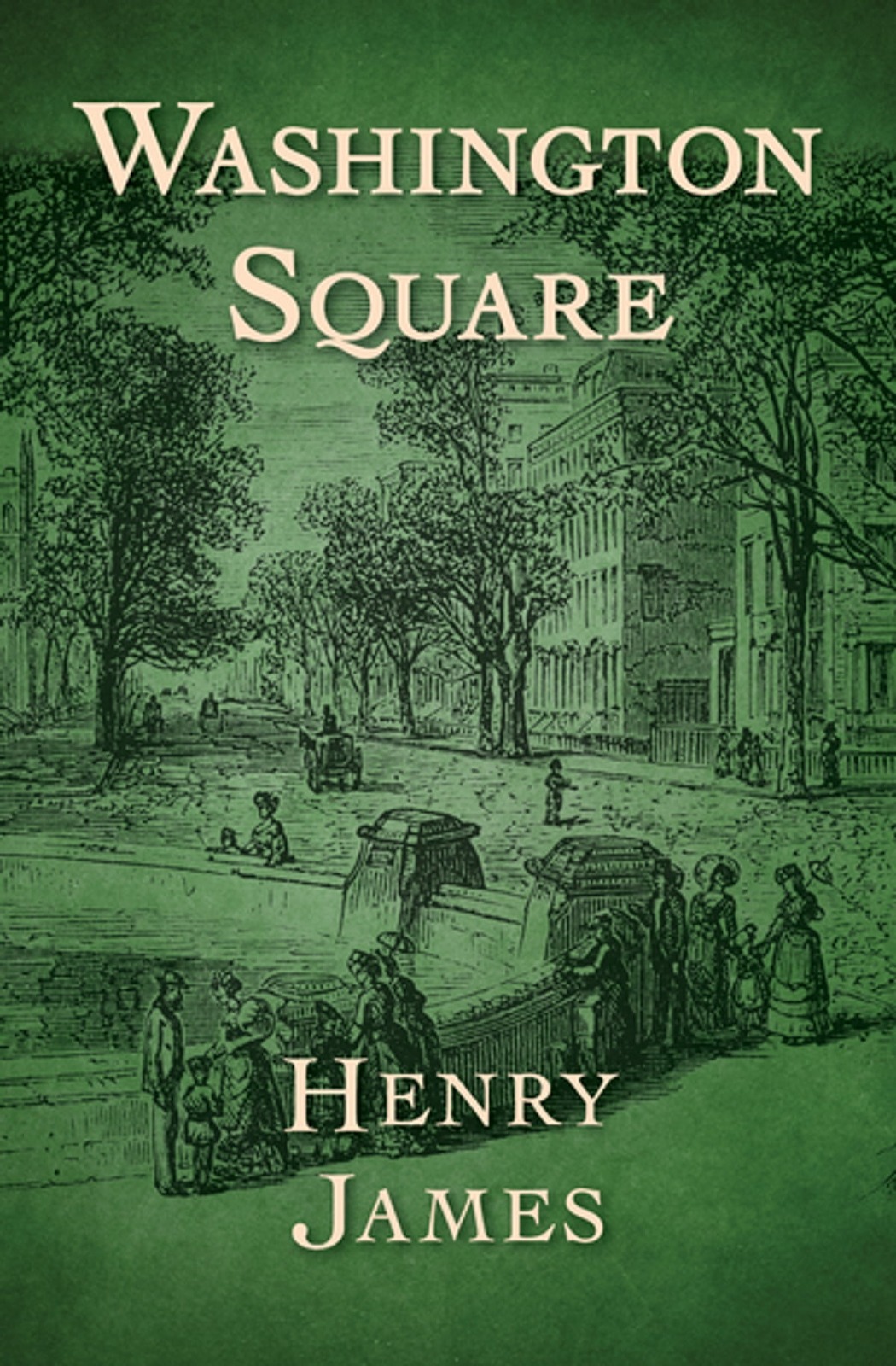
Washington Square, first published in 1880, is Henry James’ least favorite of his own works.
At first glance, it’s hard to see why. It’s one of his most accessible books, it’s highly readable, and the story deals with such heady subjects as greed, overbearing parents, and the plight of women in the 19th century.
The story takes place in 1840s New York City, and focuses on Catherine Sloper, a gentle introvert living with her father, Dr. Austin Sloper, a noted physician, in Washington Square. But her relationship with her father is an uneasy one, as the Doctor does not hold his daughter in high regard, disappointed with what he considers her unremarkable nature.
Enter Morris Townsend, an attractive, charming, and worldly young man, who quickly sets his sights on Catherine. Dr. Sloper quickly opposes the relationship, suspecting Morris of only wanting his daughter for her sizable inheritance. And from that moment on, a battle of wills ensues, with Catherine at the center of it all. It’s a simple, melodramatic premise, with well-drawn characters, and plenty of psychological twists and turns, handled in that elegant and absorbing manner that only James could pull off.
But a closer look into the heart and style of the novel reveals why James hated the book so: It is the cast of characters, an unlikable bunch that all seem to revel in abusing Catherine’s heart and soul. They act and speak in an overwrought, occasionally grating manner, very uncharacteristic of James’ usual writing style. This is James at his least elegant; James not in complete control of his creations. This makes Washington Square one of the few stories that James ever wrote, in which melodrama almost threatens to overwhelm the narrative and drown out James’ usual quiet voice; his elegantly delivered insight into the psychology and inner lives of his characters.
No wonder James himself called the novel “poorish”, describing Catherine Sloper as “the only good thing in the story.” But, in a way, James was being too hard on the novel. Yes, Washington Square is one of his most flawed and cynical works, but it’s also a solid read, which, despite its rudimentary plot, manages to be a page-turner.
One wonders, though, what makes the book one of James’ most popular novels. Is it the readability factor? The uncharacteristic cynicism? The dark pall that hangs over Catherine, and, for that matter, the whole story? James has often been accused of being too restrained, too gentle with his pen, a charge that misses the entire reason why his work lives on. As it is that restraint, that seeming gentleness, which hides beneath it layers upon layers of drama, psychological insight, and storytelling momentum.
I suspect that the reason Washington Square is so popular with modern audiences is that it’s James at his loudest, at his least restrained. This is a book that easily grabs your attention, that demands less of you than, say, Roderick Hudson or The Aspern Papers. But as flawed as it is, it is still a wonderful, absorbing story that has more nuance and storytelling power within its pages, than most novels of its era, or any other era, for that matter.
Ahmed Khalifa is a filmmaker and novelist. He is the writer/director of several short films and a feature, which was released on Netflix, and the author of a number of novels and short stories, including the YA horror novel, Beware The Stranger, available on Amazon. He is also the host of The Dark Fantastic Podcast. Find him on Twitter @AFKhalifa and on Facebook @DFantasticPodcast
Next (2006), the last novel to be published by Michael Crichton during his lifetime, is kind of a greatest hits collection. Yet, in a way, it’s also unlike anything he’d written before. It combines many of his favorite themes and obsessions, to produce a book that is bitingly satirical, surprisingly cynical, and, paradoxically, one of his most humane.
Crichton goes for broke here, creating a multi-layered and sprawling novel with a multitude of characters and plotlines, some of which, by the end of the book, will converge. It’s useless to go into details about the story itself. The plot is just too complex to summarize. Suffice it to say that Crichton tackles the issue of gene patenting, and how playing God leads to complicated and, sometimes, disastrous consequences.
He’s dealt with these issues before in many of his books, but never in such an assured and humorous manner.
Next is the work of a writer at the peak of his powers, using every technique at his disposal, every lesson learned from a lifetime of writing. With Next, Crichton creates the sort of novel 2003's State of Fear should have been. With State of Fear, Crichton courageously took on the global warming/climate change hysteria, and tried to expose those he called “catastrophists”, scientists, politicians, and media personalities who use genuine environmental concerns, and blow them all out of proportion to induce fear and gain control of public opinion for their own benefit. But the novel came across as half-cooked and meandering, and didn't really make its point that clear.
Next, on the other hand, fires on almost all cylinders, with Crichton in complete control of his narrative. He takes on politicians, tech moguls, corrupt scientists, ego-maniacal businessmen, evangelists, and many more, with gleeful, dark humor.
Sometimes he lays it on a bit too thick, and his vitriol isn't always evenly meted out, but he succeeds in producing a piece of work that is literally unputdownable, and a joy to read; one of the few Crichton books I felt I could re-read almost instantly.
While not as propulsive and action-packed as some of his best techno-thrillers, Next is a terrific, intelligent novel, filled to the brim with ideas, many of which are thought-provoking and more timely than ever.
A must for fans. For newcomers to Crichton's work, I'd recommend The Andromeda Strain or Airframe.
Ahmed Khalifa is a filmmaker and novelist. He is the writer/director of several short films and a feature, which was released on Netflix, and the author of a number of novels and short stories, including the YA horror novel, Beware The Stranger, available on Amazon. He is also the host of The Dark Fantastic Podcast. Find him on Twitter @AFKhalifa and on Facebook @DFantasticPodcast
Almost everybody knows the story of Superman and the planet Krypton with its red sun. Everybody knows that Superman is the only son of Jor-El and Lara, who shipped him off to Earth moments before the planet Krypton was blown to smithereens. But Kevin J. Anderson's novel, The Last Days of Krypton, proves that there is much more to the story. And what a story it is!
From political shenanigans, to sibling rivalry, to the plots of the evil dictator Zod, to the mute villain Nam-Ek, to the true nature of Brainiac, to earthquakes and flash floods, Anderson's Krypton has to be one of the most unfortunate planets in the universe. And that's what makes this book so entertaining and flawed at the same time.
With straightforward prose and a quick pace, Anderson tells the story of Krypton in an exciting, never-lagging manner, with one disaster after another, while the endearing characters try to overcome those ordeals. The novel is full of adventure, romance, villains and action, which makes it an almost epic tale that sheds new light on the whole Superman mythos.
But in trying to combine all the different mythologies that have been created over the decades, Anderson also creates a novel that doesn't leave the reader room to breathe and suspend his/her disbelief. As Anderson crams his 400+ pages with disaster after disaster that the story becomes more of a space opera than anything else, which, of course, might have been Anderson's intention in the first place (the book begins with a list of all the characters in the novel - Dramatis Persoane - as if it were an opera or a play). And, also, the stilted dialogue surely doesn't help.
But, overall, the flaws don't take away from the fact that this is a hugely entertaining book, with enough imagination and forward momentum to make it an addictive read and a must for fans of The Man of Steel. And on the long run, it's probably going to become the final word on the story of Krypton.
Ahmed Khalifa is a filmmaker and novelist. He is the writer/director of several short films and a feature, which was released on Netflix, and the author of a number of novels and short stories, including the YA horror novel, Beware The Stranger, available on Amazon. He is also the host of The Dark Fantastic Podcast. Find him on Twitter @AFKhalifa and on Facebook @DFantasticPodcast
Whether you are into Poe or not, this novel is nothing short of astounding. After burning through it as quickly as I could (which I ultimately regretted doing, since I was so sad when it was over) because it was so compelling and entertaining, I had to sit back and admire how much Pearl has achieved with this book.
Not only has he attempted to solve the mystery of Edgar Allan Poe's death (a mystery which has proven insolvable for over a century) by using clues and evidence that he has gathered through painstaking research, but he has also written one of the best historical novels of all time.
This is a compelling, brilliantly written, meticulously plotted novel that people will continue to talk and argue about for years to come. And as a bonus, it's also one hell of an entertaining ride. Unmissable.
Ahmed Khalifa is a filmmaker and novelist. He is the writer/director of several short films and a feature, which was released on Netflix, and the author of a number of novels and short stories, including the YA horror novel, Beware The Stranger, available on Amazon. He is also the host of The Dark Fantastic Podcast. Find him on Twitter @AFKhalifa and on Facebook @DFantasticPodcast
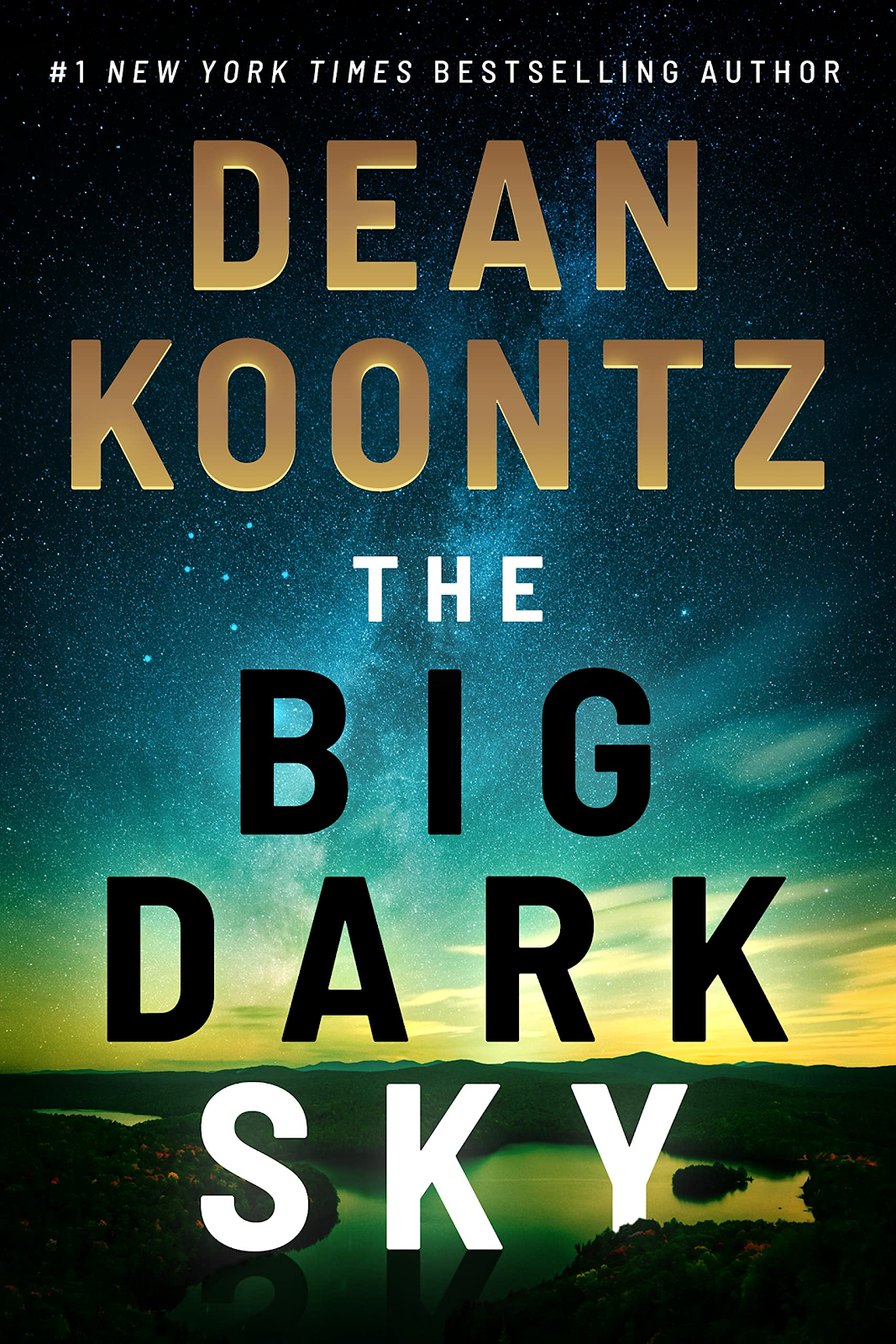
Dean Koontz returns to some of his favorite themes in The Big Dark Sky, letting his obsessions, fears, and hopes all come through loud and clear. And in doing so creates one of his most effective and memorable novels in years. Although Koontz came close with his wonderful novel Devoted, published in 2020, The Big Dark Sky is a better, more nuanced book in many ways. It is also much darker.
The plot: A group of people from different backgrounds has converged at a remote ranch in Montana. Each person has a reason to go there, from facing painful childhood memories, to investigating a series of strange phenomena, to escaping from a seemingly omnipotent killer. Each one of them is haunted, seeking answers to questions they can no longer ignore. Meanwhile, on the outskirts of the ranch, a disturbed visionary works on completing his manifesto of terror and mass murder, unaware that his fate is also connected to the ranch and the people headed there.
With echoes from some of his earlier books, especially Phantoms, Strangers, and Demon Seed, Koontz delivers a tale that is compelling, wondrous, and disturbing. It has a questioning, marveling quality and a nasty, darkly witty edge that have been missing from his books for years.
It isn't a perfect book, though, with a number of slow-going chapters near the beginning of the book, and a short slump around the middle section. But for the most part, the writing is crisp, the main concept fascinating, and the characters likable. And the villain is one of the most terrifying creations of Koontz's career. Highly recommended for fans and newcomers alike.
Ahmed Khalifa is a filmmaker and novelist. He is the writer/director of several short films and a feature, which was released on Netflix, and the author of a number of novels and short stories, including the YA horror novel, Beware The Stranger, available on Amazon. He is also the host of The Dark Fantastic Podcast. Find him on Twitter @AFKhalifa and on Facebook @DFantasticPodcast
Following on his hugely successful and tremendously entertaining novel Frankenstein Unbound, which combined time-travel with a post-modernist revision of Mary Shelley's life and her most famous novel, Brian Aldiss dips into the same well with Dracula Unbound, his attempt to do something similar with Bram Stoker's Gothic masterpiece.
Alas, the second time is not the charm. Where Frankenstein Unbound was fast-paced, coherent, and thought-provoking, Dracula Unbound is slow, meandering, and intellectually lukewarm.
The plot (from the publisher's blurb): In the barren dust of the far future, the sun leaks energy in a darkening sky and the only remaining humans are imprisoned by spectral, bloodthirsty beings. Back in the brilliant Utah sunlight of 1999, two ancient graves yield evidence that a species of human coexisted with the dinosaurs . . . Linking these scenarios is impetuous inventor Joe Bodenland (the protagonist of Frankenstein Unbound), who has just created a machine that manipulates time to dispose of hazardous waste . . .
Where's Dracula, you ask? Well, without revealing too much, let's just say that Bodenland manages to go back in time, meet Bram Stoker, and together they hunt down the vampiric creature that will later inspire Stoker to revise his masterpiece.
As is obvious from the synopsis, the plot is confusing and confused, and Aldiss, never a writer to dwell on characters' motivations and psychology, is at his worst here, with characters that are mere sketches, and dialogue that is woefully artificial.
And unlike in Frankenstein Unbound, where he treated the source material and its author with reverence, here, Aldiss foregoes the tone and mood of the original novel, and seems intent on ridiculing Stoker, portraying him as a staunchly conservative, syphilitic hypocrite, who is always eager to do battle for "God and Country" at the drop of a pin. Aldiss, who has a penchant for psycho-sexualizing his stories at the expense of quality, misses the mark here, and his portrayal of Stoker is nothing less than offensive, especially since in his afterword he mentions relying for his research on two highly-contested biographies: A Biography of Dracula: The Life Story of Bram Stoker by Harry Ludlum, and The Man Who Wrote Dracula: A Biography of Bram Stoker by Daniel Farson *.
But all could have been forgiven if the story had been compelling. But it isn't, and fans of Stoker and his novel will be disappointed by what Aldiss does with and to them.
Still, the novel is high on imagination, even if it is low on craft, and it is an interesting misfire by a singular author.
* For a more balanced analysis of the novel Dracula, and the life of Bram Stoker, check out Elizabeth Miller's brilliant essay, Coitus Interruptus: Sex, Bram Stoker, and Dracula, available here.
Ahmed Khalifa is a filmmaker and novelist. He is the writer/director of several short films and a feature, which was released on Netflix, and the author of a number of novels and short stories, including the YA horror novel, Beware The Stranger, available on Amazon. He is also the host of The Dark Fantastic Podcast. Find him on Twitter @AFKhalifa and on Facebook @DFantasticPodcast
First published in 2002, From A Buick 8, is midrange Stephen King, which means his irresistible voice and mastery of style are there, drawing the reader and moving the story along. But it also means that, like other King midrange novels, think Firestarter, The Dark Half, and Gerald’s Game, the plot is thin, the characters not very memorable, and the ending problematic.
The story. members of Troop Dee, a Pennsylvania State Police barracks in Western Pennsylvania, come across an abandoned Buick that resembles a vintage blue 1953 Buick Roadmaster. Slowly, they start to realise that it isn’t a car at all, but something other.
The story is told as a series of recollections by different troopers, and their experiences range from the nerve-wracking to the horrific. The book is at its best during these episodes, which are like tightly-written vignettes of imaginative weird fiction. But when King focuses on the characters and their inner thoughts, the book stumbles, as none of the characters are very interesting, and the plot is nothing less than a concept stretched to its breaking point. This is most apparent during the book’s climax, an unimaginative and predictable sequence that is short on thrills and catharsis.
Light on plot but highly readable, From A Buick 8 is King-lite, and one of the first books where King started to show signs of leaning too heavily on sentimentality instead of on structure and genuine emotions. But King is King, and one usually knows what they are getting when they pick up one of his books, an entertaining page-turner, which From A Buick 8 surely is.
The Dark Forest is considered by many one of Hugh Walpole’s best novels. On the surface, it’s easy to see why. It deals with the always relevant subject matter of the effects of war on life, society, and the human soul. Walpole, ever the sentimentalist, would seem to be the ideal choice to write a tear-jerker about life in the trenches of battle, in war-torn Russia during the First World War. But Walpole as a person and as an author, was hard to pin down, and his take on the anti-war novel is somewhat different than one would expect.
The book tells the story of John Durward and John Trenchard, two Englishmen who join a company of Russian doctors working on the Russian side of the Eastern Front during World War I. Durward, the narrator, is practical and open-minded, and is arguably a stand-in for Walpole himself, while Trenchard is a dreamy, clumsy, and naïve man, who Durward at first dislikes, then slowly starts to grow fond of, foibles and all.
Part war journal, part love-story between Trenchard and his enigmatic fiancé, Marie Ivanova, part meditation on the nature of friendship and sacrifice, The Dark Forest is one of Walpole’s darkest and least accessible books, at least during its first half, with Walpole indulging himself, with excessive detail and a too deliberate a pace. But once the myriad elements of psychological drama, harrowingly realistic war scenes, and Walpole’s mastery of setting and atmosphere, start to gel, the novel turns into something bordering on the sublime.
Although Walpole proves himself more than capable of depicting the grim reality of war, it’s not his main focus here, as he seems more interested in the psychology of his characters - especially Trenchard - and why they do the things they do. He delves into concepts of valor, motivation, and the effect of love, both romantic and platonic, on the unimaginative man. And as the story builds and the horror mounts, the book slowly transforms into a sort of existential dark dream that ends on a devastating note.
It’s not a perfect book, and, in my humble opinion, not even one of Walpole’s best, with the main character, Durward, coming off as cold and forgettable, and, as usual with Walpole, the psychology can get a little too simplistic and clumsy. But as is also usual with Walpole, there are passages, images, and truths that transcend time and place, and the writing is occasionally so heartfelt, so honest, that one has no option but to surrender to its beauty.
The Dark Forest is a flawed and fascinating book, and one which signaled Walpole’s growing fascination with Russia, about which he would write several books, all fueled by his harrowing experiences as a volunteer for the Russian Red Cross in the First World War.
Ahmed Khalifa is a filmmaker and novelist. He is the writer/director of several short films and a feature, which was released on Netflix, and the author of a number of novels and short stories, including the YA horror novel, Beware The Stranger, available on Amazon. He is also the host of The Dark Fantastic Podcast. Find him on Twitter @AFKhalifa and on Facebook @Dark.Fantastic.AK·Writer
Diverting The Shadow story, with twists aplenty, about a lavish money counterfeiting scheme, political maneuvering, and the dead coming back to life! It's mid-range Gibson, which means that it's never boring but pretty forgettable, with The Shadow playing a somewhat minor role.
Ahmed Khalifa is a filmmaker and novelist. He is the writer/director of several short films and a feature, which was released on Netflix, and the author of a number of novels and short stories, including the YA horror novel, Beware The Stranger, available on Amazon. He is also the host of The Dark Fantastic Podcast. Find him on Twitter @AFKhalifa and on Facebook @Dark.Fantastic.AK·Writer
Carol O’Connell has to be one of the most underrated crime fiction writers of all-time. Her books are atmospheric, eccentric, and feature tremendously original plots. Crime School is no exception.
The plot: Police Detective Kathleen "Kathy" Mallory, a cold, hyper-intelligent young woman, recognizes a recent victim of a brutal attack as Sparrow, a prostitute she knew from her past who protected her on the streets of New York when Kathleen was a homeless child on the run. Slowly, clues reveal that this attack might be the work of a copy-cat killer who is repeating crimes from more than twenty years ago. But Kathy is worried, and so is her older partner Riker, as it seems that Mallory's past has finally caught up with her.
The above synopsis does the book a disservice, as O’Connell’s books are never about plots, which are usually serpentine and overly-complex. Instead, her books are about the journey, the characters, the unique voice that is both modernist and classical; accessible yet strange. O’Connell has a tendency towards self-indulgence, often losing herself in bizarre asides and overly quirky situations, elements which are more pronounced in her less effective novels, like Stone Angel, and Shell Game, also featuring Mallory. But here, although these distractions are present, O’Connell’s writing, for the most part, is at its finest, weaving myriad strands and fascinating psychological details into a compelling, haunting story about memory, trust, the magic of storytelling, and the beauty of an unsolvable mystery. The novel also pulls off the neat trick of working both as a stand-alone story, and as an introduction to the adventures of Mallory, of which this is the sixth volume, while ending on a pitch perfect note that could have served just as well as the series’ finale.
Crime School is crime fiction at its best, entertaining, moody, original, and with a touch of the surreal. If you’re new to the Mallory novels, you’re in for a pleasant surprise. If you’re already a fan, you’re in for a treat.
Ahmed Khalifa is a filmmaker and novelist. He is the writer/director of several short films and a feature, which was released on Netflix, and the author of a number of novels and short stories, including the YA horror novel, Beware The Stranger, available on Amazon. He is also the host of The Dark Fantastic Podcast. Find him on Twitter @AFKhalifa and on Facebook @Dark.Fantastic.AK·Writer
Quicksilver is a problematic book to review, to say the least. It's Koontz mostly on autopilot, rehashing themes, ideas, and plotlines that he's always been obsessed with. It's a "tell" book, not a "show" book, meaning that Koontz tells the story mostly through dialogue.
The plot is slight: a young journalist who suddenly finds his life turned upside down when two mysterious men in black try to kidnap him. From there, he is hurled into a strange adventure that involves guns, monsters, and horrific visions. Koontz basically uses this threadbare and tired concept to wax poetic on the horrors of nihilism, totalitarianism, and the weight of personal courage in times of mass evil. The tone shifts from funny, to preachy, to, ultimately, troubling violence, leading to a tepid ending.
Surprisingly, it builds to a somewhat dark last third that is relatively affecting, with a shift of tone that some might find jarring.
Overall, it's an uneven, overlong, forgettable novel, but one which has something of value to say, even if it takes its sweet time and oodles of self-indulgence on Koontz's part to get there.
Ahmed Khalifa is a filmmaker and novelist. He is the writer/director of several short films and a feature, which was released on Netflix, and the author of a number of novels and short stories, including the YA horror novel, Beware The Stranger, available on Amazon. He is also the host of The Dark Fantastic Podcast. Find him on Twitter @AFKhalifa and on Facebook @Dark.Fantastic.AK·Writer
Part of the DC Universe line of novels that came out a few years ago, Helltown focuses on the origin story of one of DC Comics' lesser known but most intriguing characters, The Question. But that's not all this book is about. No. This is a damn fine novel that combines action, pop philosophy, atmosphere and strong, smooth writing to produce something truly enjoyable.
The story: Vic Sage returns to his hometown, Hub City, in search of his parents' identity (he was brought up in an orphanage), to discover that it has become a cesspool of violence and hatred run by criminals and corrupt politicians. Soon after his arrival he attracts the attention of the mayor and his thugs, which leads to him being beaten almost to death and rescued by a mysterious warrior who calls herself Shiva. He is then taken to an enigmatic mentor named Richard Dragon, who, at the request of Shiva, begins to transform Sage into a warrior. But Sage feels that something is missing in his life, questions that need to be answered. So he decides to return to Hub City, and, as a vigilante named The Question, find those answers, no matter what the cost.
The Question, as envisioned by veteran comic book writer Dennis O'Neil, is a complex, enigmatic character, that is both unique and reminiscent of the greatest characters to ever grace the pages of comic books. He is a conflicted character on a dark quest, an intriguing, norish hero. But what truly sets him apart are his flaws, his humanity, and his background. Here is a character that's neither rich nor formally educated, has no sidekicks or friends, no gadgets other than his costume and mask (that change color at will). He is human, has no superpowers, and isn't really a great detective. But that's what makes him interesting. O'Neil, who also penned the ground-breaking comic book series about The Question back in the Eighties, has a masterful command of the complex nature of the character and his inner struggles. He also anchors the story in reality, giving the book a gritty, somewhat bleak feel, which suit the character and his quest. And despite the appearance of Batman, who plays a major role in the story, he doesn't overshadow Vic Sage/The Question, which is a testament to O'Neil's strong writing.
Although the main villains of the book are borderline caricatures and the main mystery is so slight it's almost a McGuffin, this is a multi-layered, well-written, compelling book that is a must for fans of DC Comics, comic books, and mysteries. An overlooked gem
Ahmed Khalifa is a filmmaker and novelist. He is the writer/director of several short films and a feature, which was released on Netflix, and the author of a number of novels and short stories, including the YA horror novel, Beware The Stranger, available on Amazon. He is also the host of The Dark Fantastic Podcast. Find him on Twitter @AFKhalifa and on Facebook @Dark.Fantastic.AK·Writer
Ed Gorman is a master. During the 1980’s and 90’s, his books were constant “mid-listers”, which means somewhere in the middle of the bestseller lists. He never had a huge hit (like some of his contemporaries Stephen King, Peter Straub, and Dean Koontz), but his short, infinitely readable novels were – and still are – a treasure trove for the discerning reader. Cage Of Night is no exception.
Written in Gorman’s minimalist, smooth prose, and comprised of short, punchy chapters, this is a mesmerizing, haunting, and endlessly compelling tale about a young man returning from his sojourn in the military, to his small home town, only to get entangled with a seductive young woman, who may or may not be insane. And what is that entity dwelling in that old well that calls for him? To say any more about the plot would be unfair to the book and the reader, but suffice it to say, this is a brilliantly crafted tale of suspense, with a dash of Jamesian psychological horror to spice things up.
If you’ve missed Ed Gorman, you’ve missed something very special, and Cage of Night is a fine example of what this talented author has to offer. Highly recommended for fans of Dean Koontz, Ira Levin, Charles L. Grant, and Cornel Woolrich.
Ahmed Khalifa is a filmmaker and novelist. He is the writer/director of several short films and a feature, which was released on Netflix, and the author of a number of novels and short stories, including the YA horror novel, Beware The Stranger, available on Amazon. He is also the host of The Dark Fantastic Podcast. Find him on Twitter @AFKhalifa and on Facebook @Dark.Fantastic.AK·Writer
The Card Counter (2021): Paul Schrader is a brilliant filmmaker, when he wants to be. American Gigolo, Forever Mine, and First Reformed are great films. But when he loses control of his talent, like in Dog Eat Dog, for example, look out. The Card Counter is not as bad as that, but it’s not very good, either. It’s an example of a filmmaker more interested in his message, in teaching his audience, than in making a good movie. The performances feel unpolished, the characters are uninteresting, and the story just isn't compelling in any way. A disappointing misfire from a singular filmmaker.
Designed as a sequel to Universal's infamous 1931 film adaptation of Bram Stoker's Dracula, starring the immortal Bela Lugosi, Dracula: Asylum is a rare book, in that it is a sequel that took me by surprise. As a huge fan of the 1931 film directed by Tod Browning, I sought out the book primarily due to it being an official sequel to that film, expecting a fun, quick read, with a thick-accented Dracula roaming the streets of London, drinking blood and spouting one-liners. What I got was something else entirely.
Author Paul Witcover uses the 1931 film and Stoker's novel as a starting point and then proceeds to transcend both, with a novel so well-written, so ambitious in its complexity and ideas, that it becomes a masterpiece of dark fantasy that manages to achieve the impossible: Add a new twist to the Dracula mythos.
The book takes place in London during WWI, following Dr. Lisa Watson, a psychiatrist who is transferred to the Seward Sanitarium for shell-shocked British soldiers, hoping to help her fiancée get back his memory, which he's lost due to the traumatic experiences he suffered in battle. Now he thinks himself Sherlock Holmes and doesn't remember anything about his true identity. Meanwhile, in the catacombs of the asylum, Renfield, who is still alive, but has become a mentally damaged mute, discovers that the corpse of Count Dracula, his master, is still there, with a stake through its heart, waiting to be revived. So he pulls out the stake, reviving the dark Count, and all hell breaks loose, as Dracula, whose slumber for the past twenty years has strengthened his psychic powers, plans to destroy the world.
Although the above synopsis doesn't do the story justice, the less told about the twists, turns and revelations of the plot, the better. Suffice it to say that if you think you know where the story is going, think again, as Witcover has a multitude of ideas and surprises under his sleeve, and, with his rich, stylized Gothic prose, lays them out one by one, continuously delving into darker psychological territory. Witcover's Dracula is the most cunning, malevolent version of the Count since Bram Stoker's; an evil, shrewd master of darkness and manipulation who is much more dangerous than previously thought. This Dracula's evil is almost biblical in scope. While the main characters, Lisa and Denis, are three-dimensional and flawed, and Witcover allows us to go under their skin to see the light and darkness within them.
Despite the novel's overly dark tone and Witcover's lifting of a couple of ideas from the films They Might Be Giants and Dracula 2000, the writing is so rich, the attention to detail so admirable, the story so original and well-plotted, that this novel deserves to be called a near-masterpiece of dark fantasy that transcends genres. And, if there's any justice in the world, it should become a classic.
Ahmed Khalifa is a filmmaker and novelist. He is the writer/director of several short films and a feature, which was released on Netflix, and the author of a number of novels and short stories, including the YA horror novel, Beware The Stranger, available on Amazon. Find him on Twitter @AFKhalifa and on Facebook @Dark.Fantastic.AK·Writer
A literary experiment comprised of 12 interconnected novellas, about an amnesiac vigilante who hunts down killers who have escaped the grip of the law. This is Koontz at his darkest and angriest, a side of him that readers rarely get to see, especially in the past 30 years or so. The main character is interesting if too enigmatic for his own good, and the 12 stories vary in quality and style. The first season is more episodic in nature, which makes for a somewhat uneven bunch of tales, but with each installment the main story, of the secrets behind Nameless's mission, gets darker and more exciting, all leading up to an ending that, though not very surprising, is powerful and moving, if a bit troubling in its implication that violence maybe inescapable and comes at a high cost. A must for Koontz fans, and a perfect introduction to readers new to his work.
Ahmed Khalifa is a filmmaker and novelist. He is the writer/director of several short films and a feature, which was released on Netflix, and the author of a number of novels and short stories, including the YA horror novel, Beware The Stranger, available on Amazon. Find him on Twitter @AFKhalifa and on Facebook @Dark.Fantastic.AK·Writer
Bram Stoker’s seminal horror novel, Dracula, has inspired numerous sequels, prequels, re-imaginings, and stories focused on side characters from the book. What makes Dracula’s Demeter by Doug Lamoreux in some ways special, is its focus on the vampire count’s journey from his homeland to England onboard the Russian schooner, the Demeter. Stoker only dedicated a small portion of his novel to the events that take place on the Demeter, but Lamoreux uses every ounce of detail that Stoker provides and runs with it, creating an entertaining, compelling, if a bit stilted, novel, that is filled to the brim with nautical minutiae.
Lamoreux fleshes out the five characters only briefly mentioned in Stoker’s original book, and creates an original character of his own with a clever twist. And although it is a bit hard to tell who’s who in the first third of the book, by the second half, as events speed up and the violence escalates, the characters come into their own, especially the Scottish cook, and the English stowaway. Lamoreux’s version of Dracula himself is also notable, as this Count is no romantic figure. Lamoreux takes Dracula back to his original form, depicting him as a powerful, vicious, disgusting, brutally violent monster with no redeeming qualities whatsoever.
What stops the novel from becoming a horror classic is Lamoreux’s almost sole focus on storytelling. This is the kind of book that is almost all story, without enough emphasis on character. While the cast is likable enough, aside from the previously mentioned cook and stowaway, none of the characters really shine. Also, the book’s tone is slightly inconsistent, with the first two thirds playing out like a violent Gothic horror story, with graphic violence and a somewhat playful tone; while the last third of the story takes a darker, grimmer aspect. And Lamoreux’s choice of eschewing the epistolary format of the original novel, disconnects it stylistically from its source material, to a large degree.
But faults aside, Dracula’s Demeter is a fun, richly textured, Gothic horror novel, and is a must for fans of Stoker’s classic tale.
Ahmed Khalifa is a filmmaker and novelist. He is the writer/director of several short films and a feature, which was released on Netflix, and the author of a number of novels and short stories, including the YA horror novel, Beware The Stranger, available on Amazon. Find him on Twitter @AFKhalifa and on Facebook @Dark.Fantastic.AK·Writer
Monday, December 13, 2021
ZOMBIE BIGFOOT: In a bravura performance, author/narrator Nick Sullivan (@NicktheSullivan), turns a fun, tongue-in-cheek adventure/horror novel, into a wild, hilarious ride, that is sure going to please audiophiles. And is there a sequel? Zombie Billionaire, maybe? #audiobookpic.twitter.com/NajOw2oeFL
First published in 1980 under the pseudonym Brian Coffey, and later released under his own name in 1991, The Voice of The Night is one of Dean Koontz’s best, yet least known, novels. It is one of his most understated books, and his only coming-of-age tale.
The story, about Colin, a 14 year-old outcast who befriends Roy, the coolest kid in town, only to find out that his new friend might be a psychopath, isn’t original, but Koontz has a lot more on his mind than delivering a mere suspense novel, although The Voice of The Night works quite well as one.
Koontz, who has been very open about his childhood traumas involving parental abuse, writes here with a candor, with an urgency, that is rare in his work. On the surface, this is a compelling page-turner about a child’s loss of innocence, and the realization that the world is a much darker place than previously imagined. Colin, a “geeky” teen, who spends his time reading horror and sci-fi to escape his loneliness, is a wonderfully drawn character. He is likeable, vulnerable, and real. Which makes his rude awakening all the more heartbreaking. Slowly, as Roy reveals one layer of his psyche after another, Colin starts to see what his friend, and the world, are really like. Ghouls, monsters, and aliens are good for a brief glimpse into a darkness imagined, but true human evil is an abyss.
This is heartfelt stuff, as Koontz vividly and realistically paints an honest picture of a lonely, alienated boy, starved for attention and companionship. His father is an aggressive, gruff man, who bullies his son for being sensitive; and his mother is a self-involved, absentee parent who doesn’t really make the effort to understand the complex nature of her son and his worries.
Koontz’s writing here is solid, unfussy, and, for the most part, confident. The dialogue flows smoothly, capturing the combination of innocence and vulgarity that is unique to teenage conversations. And his command of atmosphere is impressive, conjuring an evocative feel for the small California town, its beauty, its dark secrets, with a few clear sentences, unlike the verbose, and occasionally trying, style he would later adopt in many of his novels from the mid 1990s onward. The plotting is a bit bumpy, and Roy is never fully realized as a believable villain. While the ending, though hard-hitting, is a bit rushed. But the closing lines are both moving and disturbing.
The Voice of The Night is one of the few novels where Koontz faces the dark full on, with only a glimmer of hope. It is one of his rawest, darkest books, and one of the best American horror coming-of-age novels to come out of the 1980s, preceding, and, in many ways, surpassing, the Stephen King novels dealing with similar themes that would make King one of the most popular writers of all time. Highly recommended.
Ahmed Khalifa is a filmmaker and novelist. He is the writer/director of several short films and a feature, which was released on Netflix, and the author of a number of novels and short stories, including the YA horror novel, Beware The Stranger, available on Amazon. Find him on Twitter @AFKhalifa and on Facebook @Dark.Fantastic.AK·Writer