Showing posts with label classics. Show all posts

Sunday, August 20, 2023

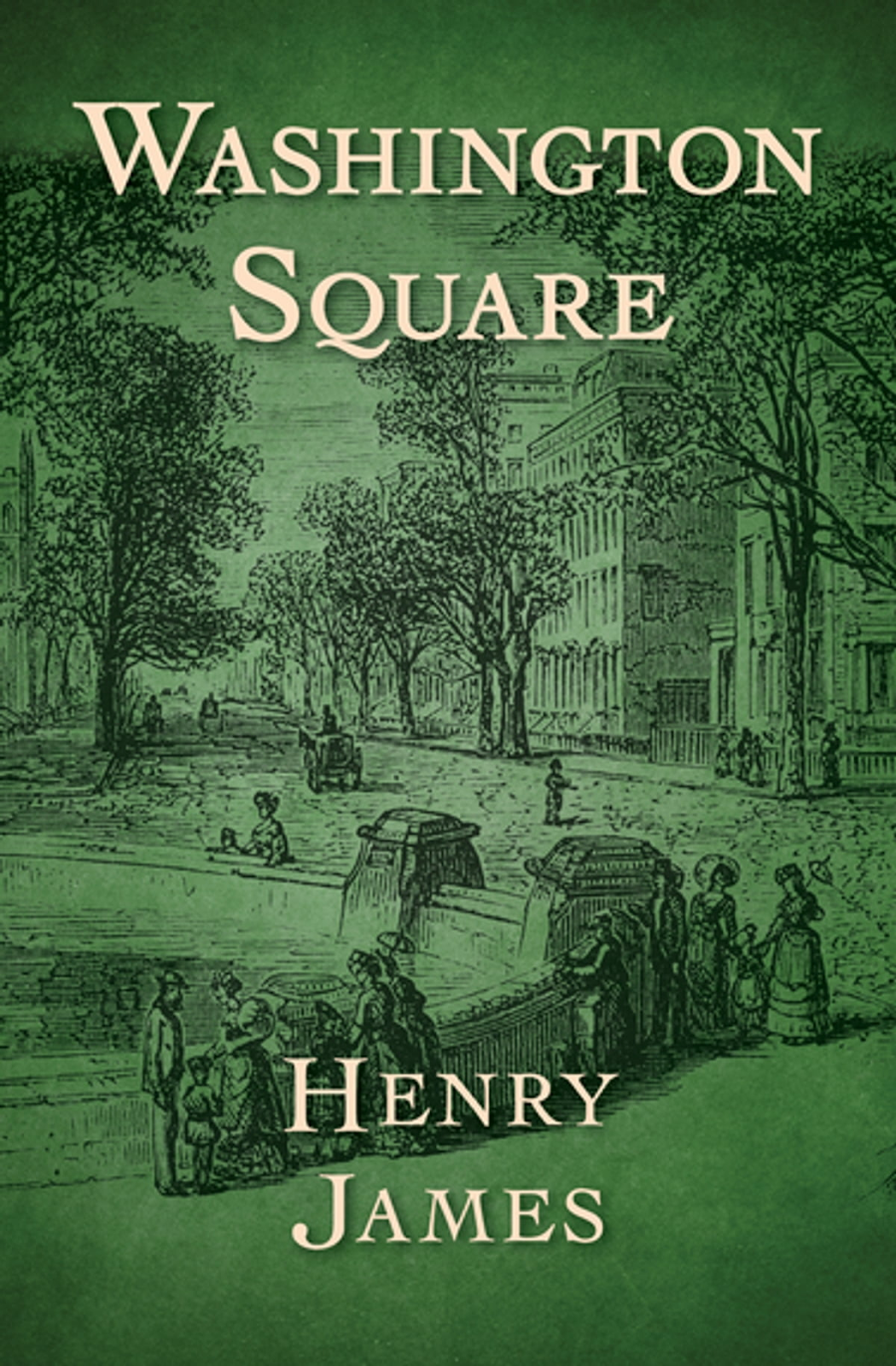
Book Review: WASHINGTON SQUARE By Henry James.

Washington Square, first published in 1880, is Henry James’ least favorite of his own works.

At first glance, it’s hard to see why. It’s one of his most accessible books, it’s highly readable, and the story deals with such heady subjects as greed, overbearing parents, and the plight of women in the 19th century.

The story takes place in 1840s New York City, and focuses on Catherine Sloper, a gentle introvert living with her father, Dr. Austin Sloper, a noted physician, in Washington Square. But her relationship with her father is an uneasy one, as the Doctor does not hold his daughter in high regard, disappointed with what he considers her unremarkable nature.

Enter Morris Townsend, an attractive, charming, and worldly young man, who quickly sets his sights on Catherine. Dr. Sloper quickly opposes the relationship, suspecting Morris of only wanting his daughter for her sizable inheritance. And from that moment on, a battle of wills ensues, with Catherine at the center of it all. It’s a simple, melodramatic premise, with well-drawn characters, and plenty of psychological twists and turns, handled in that elegant and absorbing manner that only James could pull off.

But a closer look into the heart and style of the novel reveals why James hated the book so: It is the cast of characters, an unlikable bunch that all seem to revel in abusing Catherine’s heart and soul. They act and speak in an overwrought, occasionally grating manner, very uncharacteristic of James’ usual writing style. This is James at his least elegant; James not in complete control of his creations. This makes Washington Square one of the few stories that James ever wrote, in which melodrama almost threatens to overwhelm the narrative and drown out James’ usual quiet voice; his elegantly delivered insight into the psychology and inner lives of his characters.

No wonder James himself called the novel “poorish”, describing Catherine Sloper as “the only good thing in the story.” But, in a way, James was being too hard on the novel. Yes, Washington Square is one of his most flawed and cynical works, but it’s also a solid read, which, despite its rudimentary plot, manages to be a page-turner.

One wonders, though, what makes the book one of James’ most popular novels. Is it the readability factor? The uncharacteristic cynicism? The dark pall that hangs over Catherine, and, for that matter, the whole story? James has often been accused of being too restrained, too gentle with his pen, a charge that misses the entire reason why his work lives on. As it is that restraint, that seeming gentleness, which hides beneath it layers upon layers of drama, psychological insight, and storytelling momentum.

I suspect that the reason Washington Square is so popular with modern audiences is that it’s James at his loudest, at his least restrained. This is a book that easily grabs your attention, that demands less of you than, say, Roderick Hudson or The Aspern Papers. But as flawed as it is, it is still a wonderful, absorbing story that has more nuance and storytelling power within its pages, than most novels of its era, or any other era, for that matter.

Video version:


Text © Ahmed Khalifa. 2023.

Ahmed Khalifa is a filmmaker and novelist. He is the writer/director of several short films and a feature, which was released on Netflix, and the author of a number of novels and short stories, including the YA horror novel, Beware The Stranger, available on Amazon. He is also the host of The Dark Fantastic Podcast. Find him on Twitter @AFKhalifa and on Facebook @DFantasticPodcast


The Dark Fantastic is sponsored by VHS Books:


Thursday, January 27, 2022

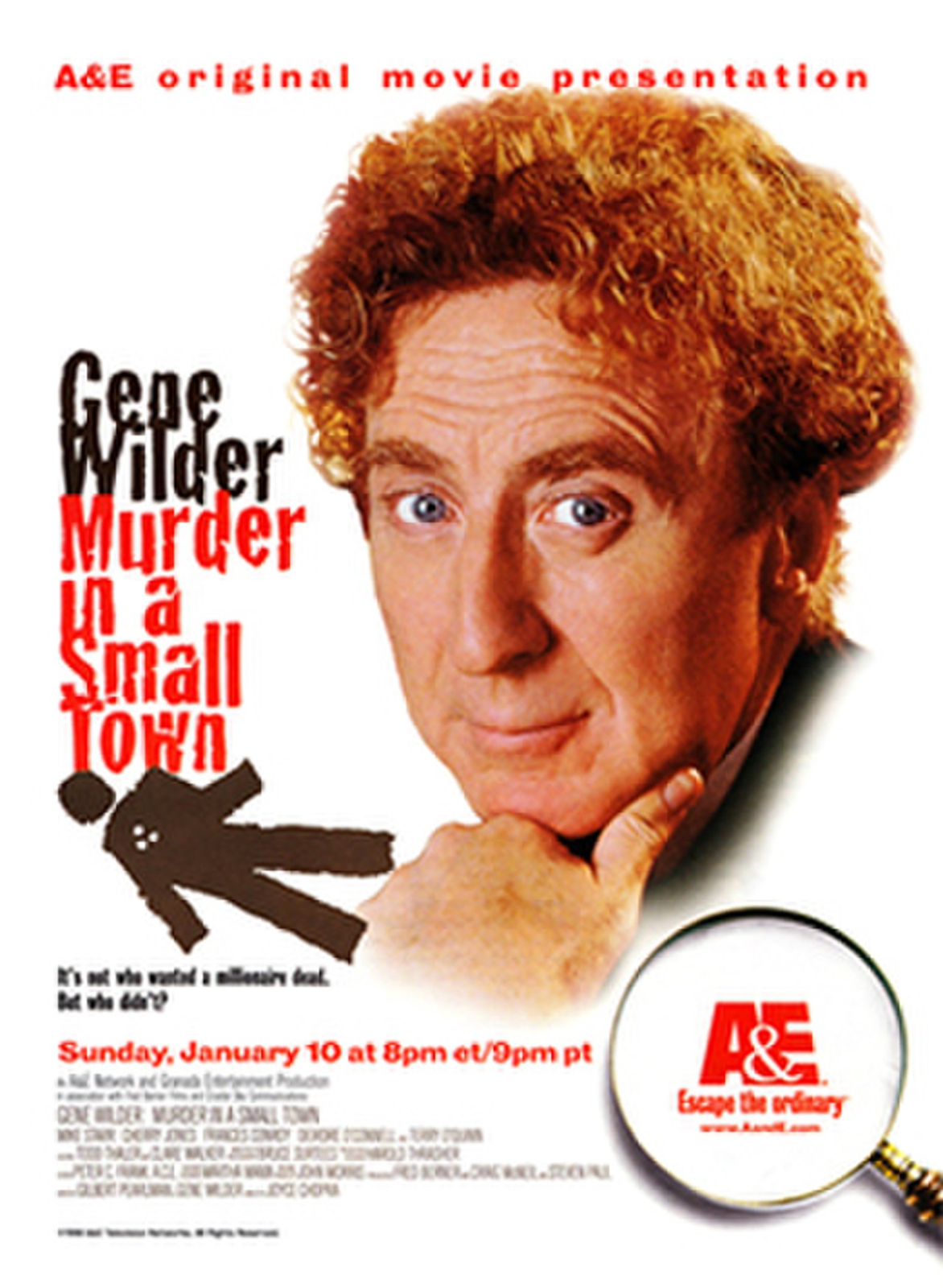
Double-Feature Review: MURDER IN A SMALL TOWN/THE LADY IN QUESTION (1999)

After a string of hits in the 1970s and 1980s, a few of which he either wrote, co-wrote, or directed, Gene Wilder’s fame started to slow down, with a number of critical and box-office disappointments. After a stint on network TV with his own sitcom, Something Wilder (1994-95), and a battle with cancer, which he eventually won, Wilder was content to ease into semi-retirement, appearing in small plays, and doing a number of cameos in TV movies.

Which brings me to Murder in A Small Town and The Lady in Question, two TV movies that aired on A&E in 1999. These two delightful mysteries, co-written and starring Wilder and directed by Joyce Chopra, and set in 1930s Connecticut, allow Wilder to showcase his talents as an actor and writer, and were the last time he ever took a starring role.

Murder in A Small Town, the better of the two features, introduces Wilder as Larry “Cash” Carter, a former actor now working as a director in a local theater, who gets entangled in a complex mystery involving the death of a local millionaire who has a long list of enemies. Wilder, and his charming supporting cast (which includes Cherry Jones and Mike Starr), glide through the film with an easy, likable panache, and the whole affair comes off as classy, stylish, and wonderfully entertaining for fans of classic mysteries.

The second feature, The Lady in Question, is more problematic, but still enjoyable, with its serpentine plot involving Nazis and espionage, large cast, and unexpected denouement. But it comes off as less polished and slightly incoherent, with a meandering script, and surprisingly less focus on Wilder’s character, who somewhat takes a backseat throughout most of the film.

The tone is also less consistent and more self-indulgent. But still, this is a classy piece of work, and a great choice for a winter night.

Both films showcase Wilder at his most versatile and laid-back, and are a must watch for his fans and fans of classic mysteries.

Text © Ahmed Khalifa. 2022.

Video Version:


Ahmed Khalifa is a filmmaker and novelist. He is the writer/director of several short films and a feature, which was released on Netflix, and the author of a number of novels and short stories, including the YA horror novel, Beware The Stranger, available on Amazon. Find him on Twitter @AFKhalifa and on Facebook @Dark.Fantastic.AK·Writer

Monday, November 1, 2021

New episode of The Dark Fantastic Podcast, featuring Sherlock Holmes Author/Expert, David Stuart Davies

In this new episode:
  • A.K. talks about the outcry against classic literature, and questions why classic "genre" fiction isn't considered "fine" literature.
  • An interview with Sherlock Holmes expert and best-selling author/editor David Stuart Davies (Sherlock Holmes: The Tangled Skein and Sherlock Holmes: Revenge from The Grave [2022]).
  • Revisiting INNER SANCTUM (1948).

  • Easter Egg: a new short story.

Listen to the episode here:

Listen to "Episode 3: Sherlock Holmes Returns, and A Defense of "Genre". Guest: David Stuart Davies" on Spreaker.

Tuesday, October 19, 2021

Film Review: SO LONG AT THE FAIR (1950) **** out of *****

Listen to this review:
Listen to "Movie Review: SO LONG AT THE FAIR (1950)" on Spreaker.

© Gainsborough Pictures

Reportedly admired by Hitchcock, who later adapted it twice for his TV show, Hitchcock Presents, So Long At The Fair (1950) is a highly effective period thriller.

The plot is a familiar one by now, variations of it appearing in many movies and TV shows, most famously in Hitchcock's The Lady Vanishes (1938). A young woman, Vicky, and her brother Johnny, travel to late 19th century Paris to attend the Exposition Universelle. Shortly after arrival, Johnny feels ill and retires to his hotel room early. The next day, Vicky wakes up to discover that her brother is nowhere to be found, his room gone, and that no one in the hotel seems to remember him ever being there. Has she gone mad, or is there something more sinister at play?

Fans of Hitchcock, and classic mystery fiction for that matter, will probably guess the solution to the puzzle long before the credits roll. But directors Terence Fisher and Anthony Darnborough keep things moving at such a brisk pace and with such technical elegance, that even if the viewer knows the outcome, the film remains absorbing and suspenseful. Most of the weight lies on Jean Simmons' shoulder as Vicky, and she handles it with aplomb, even if aspects of her performance are a bit of their time. And Cathleen Nesbitt as Madame Hervé, the conniving hotel owner, is a terrific villain. A young Dirk Bogarde is unimpressive, not having yet blossomed into the British art-house icon he would become in the 1960s and 70s.

Co-director Anthony Darnborough mainly worked as a producer throughout his career, but Terence Fisher would later become the wizard behind some of the best British Horror films of all-time, with his groundbreaking work with the iconic Hammer Studios, and elements of his controlled, visually fluent style are present here.

Even if the ending doesn't have the impact it should after more than an hour of superbly crafted build-up, So Long At the Fair remains a terrific thriller, and with a running time of just over 80 minutes, is a fast-paced watch. Highly recommended.

Text © Ahmed Khalifa. 2021.

Ahmed Khalifa is a filmmaker and novelist. He is the writer/director of several short films and a feature, which was released on Netflix, and the author of a number of novels and short stories, including the YA horror novel, Beware The Stranger, available on Amazon. Find him on Twitter @AFKhalifa and on Facebook @Dark.Fantastic.AK·Writer

Friday, October 8, 2021

Book Review: RODERICK HUDSON (1875) By Henry James **** out of *****


© Harper Classics

I first discovered Henry James as a teenager. After watching a film adaptation of The Turn of The Screw and becoming fascinated with the story, I bought a cheap TOR paperback copy of the novella, and devoured its prose with ever-increasing joy and awe. It was my first introduction to James, and, in turn, to fine literature. Reading Henry James for the first time is, for people of a certain temperament, an epiphany. His stylistic choices, command of atmosphere, uncanny psychological insight into his characters, and, above all, his restraint, is a marvel to behold.

Roderick Hudson (1875), what Henry James considers to be his first novel (although he'd written a short novel, Watch and Ward four years prior), is a joy to read. It might not be the best introduction to his work (Washington Square, or a collection of his short stories would serve that purpose better), but it is fascinating nonetheless. Reading it, particularly the first version, not the revised one Henry James did for the New York Edition, is akin to watching an artist admirably struggle to hone his craft in front of one's eyes.

At first, Roderick Hudson looks like a simple, even frivolous, tale about the rise and fall of the eponymous young sculptor. But like most of James' work, his book's plot are deceptive, beginning as one thing, and slowly morphing into another. Here, James, like Hudson, keeps refining his sculpture, adding layers, definition, detail. By the end of the book, the characters are fleshed out, their nuances laid bare, and their fates wonderfully unraveled.

Roderick Hudson is somewhat unique in James' oeuvre in that, here, he quite clearly loses control of the novel's tone more than once, veering into melodramatics typical of the era. Even the tragic ending, as effectively shocking as it is, is somewhat abrupt, flawed. In the 1907 preface to the New York revised edition, James criticizes Roderick Hudson, saying it lacks "verisimilitude" and that the "time-scheme" is inadequate. But these blemishes don't take away from the overall effect of the book, which is of a fascinating journey through the minds and hearts of three compelling characters: Hudson; Mallet, Hudson's benefactor; and Christina Light, who would reappear in James work as the Princess Casamassima.

Next, James would go on to write The American (1877), a better, more assured novel, with a splendid third act, and which benefits greatly from the lessons he learned writing Roderick Hudson.

Video version:


Text © Ahmed Khalifa. 2021.

Ahmed Khalifa is a filmmaker and novelist. He is the writer/director of several short films and a feature, which was released on Netflix, and the author of a number of novels and short stories, including the YA horror novel, Beware The Stranger, available on Amazon. Find him on Twitter @AFKhalifa and on Facebook @Dark.Fantastic.AK·Writer

Sunday, September 19, 2021

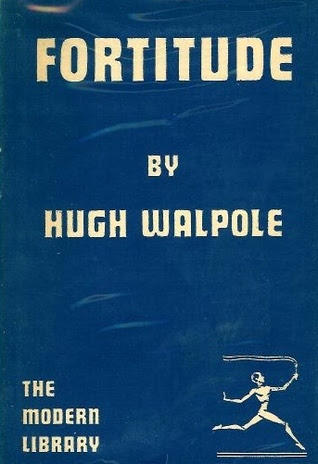
Book Review: FORTITUDE By Hugh Walpole. **** out of *****

Reading Hugh Walpole is a strange and wonderful thing. Sometimes he's brilliant (The Prelude to Adventure), sometimes he's good (Mr. Perrin and Mr. Traill), and sometimes he's barely passable (Jeremy). Fortitude (1913), Walpole's homage to the works and styles of Dickens and Henry James, is nearer to brilliant on that spectrum.

It follows the life of one Peter Westcott, from his boyhood to the onset of middle-age, tracking his attempt at transcending a hard life, including a disturbed, abusive father, poverty, and, ultimately, succeeding as an author. The plot is layered, sprawling, even meandering at times, but Walpole is at his most ebullient here, driving vigorously onwards through a breakneck narrative, pulling the reader with him.

I guess it would be considered sacrilege to call Fortitude as good, or even better than, a lot of Dickens' coming of age tales, but Walpole comes close. He also attempts to mimic James' psychological mastery, but here, he doesn't really succeed, although his characters are interesting enough, some even fascinating. The protagonist, Peter Westcott is a flawed character if ever there was one, and in the hands of a lesser, and less humane, writer, he would have been thoroughly unlikable, but Walpole makes him not only compelling, but sympathetic as well.

Aside from the sheer storytelling joy of Fortitude, with its twists, turns, and occasional forays into hackneyed melodrama, Walpole is aiming for something more, something higher. Like in this exchange between Westcott, after the successful publication of his first novel, and Henry Galleon, arguably a thinly disguised surrogate for Walpole's idol, Henry James. Galleon says to  the young author: "Against all these temptations, against these voices of the World and the Flesh, against the glory of power and the swinging hammer of success, you, sitting quietly in your room, must remember that a great charge has been given you, that you are here for one thing and one thing only ... to listen..." The whole of Galleon's speech, is sublime, in fact; and sublime is what Walpole, in his own flawed way, achieves with this novel.

Fortitude is unputdownable, moving, sensational, unabashedly melodramatic, somber, and, in the most surprising of ways, uplifting. A great book that deserves to be rescued from the shadows of obscurity.

Text © Ahmed Khalifa. 2021.

Video Version:


Ahmed Khalifa is a filmmaker and novelist. He is the writer/director of several short films and a feature, which was released on Netflix, and the author of a number of novels and short stories, including the YA horror novel, Beware The Stranger, available on Amazon. Find him on Twitter @AFKhalifa and on Facebook @Dark.Fantastic.AK·Writer


Tuesday, August 24, 2021

Book Review: THE PRELUDE TO ADVENTURE by Hugh Walpole *** and a 1\2 out of *****

Hugh Walpole (1844-1941) was a prolific writer with a readable, compelling style, but whose sensibilities were somewhat limited. Almost all his books feature tortured, alienated characters, Gothic atmospherics, and a cynical, often downbeat undertone.

Inspired by Francis Thompson's haunting poem "The Hound of Heaven", The Prelude to Adventure (1912) features all of Walpole's signature ingredients, but what sets it apart is that, here, Walpole's main character is not lost, but found. Here, his lead character, a college student by the name of Olva Dune, a man who commits a murder in a moment of rage and then hears the voice of God calling him, is a man who has always felt out of step with the world until the moment of his crime, when he finds God, or rather, when God finds him. From there, the story focuses on Dune's struggle with that revelation, as well as his guilt and his fear of being unmasked as the killer. It's an unputdownable book written with surprising urgency by Walpole, who usually takes his time setting things up. It's also a successful cross-genre novel if ever there was one. It's a detective story, a Gothic tale, a spiritual meditation, and a love story all in one. 

What makes the novel's effectiveness all the more surprising, is that its flaws are so apparent. Other than Dune and another character (Bunning, a lost soul who idolizes Dune), the rest of the cast are little more than sketches, and the plot progression and psychology are often clumsy. But work the novel does. It's a spellbinding book which aches with spiritual longing and the struggle to understand one's own darkness. No wonder Carl Jung praised it. It's a unique, fast-paced, moving story that ends on just the right note. Highly recommended.

Text © Ahmed Khalifa. 2021.

Video Version:


Ahmed Khalifa is a filmmaker and novelist. He is the writer/director of the feature film Wingrave, released on Netflix, and the author of a number of novels and short stories, including the YA horror novel, Beware The Stranger, available on Amazon. Find him on Twitter @AFKhalifa and on Facebook @Dark.Fantastic.AK·Writer

The Dark Fantastic is sponsored by VHS Books:


Wednesday, July 21, 2021

Book Review: MR. PERRIN AND MR. TRAILL By Hugh Walpole *** and a 1\2 out of *****

Listen to this review:
Listen to "Book Review: MR. PERRIN AND MR. TRAILL. By Hugh Walpole" on Spreaker.

Hugh Walpole's third novel, Mr. Perrin and Mr. Traill (1911), considered by many, and by the author himself, to be his best work, is a strange, somber, meandering, and unforgettable piece of literature.

Revolving around a feud between two school masters in a public school in Edwardian England, the book starts out as a slow-burn social drama about the tedium and oppressive nature of everyday life in the public school system, depicting an affecting if not exactly compelling series of incidents that almost outstay their welcome. But then the book's tone shifts to something much darker and much more fascinating, as it focuses on one of the character's headlong dive into regret, rage, and, inevitably, madness. Here, the book, which flirts with Gothic undertones from the beginning, transforms into a disturbing psychological drama, with the screws tightening faster and faster, till the poignant ending.

Walpole's prose ranges from sublime to serviceable. It has been noted by several scholars and students of his work that Walpole was an unfussy writer, to a fault, writing quickly and seldom revising the first draft. The outcome of such a method does the novel a disservice to some extent, with the pacing of the book, especially in the first half, being too unsteady, and the tonal lurches are also a distraction. But by the second half the narrative threads coalesce into a satisfyingly unnerving whole, with scenes of psychological torment so vivid they push the book right to the edge of a Gothic horror story.

The book has two endings, the original one published in Britain, and a revised one for the later American editions. Both endings are interesting, yet each is problematic in its own way. The original ending, though melodramatic, is more effective, more poignant, and much darker. The revised ending is clumsy, heavy-handed, and borderline didactic, but its more hopeful tone might appeal to some readers.

Mr. Perrin and Mr. Traill is a flawed piece of psychological fiction, with a cynical bent that can be hard to take at times. But, in the end, it is a novel that has stood the test of time, as there's emotional truth buried within its pages, and its depiction of a middle-aged man undergoing a calamitous transformation is harrowing and memorable. Recommended.

Text © Ahmed Khalifa. 2021.

Ahmed Khalifa is a filmmaker and novelist. He is the writer/director of the feature film Wingrave, released on Netflix, and the author of a number of novels and short stories, including the YA horror novel, Beware The Stranger, available on Amazon. Find him on Twitter @AFKhalifa and on Facebook @Dark.Fantastic.AK·Writer

Friday, October 23, 2020

Flashback Review: ALL QUIET ON THE WESTERN FRONT (1930) **** and a 1\2 out of *****

A testament to the ageless power of great filmmaking, All Quiet On The Western Front (1930) is proof positive that early talking pictures could be anything but static. Director Lewis Milestone and cinematographer Arthur Edeson achieve something that was a rarity in early 1930's movies: a film that is told primarily using fluid camerawork, powerful sound design, and layered, textured framing. The result is a film that has lost little of its power to move, haunt, and thrill, in equal measure.

Telling the story of a group of German soldiers during WWI, Milestone and co. deliver a sobering portrayal of the reality of war, and what it does to those who actually fight it on the front lines. Spellbound by patriotism and dreams of glory, young men volunteer straight out of school classrooms, with hopes of embarking on an exciting adventure. But reality is far more brutal, and as the film progresses, Milestone meticulously shows the trials of the life of a soldier, and the horrors of the battlefield.

It is astounding that a film made with such primitive equipment could be so kinetic. Milestone and co. capture such beautiful imagery and create such an immersive experience, that, at times, one forgets that this is a film that's almost a hundred years old. Although some aspects haven't aged as well as others (the editing can get a little choppy, and baby-faced Lew Ayers is woefully miscast as the lead), what the film achieves overall is just short of miraculous, culminating in a haunting, masterfully understated ending.

One of the greatest anti-war films of all-time, and a true groundbreaker, All Quiet On The Western Front is a film for the ages.

Text © Ahmed Khalifa. 2020.

Ahmed Khalifa is a filmmaker and novelist. He is the writer/director of the feature film Wingrave, released on Netflix, and the author of a number of novels and short stories, including the YA horror novel, Beware The Stranger, available on Amazon. Find him on Twitter @AFKhalifa and on Facebook @Dark.Fantastic.AK·Writer.

Tuesday, October 20, 2020

Flashback Review: I AM A FUGITIVE FROM A CHAIN GANG (1932) **** and 1\2 out of *****

The granddaddy of all prison dramas, I Am A Fugitive From A Chain Gang (1932) is a timeless masterpiece of filmmaking. Shot on the quick during the height of the studio system, director Mervyn LeRoy, cinematographer Sol Polito, and star Paul Muni, created a tense, grim, and riveting look at post WWI America in all its dark glory, with a realistic adaptation of Robert E. Burns' true story of his false imprisonment and his hellish years in the chain gang system of hard labor.

LeRoy, known at the time as one of the fastest shooters on the Warners lot, directs the film with an economic, efficient, but never artless, style that doesn't get in the way of the story, creating an immersive, gritty movie experience that has stood the test of time. The film's pace - with the exception of the second act, where Muni's character falls for a femme fatale - rarely lags, right up to the hard-hitting and unforgettable final scene.

Almost a hundred years on, I Am A Fugitive From A Chain Gang still holds up, and its influence can be seen on almost every single American prison film made since.

Text © Ahmed Khalifa. 2020.

Ahmed Khalifa is a filmmaker and novelist. He is the writer/director of the feature film Wingrave, released on Netflix, and the author of a number of novels and short stories, including the YA horror novel, Beware The Stranger, available on Amazon. Find him on Twitter @AFKhalifa and on Facebook here.