Showing posts with label the dark fantastic interview. Show all posts

Saturday, January 2, 2021

The Dark Fantastic Interview with author Robert J. Randisi (Author of The Rat Pack Mysteries and Curtains of Blood)

Robert J. Randisi is one of the most prolific writers in history, having authored hundreds of  published books and edited more than 30 anthologies of short stories. He co-founded and edited Mystery Scene magazine (with Ed Gorman) and co-founded the American Crime Writers League. He founded The Private Eye Writers of America in 1981 and created the Shamus Award.

In a 2011 Barnes & Noble interview he revealed that he writes under sixteen pseudonyms, and that he produces fifteen books a year, with 1984 being his most prolific year, with an output of twenty seven books!

He is most renowned for his mystery fiction (Dean Koontz and Michael Connelly are fans of his work), which includes The Rat Pack Mysteries, the Nick Delvecchio series, and the Joe Keough series.

Randisi has also written hundreds of western novels - including The Gunsmith series, The Tracker series, The Angel Eyes series, among others - and dozens of stand-alone novels in numerous genres.

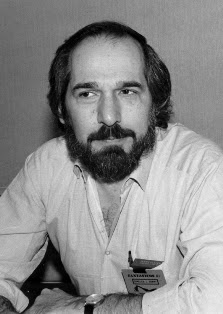
Author Robert J. Randisi

I had a chance to interview him recently and ask him about his prodigious output, his style, and one of my all-time favorite novels, Curtains of Blood.

How early in your life did you discover that you wanted to be a writer?

I was 13 when I first put pen to paper—or fingers to a typewriter—but I was 15 when I decided I would do it full time for a living by the time I was 30—and I did. 

Early in your career, your worked for the NYPD. What was that experience like, and how did it influence your writing?

It was an eye opening experience, a peek into real life that I hadn’t seen before. At 23 I’d have to say it was life altering.  It did enable me to write more realistically about people, but except for a short story or two it didn’t actually influence my writing until I wrote ALONE WITH THE DEAD in 1995.

P.I. fiction has definitely stood the test of time and continues to be popular to this day. In your opinion, what makes P.I. fiction such a sturdy and timeless genre?

I think the loner standing against the masses is timeless.  We all like to think we could do it if we had to. It’s something that connect the Western and the Private Eye story, the lone gun who’s not on either side of the law, but sort of straddling the line in the middle. He’s heroic, and almost everybody would like to be a hero.


I think it's safe to say that you're one of the most prolific writers of all time, with hundreds of novels in countless genres under your belt. To what do you attribute your prodigious output, and what is your writing process like?

I can only attribute my output to my absolute love of writing. Most of my waking hours are spent writing. And I discovered at an early age that I had an unusual ability to write swiftly. I was advised by other writers early on NOT to write quickly, to slow down. But when I tried to follow that advice it affected everything—my output and the quality of my work. So I had to settle down into my natural pace, which is the advice I give to writers when they ask. Find your natural rhythm, and stick with it. And remember, I wanted to write for a living by the time I turned 30. That meant writing a lot of books, or becoming Stephen King—and I ain’t Stephen King.  

Do you have a favorite genre to write in?

For me it is and always has been the Private Eye genre—even  before it was accepted as a genre of its own, rather than the sub-genre of the mystery. It became part of my life’s work to make that happen.  

As the creator of the Shamus Award, and an expert in P.I. lore and methodology, did you ever think of becoming a P.I. yourself?

Early in my life, yes. Dealing with police detectives and meeting some private eyes along the way, I thought about it, but that would have interfered with the writing. I was a musician in my teens, and decided I’d have to either pursue music or writing to succeed at one of them. You know what I chose. But yeah, I think I could’ve been a good P.I.


Who are your favorite writers, the ones that inspire you the most?

I go cross genre with influences, from Chandler and Ross Macdonald to Roger Zelazney and Keith Laumer. I enjoyed them, and learned from them. And I was mentored by Warren Murphy, who gave me my first writing job.  These days I enjoy the work of Michael Connelly very much. He’s one of the few writers I think actually deserves his success status. 

Your style can arguably be called minimalist: You achieve so much with so few words, and your sentences are always lean and drive the story forward, which makes most of your books on the shorter side, yet wholly satisfying as novels. What attracts you to this spare style?

It’s not conscious, it simply comes naturally. I don’t rewrite, the story comes out of my head and flows through my fingers at a certain speed, and the “minimalist” style you refer to just fits.  I’m much more concerned with the action of the story, than I am with the kind of shoes characters are wearing, or what the weather’s like. I’m as much criticized for that as I am praised, but once again, you have to go with what comes naturally. 

Your mastery of almost all genres is mind-boggling. Is that the result of your interest in a wide-range of subjects? Or are you just a voracious reader?

Oh, I was a voracious reader from an early age, and kept looking for more and more to read, which meant bringing new genres into the fold. I have to say the only genre I’ve never read or written is the romance. The private eye is still my favorite genre to read, but some of my favorite books have come from Roiger Zelazney and Frank Herbert.

One of my favorite novels of yours is CURTAINS OF BLOOD, a terrific historical thriller in which Bram Stoker crosses paths with Jack The Ripper, a concept which has been used many times, with varying degrees of success. In my opinion, your take is the most effective, and for me, the most enjoyable. What attracted you to the subject matter, and how much research did you have to do for the novel?

I probably did more research for that novel than any other I’ve written. I just happened to come across the fact one day that Stoker was the manager of the Lyceum Theatre at the time of Jack the Ripper, and that the theater’s run of Dr. Jekyll and Mr. Hyde was closed down due to the fact that the police thought it might be “inciting” Jack. I just went from there . . . to me, it was a natural.

Do you ever consider going back to that Victorian world and writing something in the same vein as CURTAINS OF BLOOD?

There’s nothing on the planning board, but who knows. I always have time to write another book, right?


What advice would you give to aspiring writers who want to write in the mystery/crime genre, especially now that the paperback market has all but disappeared?

If you want to write this stuff, you just have to write it. You can’t worry about where or when or how it’s going to be published. If you’re a writer, then the writing is the important part. You’d write it even if you were the only one who was going to read it. So get it written, and don’t worry about anything else until it’s done.

What are you working on at the moment?

Several things—a traditional western for Berkley Books, who has started publishing westerns once again; the next Gunsmith book, continuing the output of one a month since January of 1982; and my next Rat Pack mystery, which will be the thirteenth book in the series.

Thank you for your time.

It’s been my pleasure.

Text © Ahmed Khalifa. 2020.

Ahmed Khalifa is a filmmaker and novelist. He is the writer/director of the feature film Wingrave, released on Netflix, and the author of a number of novels and short stories, including the YA horror novel, Beware The Stranger, available on Amazon. Find him on Twitter @AFKhalifa and on Facebook @Dark.Fantastic.AK·Writer

Tuesday, November 24, 2020

The Dark Fantastic Interview: Author Kathy Ptacek on Charles L. Grant (1942-2006), the Master of "Quiet Horror

There are writers who write straight horror with populist leanings (Stephen King), and those who write horror that is playful and ebullient (Richard Laymon). There are writers who try to mishmash genres together, and, therefore, don't like to be labeled as "horror" authors (Dean Koontz). There are writers who try to elevate horror to something akin to "literary" fiction" (Peter Straub); and then there is Charles L. Grant.

Charles L. Grant (1942-2006) is, undoubtedly, one of the most underrated horror writers in history. He was prolific, writing dozens of novels and short story collections in numerous genres, as well as editing dozens of anthologies, the most famous of which is Shadows. He treated the genre with the reverence it deserves, and his style was unmistakably his own. He was one of the most flavorful horror writers to ever come out of the United States, his writing was never pretentious, and he basically invented "Quiet Horror", a style that focused more on character and atmosphere, than on graphic violence.

Charles L. Grant


During his lifetime, Grant won two Nebula awards, the World Fantasy award, and life achievement awards from The British Fantasy Society and the Horror Writers Association.

Long out of print, Grant's entire body of work is now available again in terrific ebook editions, courtesy of Crossroad Press. If you are a fan of stylish, understated, imaginative horror with memorable characters and which drips with menacing atmosphere, pick any horror title by Grant and it will hit the spot, and then some.

But who was this artist who created these shadowy, autumnal landscapes, who so mastered the art of scaring readers with seemingly little effort? Acclaimed and prolific novelist Kathy Ptacek, who was married to Charles L. Grant from 1982 till his passing in 2006, and who also happens to be one of his biggest fans, tells us all about Grant.

Charles was so prolific, writing under a variety of names, and in so many genres. I know he was mainly known for his horror fiction, but did he have a favorite genre out of all the genres he wrote in?


Well, he loved horror, of course, but I know he really had a fun time writing his humorous fantasy. He didn’t use humor in the dark stuff he wrote, so with his Kent Montana books and the others, he had a chance to develop puns and let people know about that twinkle in his eye that so many people have commented on.

Charles always talked about and championed what he called "Quiet Horror", horror fiction that focuses more on mood and suspense than on gore and gross-out effects. Can you elaborate on what "Quiet Horror" exactly meant to him in terms of language and style?

"Quiet horror" was never in-your-face writing. He wanted the horror, the eerieness to creep up on the readers ... to make them uneasy, unsettled. He thought that was best accomplished by the mood. He was sort of the master of understatement ... He was never explicit in any of the quiet horror ... He wanted the readers to fill in the gaps with their mind. One time, he got a letter from a woman, who talked about how horrible and bloody his work was, and she was so upset, etc. She mentioned this one scene in a book, in particular. Charlie and I looked at each other, because there was no way he provided any graphic details. That was my territory. Anyway, we found the book and the end of the chapter that she mentioned, and I think it was something along the lines of the monster–or whatever–pulled the character’s arm off. That was it. No description whatsoever. But this woman’s mind had painted a bloody scene ... all because, I think, Charlie had laid the groundwork in the earlier part of the chapter. She was so invested, so involved in that storyline, that it played out in her mind ... even if the words weren’t there on the page.

Charles was a very versatile writer and editor, jumping from one genre to the next, and from one form to another. With so many interests, what was his writing schedule like, and how did he choose his projects?

He usually got up later in the morning (he worked until the wee hours of the night), then he would play a computer game ... while he was waking up. He’d put on a CD to listen to while he was playing–and thinking. After he woke up a bit, he would open files and look at what he had written the previous day and night. By the way, the CD was usually the soundtrack to [John Carpenter's] THE FOG. I knew when the music stopped, that he had settled down to work. He worked usually until dinner, then would come downstairs. We might watch a movie or two, and then sometime after 11 or so, he’d go back upstairs to work some more. Of course, if he was on deadline, he might be up there longer.

As to how he chose his projects, I don’t know. I think they chose him. Sometimes, a word or phrase or something he saw in a movie or in real life would spark an idea. He did have a lot of deadlines, so, of course, he worked on those books and short stories first, but sometimes he would have a side project. He kept a steno notebook by his side when he would read downstairs or work in his office. He would jot down words he saw in books; he knew them, of course, but maybe he didn’t use them all that often. Or he’d see a phrase that interested him. And I know that he would review those pages before writing ... I would guess that sometimes a word or phrase would leap out at him then.

Arguably, Charles's most well-known books are the "Oxrun Station" series. Do you know what made him go back again and again to the strange and wonderfully dark world of Oxrun?


I don’t know why he returned to it so often, except he loved that little town. And so did I. I had asked him to write a BIG Oxrun Station novel for me, and he planned on it. But, unfortunately, he ran out of time.

It is astounding to me that with such a wealth of terrific and cinematically written stories under his belt, Charles's work never got the feature film treatment. I know that some of his short stories were adapted for TV, but never as a feature. Why is that?

I don’t understand that, either. The Pet was optioned once, back in the ‘80s, by a well-known director, but he ultimately passed on it because he didn’t know how to make the horse spooky. Well, that’s what we heard, which just astounded me. This was long before CGI, but I could name easily five or six ways to “spook” up the horse ... I am hoping someone from Hollywood gives a holler one of these days about Charlie’s work. I would love to see some of it filmed. I think the Oxrun Station stories and novels would work really well as a TV series. Hint, hint to anyone out there with TV connections! Heh!

The Pet was a big hit for Charles, back in 1986. It's an elegiac, haunting book, and somewhat different from most of his work. It's also one of his longest books. Can you talk a little bit about the success of the book, and what, in your opinion, made it connect with readers to such an extent?

Everyone was a teen at one time, and I think that much of what the boy goes through, what he thinks, how he reacts ... it’s something most people can identify with. I think that it is amazing–and gratifying--that so many people always talk about The Pet when they mention Charlie’s books.


Charles had a special friendship with Stephen King, and King wrote Charles one of the greatest blurbs in all of horror fiction, calling Charles "one of the premiere horror writers of his or any generation." So how did that friendship start, and what was their relationship like?

The two shared the same agent in their early days of writing and publishing, and I guess that’s how they met. I remember that Charlie said that he and Steve and the agent would often go out for a breakfast meeting and that because none of them had much money in those days, they would share the meal.

My introduction to Charles's work was through a copy of "Black Oak: Genesis" [the first in the "Black Oak" series of five books, about a private investigation firm that focuses on the paranormal]. I loved it. It was like reading a contemporary version of those classic short stories about "psychic detectives", like Algernon Blackwood's John Silence, or Seabury Quinn's Jules DeGrandin. I read in an interview that Charles started the series so that he could do in it what he wasn't allowed to do on his "X-Files" tie-in books [Goblins and Whirlwind]. Charles passed away before he could finish the series. Do you know what he had in mind for the future of the series?

I’m glad you enjoyed Black Oak! So many people wrote to him about that ... I still received emails and notes from folks about the series, even after his death.

He did have a sixth book for the series, but it wasn’t finished at the time of his death. I don’t know what he had planned for the future, but I’m in the process of talking to another writer to finish the book. 


What were Charles's favorite books of his? And who were some of his favorite writers?

I think all his books were his favorites! Heh! But I do think the three books based on the Universal movie monsters [The Soft Whisper of The Dead (1982), The Dark Cry of The Moon (1986), and The Long Night of The Grave (1986)], and initially published in hardcover by Donald Grant, and now in E-book format from Crossroad Press with the same wonderful covers by Jill Bauman, held special meaning for him. He never listed contemporary writers as his favorites–he did have them, but he really didn’t think it was fair to many authors. But one of his all-time favorites from long, long ago was Nathaniel Hawthorne.

Many of Charles's books have been re-released as e-books through Crossroad Press. They are wonderful editions, and a treasure trove for fans like myself, who were struggling to find copies of his older books and books written under pseudonyms. How did that come about, and what can we look forward to in the future? Any unpublished work, perhaps?

At one time, E-books were brand new ... an emerging form of publishing, and I suspected they would take off, but I had no idea where to turn. I was approached by a number of other presses, and I was really appalled at their options and rates. The royalty rate was sometimes barely half–for the writer!–and one place wanted me to PAY them $300 each for 3 books to be published, and then, supposedly, I would recoup the money via royalties. No, I don’t think so. I took my time and didn’t rush into any deals. I was doing this without the benefit of an agent, and I wanted to make sure I got it right; it really was such a new form of publishing, so there weren’t a lot of people I could turn to for advice; I figured I would let common sense guide my hand. And then Dave [David Niall Wilson, CEO of Crossroad Press] contacted me, and we talked about things. I had worked with him when he was President of the HWA, and I had known him from long before that when he edited his magazine, THE TOME. I liked what I saw on the contract, and signed up, and it has been an incredible experience. I am really thrilled with Crossroad and Dave Wilson and David Dodd. Thank you, guys!

I am still looking for some of Charlie’s unpublished stuff, but there isn’t much, sadly. He sold most of what he wrote, so it’s not like he has a shoebox with unpublished manuscripts lurking under the bed! I wish there were. I was hoping to find more short stories, but I still might.

I want to talk a little about your own work. Did you always know you wanted to be a writer?

Thanks. No. I wanted to be an artist or an archaeologist. But in ninth grade, we had to write a short story for my English class. I didn’t have a typewriter in those days, so I wrote it longhand. It was based on THE MAN FROM U.N.C.L.E., and my teacher loved it and wanted to read it aloud to the class. I was so shy in those days that I said no. Sheesh. But at that point I decided I liked writing, but I didn’t know how I could write fiction and make a living (I was clueless in those days!), so I took journalism after that, and that was my major in college. I still wrote fiction, but not a lot. And I was very fortunate to have a wonderful professor in college who encouraged me to write more. This was the late Tony Hillerman, the bestselling mystery writer. At the time I was in his classes, his very first mystery had just been published. I was so amazed to know a real-life writer at that time. Later, after I sold my first novel, I joined his First Friday luncheons where a lot of other New Mexico writers would get together to have lunch and talk about everything.

You're an eclectic writer, going from monster movie homages like Gila!, to literary horror like Ghost Dance, to Young Adult fiction like The Hunted. How do you choose your next project, and do you enjoy writing in so many genres?

I love to write in the different genres because I love to read so many varied things. I have never read in just one category ... I do read a lot of nonfiction (and I also have had a number of credits in different magazines, including some short fiction about canals in SKYLANDS MAGAZINE) as well. But I am fascinated in just about anything and everything. I have a friend who said to me once that she never knew anyone who was interested in so much. I don’t know if that’s from my journalism training or if it’s just because I’m basically a nosy person ... which goes back to the journalism, I guess. 

As for how I choose my next project ... it’s hard to say. I write what strikes me. When historical romances were hot in the ‘80s, I was writing those ... I love history, and this allowed me to do tons of research, which I really enjoy. Actually, most of my novels are historical, even the fantasy.

Who are your favorite writers, and what have you read recently that you recommend to fans of your work?

One of my favorite writers is Charlie, and I think that fans should read his work. It is nothing like mine. In fact, we had thought once about writing an historical romance together, but our styles differed so much and our interests in history didn’t mesh, so we said, never mind! We used to laugh about that ... the book that never was!

What are you working on at the moment?

I’m actually working on a poem. I just started to write poetry in the last few years, and I enjoy it quite a bit. I haven’t written many poems, and I do want to work on more. I like poetry because each word has to say what a paragraph or more would say in a story. It’s a challenge.

And I do have an idea for a novel. I was set to do some research in New York state, but then the virus hit, and I canned the idea of a road trip. But I still might do that. And a short story idea popped into my head yesterday, so I need to find some time to jot down some notes.


What advice would you give to young writers, especially ones who want to write horror and fantasy?

Read, read, read. Read everything and anything; don’t stick to one genre. Same with writing. Just do it. Don’t think you have to have your writing area just so or that you can only do it at a certain time of the day or when the moon is full or whatever ... Just put down those phones, look into the distance, think a bit, then sit down and write. It doesn’t have to be a complete story or chapter from a novel ... Write a sentence ... a phrase. You can come back and expand on it later on.

I have never been an every-day writer, but for several years in February (this year it was February through part of April), I sit down and write the opening sentence to a short story ... I do this every single day in February. Why that month? I don’t know. Sometimes, I’ve struggled to complete a sentence, but on other days I’d have a number of sentences, and sometimes those would become paragraphs and even pages. At the end of the month, I would reread what I wrote. A lot of it will never see the light of day, of course ... but some of it sparked my interest, and I expanded those opening lines into short stories. And then I sent some of those out to various markets and sold them, which was fantastic. I think this is a fun exercise for any writer to try ... Do it for a week if a month is too long. I’ll be doing it again next February, and I invite people to contact me on Facebook to let me know how they’re doing with the exercise.

Oh, and one other piece of advice? Never sneer at another genre that you don’t write in. When I was writing historical romances, I remember that many people had nothing good to say about it, and the same with horror. It’s all writing, and it’s all good, and writers should support each other.

Thanks so much for you time.

Thank you for asking me.

Charles L. Grant and Kathy Ptacek


Text © Ahmed Khalifa. 2020.

Ahmed Khalifa is a filmmaker and novelist. He is the writer/director of the feature film Wingrave, released on Netflix, and the author of a number of novels and short stories, including the YA horror novel, Beware The Stranger, available on Amazon. Find him on Twitter @AFKhalifa and on Facebook @Dark.Fantastic.AK·Writer

Saturday, April 25, 2020

The Dark Fantastic Interview with Director Michael Pressman (Exclusive)

Director/Writer/Producer Michael Pressman has been working in Hollywood for over forty years. He's done it all: from TV movies, to weekly dramas, to mini-series, to features. His work is always visually stylish and energetic, no matter the genre he is working in (and he's worked in almost every conceivable genre).
I had a chance to ask Michael a number of questions about his work, especially the TV movie Final Jeopardy (1985) starring Richard Thomas and Mary Crosby, one of the most suspenseful and underrated American TV movies ever made, Teenage Mutant Ninja Turtles II (1991), and what he's working on at the moment.

Final Jeopardy is, in my humble opinion, one of the best American TV movies ever made. It looks and plays like a feature. How did you manage to achieve that with what I assume was a small budget and mostly location shooting in Chicago and Los Angeles?

Thank you for the compliments. I so enjoyed making that film because it was like shooting a movie. I was completely left alone to make it visual and exciting. We were also quite short in the first cut, and I personally wrote two additional scenes that were my favorite - one was finding the dead body in the empty theater and the other was the drugged out girls in the abandoned church who thought it was a hospital.  

We only shot for one week in Chicago, and we used the sewers and the subways and the ending with Denis Farina, and that was pretty much it. The rest was shot in Los Angeles at night, of course.

I am a huge fan of the vastly underrated Richard Thomas. What was it like working with him?

Richard Thomas was totally dedicated and fully invested and a lot of fun. He had a tremendous sense of humor, and I remember many times if we were shooting past midnight he would go into a foreign accent and rehearse with a French or an Italian accent and crack everyone up. I also adored Mary Crosby who was a dream to work with. The most exciting actor was the famous late Jeff Corey whom I became very close to in his last years, and he was brilliant in a very underwritten role of the man who lived in the underground. He had a whole backstory and point of view and if you watch closely, he played the role like a rat who lived under ground and would scrounge. He added all his lines about “you got any food ?", lines like that. 

How did you get involved with Teenage Mutant Ninja Turtles II (1991), and what was it like working on such an effects heavy film?

That was a complete left field surprise that I just said "Yes". They were looking for a director for the sequel and someone who knew how to work under pressure and handle TV-like schedules, and because of Bad News Bears in Breaking Training (1977), I had also directed a successful children’s movie that was also a sequel, so I was the perfect person for the job. I learned so much on that film about puppetry and effects, and little did the producers know my theater background came in very handy with the movement and staging of mimes playing the Turtles, and puppeteers off screen doing the facial expressions. I loved that experience, but it was stressful and demanding. I was offered to do the third one and turned it down, because I felt there wasn’t a learning curve.  

You’re an extremely versatile director. Doing everything, from thrillers, to one-hour TV dramas, to big-budgeted features like Ninja Turtles II. How do you choose your projects, and what do you enjoy more, working on features or TV? 


Michael Pressman
It's hard to answer that. Movies are my first love, and take a very long time, and sometimes you spend most of your time raising money or interesting a star that helps you get the money. And if it doesn’t make money, the director is always blamed. Television is a good friend. I am in demand if the work is good, and its fast and is always a challenge and keeps me going. And it pays well. 

What are you working on at the moment?

I am producing/directing Chicago Med [the Dick Wolf medical drama which airs on NBC] and enjoying it very much, though at the moment we are in a holding pattern due to the coronavirus, as is the rest of the industry and the country in fact.

* Special thanks to Craig Safan, for making this interview possible.

Text © Ahmed Khalifa. 2020.

Ahmed Khalifa is a filmmaker and novelist. He is the writer/director of the feature film Wingrave, released on Netflix, and the author of a number of novels and short stories, including the YA horror novel, Beware The Stranger, available on Amazon.

Wednesday, April 8, 2020

The Dark Fantastic Interview With Composer Craig Safan (exclusive)

I first came across Craig Safan’s music about twenty five years ago, when I was just a kid obsessed with horror movies. I was watching a rented VHS copy of A Nightmare On Elm Street 4: The Dream Master (1988) when something strange happened. I started noticing the score, a rarity for me at that age. To me, it sounded strange, eerie, rousing, and catchy. Going over the credits, I realized that the score was composed by someone named Craig Safan, and ever since then, whenever I find the words “composed by Craig Safan” up on the screen, I know I’m in for something special.

Safan has composed dozens of scores since the seventies, including the scores to Remo Williams (1985), The Last Starfighter (1984), Warning Sign (1985), Tag: The Assassination Game (1980), and several episodes of the 1985 versions of The Twilight Zone and Amazing Stories. His latest release is Sirens: Music inspired by Homer’s Odyssey, an album of original music.

I had a chance to talk to Craig and ask him a number of questions about his music, his background, how he broke into the industry, and about working with Spielberg, John Milius, and Danny DeVito, among others.

So, the first thing I wanted to ask you about is how you got started as a film composer.

Craig Safan

   I started playing piano when I was about six or seven, and my mother had played classical piano a bit, and wasn’t very happy with it, because she said nobody wanted to listen to classical music. So when she started to find a teacher for me, she found someone who taught what was called “popular music”, which was basically more improvisation. From the very first listen I was improvising, and then I started writing songs. I was about ten or eleven, probably, and I wrote songs all through high school. And then in college I was actually a fine arts major, because I never thought I would be a professional musician, plus my family looked down on that. When I graduated university, I was given a fellowship and went to London.
   When I was in college, they had an electronic music studio in the music department, and even though I wasn’t a music major, I’d spend night after night working on the synthesizer. I was always fascinated by contemporary music and electronic [music], since the late sixties, when I was in college. When I came back after living in London, I started getting into songwriting and performing with my brother, and trying to earn a living arranging record albums, and working part-time in my father’s store. Of course, my father was furious that I wanted to be a professional musician, because his idea was you’re a doctor or you’re a lawyer, and you play music at night, when you come home to relax. He couldn’t conceive of it as a profession that didn’t lead to destruction on every level.
   I did that for a while, songwriting and some arranging for record albums, and then one day I just got a call from a college friend who’d gotten married, and her husband was starting AFI here in L.A, and had made a low-budget horror film, and she said you’re the only person I know who does music in Los Angeles, and we need music for this film. He’d made it on Super 16mm. She said, “You know who can do it?”, and I said, “I’ll do it.” And just, I figured, why not. And I did that film, and it was never released. The director was John McTiernan, who ended up being a famous director [the director of Predator (1987) and Die Hard (1988)], but it took him years before he made Nomads (1986) after that, he really just languished. But I did this little film for him that never got released, and I loved doing it so much, it just was perfect for me. I loved that the palate could be so large, and I didn’t just have to write a “pop” hit, which I wasn’t very good at.
   And so I started really pursuing film music at that point, and what was just serendipitous was that I was working with a group of musicians in the the studio in L.A, around Linda Ronstadt and Emmylou Harris, and people like that, and three of the musicians had all gone to school together, and their parents were all famous film composers. Elmer Bernstein’s son, Ernest Gold’s son, and Fred Steiner, who did a lot of Star Treks and Twilight Zones, and Perry Mason, he wrote the theme. And I started talking to these friends' parents, and they became my mentors. That’s really how I started. It was just total luck that this friend called me and asked me to do this low-budget picture, and I did it. And I knew immediately that this totally fits my talent…my talent is really writing dramatic music, it really is fun, I really enjoy it.

When I looked at your filmography, I saw that you worked with Michael Pressman, and Matthew Robbins, and Nick Castle several times.


Well, I think a lot of composers’ success, besides being good composers, is that they find one director who sort of [uses] them over and over. You can see that, especially in my generation, quite a bit. If you look at Alan Silvestri...Robert Zemeckis always used him from his first movie. It’s a big part of whether you can have success as a composer, your relationship with the director. So, yeah, I did a lot of movies with Nick Castle, I think I did my best movies with Nick Castle, or a lot of them anyway. And with Matthew Robbins and Hal Barwood, I did Corvette Summer (1978) with Mark Hamill. We did Warning Sign (1985).

I love the soundtrack to Warning Sign. I was listening to it recently, and I think that many aspects of that soundtrack are way ahead of their time. It hasn’t aged that much.

That movie was not a successful movie, and I’d just forgotten about the score. And then, five years ago or something I get a call from Invada records in the UK, and they are rock and rollers, and they said this is one of their favorites, you know, heavy metal, all electronic scores. And they got the rights, and I sent them my masters, and they released a double vinyl set, plus the CD, with all new artwork. So they were really into it, and they did a great job. It was a pretty obscure score.

Looking at your filmography, what’s really interesting about your work is that you do these big, orchestral scores, and you also do these synth-based, electronic scores.


I’m a very eclectic musician, and I’ve done rock and roll scores, like The Legend of Billie Jean (1986), I’ve done The Last Starfighter, which is just a big, giant romantic orchestra. Nightmare On Elm Street 4 or Warning Sign, which [are] all electronic. So I’ve always been comfortable going from genre to genre. What’s important to me is to find what the right sound of the movie is, and that will lead me to whether it’s…is it electronic or is it more ethnic, like Remo Williams, where I used a lot of Korean musicians. So I change from score to score. I guess that’s good and bad in terms of a career, I can’t quite tell (laughs).

I love your new album Sirens. I think it’s very accessible, and I think it’s a great introduction to your work for newcomers, as it has both orchestral and electronic arrangements.

I’m really happy with that album, it’s the last album I did, and the second of just music without a film. But I think of it as music with an imaginary film, as that’s sort of how I write.


Going back a bit, I wanted to ask you about a movie you worked on in 1983, called Nightmares. I think it was initially produced as a pilot before it was released to theaters.

I have to go back one movie before that, which was a movie called Wolfen (1981). I did what is called aleatoric music, which has no synthesizers at all, it’s all orchestra. But the orchestra is making sounds, that are just weird sounds. And then the director on that [Michael Wadleigh] got fired and then they threw out my score and hired James Horner. But I had all this music that I wanted to use in a movie and it was thrown out. Then I got hired to do Nightmares, which was a pilot at Universal, which was an anthology, I guess. It had like four different segments. And I thought, well, I won’t have as big an orchestra, but I can use the same techniques and do the whole thing with just sounds from conventional instruments. And that’s what I did, and then they eventually actually released it as a film, I guess. It’s sort of a cool score. It’s interesting, because people who like film music sometimes mention it to me.

You also worked on the eighties reboot of The Twilight Zone and on the original version of Amazing Stories.

I did two Amazing Stories. “The Wedding Ring” with Danny DeVito, “The Main Attraction” with Matthew Robbins. I did eight [episodes of The Twilight Zone].

I know that version of The Twilight Zone wasn’t a huge success, but the talent behind it was amazing. Wes Craven, William Friedkin, and George R.R. Martin all worked on it. Did you get a chance to work with any of them?

In television, especially episodic television, you almost never even meet the director. The only director I remember I spent some time with is John Milius. And I did one, it was called “Opening Day”, and it’s a really cool thing, it was [in] Vietnam…you know, during the Vietnamese War. And all I remember is sitting with John, and you sit and decide where the music goes, and he finally said, “I don’t know where it goes, write music for everything and then I’ll take out what I don’t like later.” I went, “OK”. I think he used all of it. What I did on Twilight Zone, each one I did had a totally different sound. So one would be electronic, one would be an orchestra, one would be more comedic with weird sound effects. I tried to keep each episode sounding different, so they’d be interesting and not the same. Other than John Milius, I don’t think that I met with other directors. Again, I think it was the producer that I worked with. You’re brought in, you have a week to write it, and you record it on one afternoon.

So was Amazing Stories the same process? I know you again worked with Matthew Robbins, and Danny DeVito. Did you get to meet him?

Yeah. I know him very well. I did a TV series for eleven years called Cheers (1982-1993), and that was a huge, huge hit. And so we became very good friends during that time. So Danny asked me to do the music, and the story of that is that these half-hour comedies like Taxi and Friends, they have very little music. They’re really run by writers who don’t want anything to get in the way of their words. There’s very little music. Danny comes out of that tradition, and so he did this really good piece, called “The Wedding Ring”, and we’re looking at the film, and he wanted very little music. I went, “OK. I would write a lot more, but you’re the director.” So I wrote, I don’t know, fifteen minutes of music, with an orchestra, and he loved it. And the next day I get a call from my agent, that Steven Spielberg (the executive producer of the show) took a look and said, “Tell Craig to write twenty more minutes of music.” So I had to go back and write, because Spielberg, you know, he just wants wall to wall music. And that’s the story of that. It was just two different points of view. So I had to go back in, and there was another whole recording session.

I know you previously said that every project is like a job, and you have to go in and do your job. But do you have a preference, whether you like working on TV shows more or on movie projects?

It’s nice to have more money and more time. With television, people have to get the film finished, because it has air dates. They can’t give you too much trouble. This thing is in a production line and it’s going out. With a movie where they don’t really have a release date, and they’re not so sure how much money they are making on it, they can be much more difficult in terms of making you rewrite...[you’re] not sure if they’re really happy... bringing in another composer. You know, it’s a more difficult process. But when people think of my music, it’s almost ninety percent about the features. I did a lot of television and a lot of good music, but…people are much more aware of the work you do on a feature.

You said that, working on TV projects, you don’t get to interact with the director that much. But in feature films you do get to collaborate with the director a lot more. So do you like that process more, with more input from the director?

I love working with the director. I think it’s much better, I think you come up with better ideas. You’re less of an assembly line. I think it’s great. Some directors are better to work with than others, but I think the interaction is great. This may have changed, but in a lot of television that I worked on, I barely met the director, not always, sometimes, like [with] Matthew Robbins on Amazing Stories, or Danny DeVitto or John Milius. But a lot of times on television the director is long gone by the time the composer gets to work.

I wanted to ask you about one of my favorite soundtracks of all time, which is your soundtrack for A Nightmare on Elm Street 4. I think it’s a very unique electronic score, and not a typical soundtrack for a horror movie from the eighties. It’s almost an experimental score, really. Can you talk a little bit about how you got that job and what went into recording that?

 I got the job because I’d done a movie [for] New Line, called Remo Williams, and the head of New Line [Robert Shaye] loved the music, and he said, “I want Craig to do the next A Nightmare on Elm Street.” And so that’s how I got the job. I decided it should be all electronic. It was not a very big-budgeted score, and I thought that would be really appropriate for the film.
   So I did it all with Synclavier…at that point we had MIDI, and you could connect a lot of different synthesizers together. So I did that, and I worked a lot with Renny Harlyn, who was the director, so we had a lot of interaction. He would come over and listen to cues, and we’d discuss them, and everything I could play back in my studio, because it was all electronic. And I guess my idea was just to come up with a lot of interesting sounds and voices, and I came up with all of the percussion myself. I recorded it, and did weird treatments of the percussion. Also, each segment of the movie, where Freddy ends up killing a different character, I tried to make it have a little different sound. So with the first one, where the kid dies in the junkyard, I had a lot of samples of metal, banging metal together that I turned into a score. The Kung Fu one, I obviously had a lot of Asian sounds. The one where she’s a cockroach, I used contrabass clarinet samples and made it sound like this weird insect. So I tried to distinguish each segment. I think I used the theme once, which I didn’t write, and I just went from there. It was just a lot of fun to put it together.
   I think it’s a pretty cool movie. If you just go with it, it’s a good movie. Renny did a really good job. The sound effects are really good. The sound effects are very loud, and sort of become part of the music, which is sort of nice. I like that for that kind of film. By that point The Nightmare on Elm Street series was…the first part was really scary, I thought. And then each one got less scary, because it became more like, campy, more like Freddy winking at us and telling one line jokes. But by part four, I didn’t think it was really scary, it was just sort of fun and macabre and weird, and I sort of went with that. In the end sequence, I did a lot of big, organ music, because it all takes place in a church. But I tried to just make it unique and have an interesting sound. It’s on vinyl, it’s on CD. It’s just constantly being re-released.

What are your favorite soundtracks by other composers?

   I like a lot of composers. I love John Barry’s music. I love Out of Africa (1985) and Somewhere in Time (1980), those two scores are gorgeous. I love Jerry Goldsmith, of course. I love Coma (1978). I was at the recording session, and it was just beautiful. The Bernard Hermann music, I love. I love North by Northwest (1959), it’s a fantastic score. Elmer [Bernstein’s] music. To Kill a Mockingbird (1962) is incredible. Those are my favorites. I like Thomas Newman a lot, in terms of composers who are working today. I like Randy Newman a lot, too. I like his score to The Natural (1984), it is beautiful. I like some of Christopher Young’s scores, I think they are really wonderful. He’s really a good composer. Those are the ones that when I listen to, I find really interesting. I think they are doing stuff that’s really unique.
   I think a lot of music now to me [is] boring. It all just sounds very similar to me. All the big, you know, action and cartoon movies, superhero movies, it’s just like almost the same score, and just from a composer’s standpoint it’s hard to even hear what the score is from the sound effects, they’re so intertwined now, which is what directors want, that’s what happens. But the scores don’t have any individuality that I can hear. I realize there’s a lot of talent and expertise in all these scores, but I just think it’s hard to think of movies today that I love the scores [for] as much as some of the older movies, but it maybe just my generation. I like melody, I also like sounds that are unique, so I like scores that are really unique, and those are harder and harder to do today, because there’s so much temping of the music before the composer gets involved, and the movie goes through more processes in terms of editing and re-editing, always with a temporary music track attached to it, that it makes it very hard for the composer to do anything that is inspired or really different.

So what are you working on at the moment?

Right now I’m working on a new album. It’s going to be released by Notefornote music, which does mostly film scores, but not only. It’s called L.A.-EX, and it’s about my memories of growing up in Los Angeles. So hopefully that will be out later this year.

For more about Craig Safan and his work, check out his official website here.

Text © Ahmed Khalifa. 2020.

Ahmed Khalifa is a filmmaker and novelist. He is the writer/director of the feature film Wingrave, released on Netflix, and the author of a number of novels and short stories, including the YA horror novel, Beware The Stranger, available on Amazon.