Showing posts with label horror book. Show all posts

Thursday, December 16, 2021

Book Review: DRACULA'S DEMETER by Doug Lamoreux *** and a 1\2 out of *****


Bram Stoker’s seminal horror novel, Dracula, has inspired numerous sequels, prequels, re-imaginings, and stories focused on side characters from the book. What makes Dracula’s Demeter by Doug Lamoreux in some ways special, is its focus on the vampire count’s journey from his homeland to England onboard the Russian schooner, the Demeter. Stoker only dedicated a small portion of his novel to the events that take place on the Demeter, but Lamoreux uses every ounce of detail that Stoker provides and runs with it, creating an entertaining, compelling, if a bit stilted, novel, that is filled to the brim with nautical minutiae.

Lamoreux fleshes out the five characters only briefly mentioned in Stoker’s original book, and creates an original character of his own with a clever twist. And although it is a bit hard to tell who’s who in the first third of the book, by the second half, as events speed up and the violence escalates, the characters come into their own, especially the Scottish cook, and the English stowaway. Lamoreux’s version of Dracula himself is also notable, as this Count is no romantic figure. Lamoreux takes Dracula back to his original form, depicting him as a powerful, vicious, disgusting, brutally violent monster with no redeeming qualities whatsoever.

What stops the novel from becoming a horror classic is Lamoreux’s almost sole focus on storytelling. This is the kind of book that is almost all story, without enough emphasis on character. While the cast is likable enough, aside from the previously mentioned cook and stowaway, none of the characters really shine. Also, the book’s tone is slightly inconsistent, with the first two thirds playing out like a violent Gothic horror story, with graphic violence and a somewhat playful tone; while the last third of the story takes a darker, grimmer aspect. And Lamoreux’s choice of eschewing the epistolary format of the original novel, disconnects it stylistically from its source material, to a large degree.

But faults aside, Dracula’s Demeter is a fun, richly textured, Gothic horror novel, and is a must for fans of Stoker’s classic tale.

Video version:


Text © Ahmed Khalifa. 2021.

Ahmed Khalifa is a filmmaker and novelist. He is the writer/director of several short films and a feature, which was released on Netflix, and the author of a number of novels and short stories, including the YA horror novel, Beware The Stranger, available on Amazon. Find him on Twitter @AFKhalifa and on Facebook @Dark.Fantastic.AK·Writer

Wednesday, December 8, 2021

Book Review: THE VOICE OF THE NIGHT By Dean Koontz. *** and a 1\2 out of *****

© Berkley

First published in 1980 under the pseudonym Brian Coffey, and later released under his own name in 1991, The Voice of The Night is one of Dean Koontz’s best, yet least known, novels. It is one of his most understated books, and his only coming-of-age tale.

The story, about Colin, a 14 year-old outcast who befriends Roy, the coolest kid in town, only to find out that his new friend might be a psychopath, isn’t original, but Koontz has a lot more on his mind than delivering a mere suspense novel, although The Voice of The Night works quite well as one.

Koontz, who has been very open about his childhood traumas involving parental abuse, writes here with a candor, with an urgency, that is rare in his work. On the surface, this is a compelling page-turner about a child’s loss of innocence, and the realization that the world is a much darker place than previously imagined. Colin, a “geeky” teen, who spends his time reading horror and sci-fi to escape his loneliness, is a wonderfully drawn character. He is likeable, vulnerable, and real. Which makes his rude awakening all the more heartbreaking. Slowly, as Roy reveals one layer of his psyche after another, Colin starts to see what his friend, and the world, are really like. Ghouls, monsters, and aliens are good for a brief glimpse into a darkness imagined, but true human evil is an abyss.

This is heartfelt stuff, as Koontz vividly and realistically paints an honest picture of a lonely, alienated boy, starved for attention and companionship. His father is an aggressive, gruff man, who bullies his son for being sensitive; and his mother is a self-involved, absentee parent who doesn’t really make the effort to understand the complex nature of her son and his worries.

Koontz’s writing here is solid, unfussy, and, for the most part, confident. The dialogue flows smoothly, capturing the combination of innocence and vulgarity that is unique to teenage conversations. And his command of atmosphere is impressive, conjuring an evocative feel for the small California town, its beauty, its dark secrets, with a few clear sentences, unlike the verbose, and occasionally trying, style he would later adopt in many of his novels from the mid 1990s onward. The plotting is a bit bumpy, and Roy is never fully realized as a believable villain. While the ending, though hard-hitting, is a bit rushed. But the closing lines are both moving and disturbing.

The Voice of The Night is one of the few novels where Koontz faces the dark full on, with only a glimmer of hope. It is one of his rawest, darkest books, and one of the best American horror coming-of-age novels to come out of the 1980s, preceding, and, in many ways, surpassing, the Stephen King novels dealing with similar themes that would make King one of the most popular writers of all time. Highly recommended.

Text © Ahmed Khalifa. 2021.

Video Version:


Ahmed Khalifa is a filmmaker and novelist. He is the writer/director of several short films and a feature, which was released on Netflix, and the author of a number of novels and short stories, including the YA horror novel, Beware The Stranger, available on Amazon. Find him on Twitter @AFKhalifa and on Facebook @Dark.Fantastic.AK·Writer

Wednesday, September 15, 2021

Book Review: NIGHT SHIFT. By Stephen King *** and a 1\2 out of *****


What to do with the dilemma that is Stephen King? A prolific author, an assured stylist, and a man whose prose is so readable it is almost hypnotic. But there's also that other Stephen King, the one who writes interminable books that go nowhere, who is so politically correct to the point of blandness, and who flirts with crassness with seeming glee. Yes, I am conflicted about Stephen King. I love a lot of his work, but I also, well, don't like a lot of it. That wasn't always the case. As a younger man, I used to be a die-hard fan, saving much needed money to buy as many books of his that I could find, salivating over any movie poster that featured his name, and defending him to high-brow poseurs who called him a hack.

I still defend his work to these philistines, though, at least his earlier books. You see, I've come to realize that there are three epochs in the career of the King. There's early King (1974-1978), books that were mostly written before, but published after, he found success. All of those are great (including The Long Walk, Carrie, Salem's Lot). There's post-success King (1979-1987), books that were written and published after his breakout success with the movie adaptation of Carrie (1976). These include the much overrated The Shining, the masterpiece that is The Stand, the haunting The Dead Zone, the middling Firestarter, the awful Christine, the terrific Pet Sematary, and the masterwork that is Misery. And, lastly, there is post-fame King, books published after he became a household name all over the world (1988-Present). This period is the most problematic of all. It includes good books (Duma Key, The Colorado Kid), ok books (Cell), and books that are just terrible (the bland Mr. Mercedes, and the almost unreadable The Institute).

Which brings me to good, old, Night Shift (1978), King's very first short story collection, and a true box of wonders. In Night Shift, King showcases all his strengths, weaknesses, styles, and obsessions. From the blood and thunder Gothic horror of the opener, "Jerusalem's Lot" (a prequel to the novel Salem's Lot), to the pulpy, overheated, but terrifically entertaining horror of "Graveyard Shift" (about giant rats and exploited workers) and "The Mangler" (a truly ridiculous story about a killer laundry machine), to the forgettable but atmospheric prequel to The Stand, "Night Surf".

There are also a handful of truly original and masterfully told tales of terror and suspense. Like the disturbing "I Am The Doorway", about a man who may or may not be possessed by an alien force that just wants to kill for pleasure; "Strawberry Spring", about a man who violently kills college students in a fogbound campus; the Hitchcock Presents homage that is "The Ledge"; and "One For The Road", a terrifying and somber sequel to Salem's Lot.

But the standout is "The Last Rung on The Ladder", a heart-wrenching tale of innocence, love, and loss, about the toll time takes on the bond between a brother and a sister, and the vows they made to each other as children only to abandon them as adults. This story is a wonderfully written piece of literature, and, arguably, was the first indication that King had the ability to write masterfully in any genre, and so is a precursor to such beloved classics like the novellas "The Body" and "Rita Hayworth and The Shawshank Redemption", both featured in the collection Different Seasons.

So, if you find yourself disappointed with King's uneven output in the past two decades, travel back in time and pick up a copy of Night Shift. It features a number of duds, but it also has some stories that will chill your bones and warm your heart, and remind you that there once was a king named King.

Text © Ahmed Khalifa. 2021.

Ahmed Khalifa is a filmmaker and novelist. He is the writer/director of several short films and a feature, which was released on Netflix, and the author of a number of novels and short stories, including the YA horror novel, Beware The Stranger, available on Amazon. Find him on Twitter @AFKhalifa and on Facebook @Dark.Fantastic.AK·Writer

Video Version of this article:

Tuesday, December 29, 2020

Book Review: DEVOTED by Dean Koontz *** and a 1\2 out of *****

While no one could argue that Dean Koontz has been more prolific than ever these past ten years, his output has been polarizing, to say the least. There have been some very good books (Odd Apocalypse [2012]), some middling ones (What The Night Knows [2010]), and some terrible ones (The Silent Corner [2017]). Some fans, especially lifelong ones, had even started to think that the Koontz of old (of terrific books like Midnight, Hideaway, and Odd Thomas) was gone, never to return. Then came Devoted (2020), restoring the faith.

Devoted is Koontz energized, impassioned, and focused. Yes, there are still instances of heavy-handed social commentary and sentimentality, and the main characters aren't that memorable, but Koontz hasn't written a book this enjoyable, this readable, this moving, in years. The plot - about an autistic boy and his mother getting entangled with a cabal of assassins, a hyper-intelligent dog, and a seemingly omnipotent killer - isn't that original, and, at times, feels like a greatest hits compilation of Koontz's best novels. But what sets this novel apart, what makes it special, is Koontz's energy. His writing hasn't felt this ebullient in more than a decade. Devoted also features one of his scariest villains in Lee Shacket, and some of the darkest, most violent scenes Koontz has ever written.

Consisting of over a hundred short chapters, this is an addictive read, and a most welcome return of a master. Highly recommended.

Text © Ahmed Khalifa. 2020.

Ahmed Khalifa is a filmmaker and novelist. He is the writer/director of the feature film Wingrave, released on Netflix, and the author of a number of novels and short stories, including the YA horror novel, Beware The Stranger, available on Amazon. Find him on Twitter @AFKhalifa and on Facebook @Dark.Fantastic.AK·Writer

Tuesday, November 24, 2020

The Dark Fantastic Interview: Author Kathy Ptacek on Charles L. Grant (1942-2006), the Master of "Quiet Horror

There are writers who write straight horror with populist leanings (Stephen King), and those who write horror that is playful and ebullient (Richard Laymon). There are writers who try to mishmash genres together, and, therefore, don't like to be labeled as "horror" authors (Dean Koontz). There are writers who try to elevate horror to something akin to "literary" fiction" (Peter Straub); and then there is Charles L. Grant.

Charles L. Grant (1942-2006) is, undoubtedly, one of the most underrated horror writers in history. He was prolific, writing dozens of novels and short story collections in numerous genres, as well as editing dozens of anthologies, the most famous of which is Shadows. He treated the genre with the reverence it deserves, and his style was unmistakably his own. He was one of the most flavorful horror writers to ever come out of the United States, his writing was never pretentious, and he basically invented "Quiet Horror", a style that focused more on character and atmosphere, than on graphic violence.

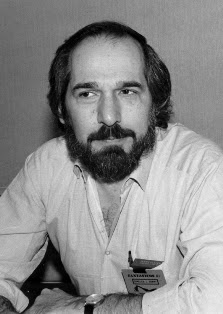
Charles L. Grant


During his lifetime, Grant won two Nebula awards, the World Fantasy award, and life achievement awards from The British Fantasy Society and the Horror Writers Association.

Long out of print, Grant's entire body of work is now available again in terrific ebook editions, courtesy of Crossroad Press. If you are a fan of stylish, understated, imaginative horror with memorable characters and which drips with menacing atmosphere, pick any horror title by Grant and it will hit the spot, and then some.

But who was this artist who created these shadowy, autumnal landscapes, who so mastered the art of scaring readers with seemingly little effort? Acclaimed and prolific novelist Kathy Ptacek, who was married to Charles L. Grant from 1982 till his passing in 2006, and who also happens to be one of his biggest fans, tells us all about Grant.

Charles was so prolific, writing under a variety of names, and in so many genres. I know he was mainly known for his horror fiction, but did he have a favorite genre out of all the genres he wrote in?


Well, he loved horror, of course, but I know he really had a fun time writing his humorous fantasy. He didn’t use humor in the dark stuff he wrote, so with his Kent Montana books and the others, he had a chance to develop puns and let people know about that twinkle in his eye that so many people have commented on.

Charles always talked about and championed what he called "Quiet Horror", horror fiction that focuses more on mood and suspense than on gore and gross-out effects. Can you elaborate on what "Quiet Horror" exactly meant to him in terms of language and style?

"Quiet horror" was never in-your-face writing. He wanted the horror, the eerieness to creep up on the readers ... to make them uneasy, unsettled. He thought that was best accomplished by the mood. He was sort of the master of understatement ... He was never explicit in any of the quiet horror ... He wanted the readers to fill in the gaps with their mind. One time, he got a letter from a woman, who talked about how horrible and bloody his work was, and she was so upset, etc. She mentioned this one scene in a book, in particular. Charlie and I looked at each other, because there was no way he provided any graphic details. That was my territory. Anyway, we found the book and the end of the chapter that she mentioned, and I think it was something along the lines of the monster–or whatever–pulled the character’s arm off. That was it. No description whatsoever. But this woman’s mind had painted a bloody scene ... all because, I think, Charlie had laid the groundwork in the earlier part of the chapter. She was so invested, so involved in that storyline, that it played out in her mind ... even if the words weren’t there on the page.

Charles was a very versatile writer and editor, jumping from one genre to the next, and from one form to another. With so many interests, what was his writing schedule like, and how did he choose his projects?

He usually got up later in the morning (he worked until the wee hours of the night), then he would play a computer game ... while he was waking up. He’d put on a CD to listen to while he was playing–and thinking. After he woke up a bit, he would open files and look at what he had written the previous day and night. By the way, the CD was usually the soundtrack to [John Carpenter's] THE FOG. I knew when the music stopped, that he had settled down to work. He worked usually until dinner, then would come downstairs. We might watch a movie or two, and then sometime after 11 or so, he’d go back upstairs to work some more. Of course, if he was on deadline, he might be up there longer.

As to how he chose his projects, I don’t know. I think they chose him. Sometimes, a word or phrase or something he saw in a movie or in real life would spark an idea. He did have a lot of deadlines, so, of course, he worked on those books and short stories first, but sometimes he would have a side project. He kept a steno notebook by his side when he would read downstairs or work in his office. He would jot down words he saw in books; he knew them, of course, but maybe he didn’t use them all that often. Or he’d see a phrase that interested him. And I know that he would review those pages before writing ... I would guess that sometimes a word or phrase would leap out at him then.

Arguably, Charles's most well-known books are the "Oxrun Station" series. Do you know what made him go back again and again to the strange and wonderfully dark world of Oxrun?


I don’t know why he returned to it so often, except he loved that little town. And so did I. I had asked him to write a BIG Oxrun Station novel for me, and he planned on it. But, unfortunately, he ran out of time.

It is astounding to me that with such a wealth of terrific and cinematically written stories under his belt, Charles's work never got the feature film treatment. I know that some of his short stories were adapted for TV, but never as a feature. Why is that?

I don’t understand that, either. The Pet was optioned once, back in the ‘80s, by a well-known director, but he ultimately passed on it because he didn’t know how to make the horse spooky. Well, that’s what we heard, which just astounded me. This was long before CGI, but I could name easily five or six ways to “spook” up the horse ... I am hoping someone from Hollywood gives a holler one of these days about Charlie’s work. I would love to see some of it filmed. I think the Oxrun Station stories and novels would work really well as a TV series. Hint, hint to anyone out there with TV connections! Heh!

The Pet was a big hit for Charles, back in 1986. It's an elegiac, haunting book, and somewhat different from most of his work. It's also one of his longest books. Can you talk a little bit about the success of the book, and what, in your opinion, made it connect with readers to such an extent?

Everyone was a teen at one time, and I think that much of what the boy goes through, what he thinks, how he reacts ... it’s something most people can identify with. I think that it is amazing–and gratifying--that so many people always talk about The Pet when they mention Charlie’s books.


Charles had a special friendship with Stephen King, and King wrote Charles one of the greatest blurbs in all of horror fiction, calling Charles "one of the premiere horror writers of his or any generation." So how did that friendship start, and what was their relationship like?

The two shared the same agent in their early days of writing and publishing, and I guess that’s how they met. I remember that Charlie said that he and Steve and the agent would often go out for a breakfast meeting and that because none of them had much money in those days, they would share the meal.

My introduction to Charles's work was through a copy of "Black Oak: Genesis" [the first in the "Black Oak" series of five books, about a private investigation firm that focuses on the paranormal]. I loved it. It was like reading a contemporary version of those classic short stories about "psychic detectives", like Algernon Blackwood's John Silence, or Seabury Quinn's Jules DeGrandin. I read in an interview that Charles started the series so that he could do in it what he wasn't allowed to do on his "X-Files" tie-in books [Goblins and Whirlwind]. Charles passed away before he could finish the series. Do you know what he had in mind for the future of the series?

I’m glad you enjoyed Black Oak! So many people wrote to him about that ... I still received emails and notes from folks about the series, even after his death.

He did have a sixth book for the series, but it wasn’t finished at the time of his death. I don’t know what he had planned for the future, but I’m in the process of talking to another writer to finish the book. 


What were Charles's favorite books of his? And who were some of his favorite writers?

I think all his books were his favorites! Heh! But I do think the three books based on the Universal movie monsters [The Soft Whisper of The Dead (1982), The Dark Cry of The Moon (1986), and The Long Night of The Grave (1986)], and initially published in hardcover by Donald Grant, and now in E-book format from Crossroad Press with the same wonderful covers by Jill Bauman, held special meaning for him. He never listed contemporary writers as his favorites–he did have them, but he really didn’t think it was fair to many authors. But one of his all-time favorites from long, long ago was Nathaniel Hawthorne.

Many of Charles's books have been re-released as e-books through Crossroad Press. They are wonderful editions, and a treasure trove for fans like myself, who were struggling to find copies of his older books and books written under pseudonyms. How did that come about, and what can we look forward to in the future? Any unpublished work, perhaps?

At one time, E-books were brand new ... an emerging form of publishing, and I suspected they would take off, but I had no idea where to turn. I was approached by a number of other presses, and I was really appalled at their options and rates. The royalty rate was sometimes barely half–for the writer!–and one place wanted me to PAY them $300 each for 3 books to be published, and then, supposedly, I would recoup the money via royalties. No, I don’t think so. I took my time and didn’t rush into any deals. I was doing this without the benefit of an agent, and I wanted to make sure I got it right; it really was such a new form of publishing, so there weren’t a lot of people I could turn to for advice; I figured I would let common sense guide my hand. And then Dave [David Niall Wilson, CEO of Crossroad Press] contacted me, and we talked about things. I had worked with him when he was President of the HWA, and I had known him from long before that when he edited his magazine, THE TOME. I liked what I saw on the contract, and signed up, and it has been an incredible experience. I am really thrilled with Crossroad and Dave Wilson and David Dodd. Thank you, guys!

I am still looking for some of Charlie’s unpublished stuff, but there isn’t much, sadly. He sold most of what he wrote, so it’s not like he has a shoebox with unpublished manuscripts lurking under the bed! I wish there were. I was hoping to find more short stories, but I still might.

I want to talk a little about your own work. Did you always know you wanted to be a writer?

Thanks. No. I wanted to be an artist or an archaeologist. But in ninth grade, we had to write a short story for my English class. I didn’t have a typewriter in those days, so I wrote it longhand. It was based on THE MAN FROM U.N.C.L.E., and my teacher loved it and wanted to read it aloud to the class. I was so shy in those days that I said no. Sheesh. But at that point I decided I liked writing, but I didn’t know how I could write fiction and make a living (I was clueless in those days!), so I took journalism after that, and that was my major in college. I still wrote fiction, but not a lot. And I was very fortunate to have a wonderful professor in college who encouraged me to write more. This was the late Tony Hillerman, the bestselling mystery writer. At the time I was in his classes, his very first mystery had just been published. I was so amazed to know a real-life writer at that time. Later, after I sold my first novel, I joined his First Friday luncheons where a lot of other New Mexico writers would get together to have lunch and talk about everything.

You're an eclectic writer, going from monster movie homages like Gila!, to literary horror like Ghost Dance, to Young Adult fiction like The Hunted. How do you choose your next project, and do you enjoy writing in so many genres?

I love to write in the different genres because I love to read so many varied things. I have never read in just one category ... I do read a lot of nonfiction (and I also have had a number of credits in different magazines, including some short fiction about canals in SKYLANDS MAGAZINE) as well. But I am fascinated in just about anything and everything. I have a friend who said to me once that she never knew anyone who was interested in so much. I don’t know if that’s from my journalism training or if it’s just because I’m basically a nosy person ... which goes back to the journalism, I guess. 

As for how I choose my next project ... it’s hard to say. I write what strikes me. When historical romances were hot in the ‘80s, I was writing those ... I love history, and this allowed me to do tons of research, which I really enjoy. Actually, most of my novels are historical, even the fantasy.

Who are your favorite writers, and what have you read recently that you recommend to fans of your work?

One of my favorite writers is Charlie, and I think that fans should read his work. It is nothing like mine. In fact, we had thought once about writing an historical romance together, but our styles differed so much and our interests in history didn’t mesh, so we said, never mind! We used to laugh about that ... the book that never was!

What are you working on at the moment?

I’m actually working on a poem. I just started to write poetry in the last few years, and I enjoy it quite a bit. I haven’t written many poems, and I do want to work on more. I like poetry because each word has to say what a paragraph or more would say in a story. It’s a challenge.

And I do have an idea for a novel. I was set to do some research in New York state, but then the virus hit, and I canned the idea of a road trip. But I still might do that. And a short story idea popped into my head yesterday, so I need to find some time to jot down some notes.


What advice would you give to young writers, especially ones who want to write horror and fantasy?

Read, read, read. Read everything and anything; don’t stick to one genre. Same with writing. Just do it. Don’t think you have to have your writing area just so or that you can only do it at a certain time of the day or when the moon is full or whatever ... Just put down those phones, look into the distance, think a bit, then sit down and write. It doesn’t have to be a complete story or chapter from a novel ... Write a sentence ... a phrase. You can come back and expand on it later on.

I have never been an every-day writer, but for several years in February (this year it was February through part of April), I sit down and write the opening sentence to a short story ... I do this every single day in February. Why that month? I don’t know. Sometimes, I’ve struggled to complete a sentence, but on other days I’d have a number of sentences, and sometimes those would become paragraphs and even pages. At the end of the month, I would reread what I wrote. A lot of it will never see the light of day, of course ... but some of it sparked my interest, and I expanded those opening lines into short stories. And then I sent some of those out to various markets and sold them, which was fantastic. I think this is a fun exercise for any writer to try ... Do it for a week if a month is too long. I’ll be doing it again next February, and I invite people to contact me on Facebook to let me know how they’re doing with the exercise.

Oh, and one other piece of advice? Never sneer at another genre that you don’t write in. When I was writing historical romances, I remember that many people had nothing good to say about it, and the same with horror. It’s all writing, and it’s all good, and writers should support each other.

Thanks so much for you time.

Thank you for asking me.

Charles L. Grant and Kathy Ptacek


Text © Ahmed Khalifa. 2020.

Ahmed Khalifa is a filmmaker and novelist. He is the writer/director of the feature film Wingrave, released on Netflix, and the author of a number of novels and short stories, including the YA horror novel, Beware The Stranger, available on Amazon. Find him on Twitter @AFKhalifa and on Facebook @Dark.Fantastic.AK·Writer

Sunday, March 22, 2020

Book Review: GHOUL. By Michael Slade **** out of *****

Ghoul, the second in the loosely connected "Special X" series by Canadian author Michael Slade, is a hard book to categorize. It's part horror, part psychological thriller, and part police procedural. But it's also much more than that. With Ghoul, Slade (which is actually an alias for writer Jay Clarke and a number of co-writers) has come up with a formula so unique, so strange, and so potent, it's basically a new genre unto itself.

The plot, which centers on the hunt for two spree killers - one obsessed with blood, the other with horror fiction, especially Lovecraft, is a dizzying spiral down  a series of graphic set-pieces, red herrings, and nightmarish imagery; and the protagonists, CID Hillary Rand from New Scotland Yard, and RCMP officer Zinc Chandler, are fleshed out and likable. But Ghoul is not really about characters. It's almost all story, and what a story it is. On the surface, this is an addictive, compelling, and wholly entertaining psychological thriller with horror overtones. But on another level, this is also a clever and well-thought out meditation on the nature of horror fiction, and the never-ending debate on its effect on society. It sounds ambitious, and it is, but Slade pulls it off for the most part, delivering a fascinating, multi-layered thriller that is unlike any other, and which is brimming with ideas and wit. He only falters a little near the end, with a climax so complex it almost buckles under its own weight, and an overlong section full of psychobabble, which tries to tie up the plot's loose ends and explain away the killer's disturbing motives.

With his debut, Headhunter (1984), Slade proved to be a force to reckon with. With his second book, Ghoul, he proves to be one of the most original thriller writers of the past fifty years. Highly recommended.

Text © Ahmed Khalifa. 2020.

Ahmed Khalifa is a filmmaker and novelist. He is the writer/director of the feature film Wingrave, released on Netflix, and the author of a number of novels and short stories, including the YA horror novel, Beware The Stranger, available on Amazon.

Wednesday, March 11, 2020

Book Review: FEAR STREET (SUPER CHILLER): THE NEW YEAR'S PARTY. By R. L. Stine *** and 1\2 out of *****

Fans of Fear Street, YA, or just plain fun horror books, shouldn't miss this entry in the Fear Street - Super Chiller series.

Part supernatural thriller, part murder mystery, this tale about a group of teens thwarted by a mysterious killer after a supposedly harmless prank goes horribly wrong, is, hands down, one of the best Fear Street books R. L. Stine has ever written, with twists and turns aplenty, and a thrilling double twist.

Recommended, as is the entire Super Chiller series, which are edgier and longer than the usual Fear Street books.

Text © Ahmed Khalifa. 2020.

Friday, February 21, 2020

Book Review: THINNER by Stephen King (as Richard Bachman) **** out of *****

The last book to be published under the Richard Bachman pseudonym before it was revealed that Bachman is actually Stephen King, Thinner is the closest in tone and subject matter to what is usually considered a “Stephen King” book than the rest of the Bachman books. It is the only Bachman book to feature a supernatural threat - the overweight protagonist Billy Halleck, after accidentally running down an old gypsy woman, is cursed by her father, and starts losing weight at an unnatural and fatal rate -  and it has more dark humor than any other Bachman novel. It is a brilliant, harrowing, often funny, and brutally dark tale of suspense.

Here King is at his most effective, with honey-smooth prose and impeccable storytelling. It is a testament to King’s ability as a writer that a book with a concept this unpleasant, can be such a pleasure to read. This is King at his absolute best, and it is arguably the second best Bachman book, right behind The Long Walk.

It is a great loss to the world of literature that Bachman was outed as Stephen King, as King seemed to be having a blast writing under an alias, with his writing darker and more energetic than in many of his works under his own name.

King later published two other books under the Richard Bachman alias (with the heading “Stephen King writing as Richard Bachman”), The Regulators and Blaze, but they didn’t really feel like vintage Bachman. So do yourself a favor and grab a copy of the out-of-print edition of The Bachman Books that includes Rage, and a copy of Thinner. You won’t regret it.

Text © Ahmed Khalifa. 2020.

Watch the expanded video version: 


Sunday, November 6, 2016

Book Review: HELLRAISER: THE FILMS AND THEIR LEGACY by Paul Kane

Essential Reading for fans of the series and genre, filled to the brim with detailed information on all aspects of the franchise, and written with energy and passion.

Tex © Ahmed Khalifa. 2016.

Tuesday, February 19, 2013

Book Review: R. L. Stine's Fear Street Sagas: The Hidden Evil. By Wendy Haley


Remember back in the late 80's - early 90's when the Fear Street books were all the rage among tweens and young teens? I wasn't one of those, I am afraid, as I am a little too young to have been the right age at the right time. But I did discover R. L. Stine and Fear Street about a decade ago, and, I have to admit, I found many of the books enjoyable, light, and occasionally very silly reads. But there's a reason why Stine is one of the most successful authors of all time, and that is his formula for an unputdownable book: Short sentences, short paragraphs, short chapters, cliffhangers at the end of each chapter, and plots that don't tax the  reader's brain. The Fear Street books are brain-candy at its most fun.

Among the many off-shoots and spin-offs of Fear Street published were the "Fear Street Sagas", which recounted the adventures of the original Fear (or Fier) family. Most of these were written by other authors, and The Hidden Evil was written by Wendy Haley.

The Hidden Evil is unlike any other Fear Street book I've read, with the story being a cross between the darker Fear Street books and Henry James' The Turn of The Screw. This is an entertaining Gothic Ghost Story set in 19th century Boston, about a young governess (who has a terrible secret of her own) who takes charge of two young boys, one of which seems to be a homicidal maniac who hears his recently dead mother talking to him at night. What ensues is a slight tale, of murder, ghosts, and secrets, with an effective twist ending.

This isn't literature, folks, but it sure is one entertaining, little book, that is perfect for those nights when you feel like reading something, but don't feel up to reading something heavy. After all, that's what all of R. L. Stine's books are made for. To pass the time.

Text © Ahmed Khalifa. 2013

Ahmed Khalifa is a filmmaker and novelist. He is the writer/director of  several short films, and a feature, released on Netflix. He is also the author of a number of novels and short stories, including the YA horror novel, Beware The Stranger, available on Amazon. Find him on Twitter @AFKhalifa and on Facebook @Dark.Fantastic.AK·Writer