Wednesday, March 23, 2022

The Overlook: THE CARD COUNTER (2021) - THE CAVES OF NIGHT by John Christopher - THE LOST CITY (2005)

Listen to the reviews:
Listen to "Reviews: The Lost City - The Card Counter - The Caves of Night" on Spreaker.

(C) Focus Pictures.

The Card Counter (2021): Paul Schrader is a brilliant filmmaker, when he wants to be. American Gigolo, Forever Mine, and First Reformed are great films. But when he loses control of his talent, like in Dog Eat Dog, for example, look out. The Card Counter is not as bad as that, but it’s not very good, either. It’s an example of a filmmaker more interested in his message, in teaching his audience, than in making a good movie. The performances feel unpolished, the characters are uninteresting, and the story just isn't compelling in any way. A disappointing misfire from a singular filmmaker.

Monday, March 7, 2022

Film Review: THE MALTESE FALCON (All Three Versions)

Listen to this article here:
Listen to "Film Reviews: The Maltese Falcon (Special)" on Spreaker.

Considered a classic, mainly due to its inventive casting and stylish direction, The Maltese Falcon (1941) wasn’t the first attempt to adapt Dashiell Hammett’s classic mystery novel.

(C) WB Pictures.


Directed by Roy Del Ruth, and starring Ricardo Cortez as morally ambiguous detective Sam Spade, this first cinematic version of the novel is a fun, compelling take on the story, with Cortez a standout as Spade. Unlike Humphrey Bogart’s snarling portrayal of Spade, Cortez is, under the tough guy façade, all smiles and charm, turning an otherwise standard and dated mystery into an entertaining and memorable film.

The script for this version does all the heavy lifting for all adaptations to follow, and John Huston’s famous adaptation borrows liberally from the structure of this version. With the exception of some of the characterization of the side characters and a different ending, the main difference between the 1931 and the 1941 versions is the tone.

Led by Cortez’s lighthearted portrayal of Spade, this version is less morally complex, and, technically, much less polished than the 1941 version. But, arguably, Ricardo Cortez’s portrayal of the legendary detective is the best.

In 1936, another adaptation of The Maltese Falcon was released, this time called Satan Met a Lady, and starring Warren William as Ted Shane, a renamed version of Sam Spade. William plays Shane/Spade as a sleazy con-artist with barely any scruples, which, of course, sets a completely different tone to the whole affair than all other versions.

(c) WB Pictures


But what a fun film Satan Met a Lady is! Thanks to an energetic script, ample support from a young Bette Davis as the femme fatale, and kinetic direction by cinematic wizard William Deiterle, this adaptation of the novel is a fast-paced blast, and probably the most entertaining out of the three versions. Where it falls short is in its portrayal of the villains, who come off as weak and forgettable. But, overall, Satan Met A Lady is an original take on The Maltese Falcon, and one worth rediscovering.

Five years later, the most famous adaptation of the novel was released, as The Maltese Falcon, scripted and directed by John Huston in his directorial debut. This version has been analyzed and lauded to death, so there’s little point in lingering over its merits. What is fascinating to note, though, is how stagey and confusing this version is, something which all adaptations of the novel struggle with. Which begs the question: why is Dashiell Hammett’s novel so attractive to filmmakers? Its plot is overly complex; its settings limited; and almost all of its characters are unsympathetic. These aspects of the novel prove difficult to overcome in the film adaptations, and Huston, surprisingly enough, seems to struggle with them the most, never fully succeeding in transcending the limitations of the original story.

(C) WB Pictures


What the 1941 version has in spades (no pun intended) is polish. Thanks to Huston’s tight direction and the stylish cinematography of Arthur Edeson (who also shot 1936’s Satan Met A Lady), this version is the most visually accomplished of all the adaptations. Bogart’s take on Spade is interesting, but it’s too humorless for its own good, and Mary Astor delivers what can only be called a subpar performance. But Sydney Greenstreet as The Fatman, and Peter Lorre as Cairo, steal the show, and Huston’s emotional climax proves to be the best ending of all three versions.

Text © Ahmed Khalifa. 2022.


Ahmed Khalifa is a filmmaker and novelist. He is the writer/director of several short films and a feature, which was released on Netflix, and the author of a number of novels and short stories, including the YA horror novel, Beware The Stranger, available on Amazon. Find him on Twitter @AFKhalifa and on Facebook @Dark.Fantastic.AK·Writer


Sunday, February 13, 2022

Book Review: DRACULA: ASYLUM by Paul Witcover **** out of *****

Designed as a sequel to Universal's infamous 1931 film adaptation of Bram Stoker's Dracula, starring the immortal Bela Lugosi, Dracula: Asylum is a rare book, in that it is a sequel that took me by surprise. As a huge fan of the 1931 film directed by Tod Browning, I sought out the book primarily due to it being an official sequel to that film, expecting a fun, quick read, with a thick-accented Dracula roaming the streets of London, drinking blood and spouting one-liners. What I got was something else entirely.

Author Paul Witcover uses the 1931 film and Stoker's novel as a starting point and then proceeds to transcend both, with a novel so well-written, so ambitious in its complexity and ideas, that it becomes a masterpiece of dark fantasy that manages to achieve the impossible: Add a new twist to the Dracula mythos.

The book takes place in London during WWI, following Dr. Lisa Watson, a psychiatrist who is transferred to the Seward Sanitarium for shell-shocked British soldiers, hoping to help her fiancée get back his memory, which he's lost due to the traumatic experiences he suffered in battle. Now he thinks himself Sherlock Holmes and doesn't remember anything about his true identity. Meanwhile, in the catacombs of the asylum, Renfield, who is still alive, but has become a mentally damaged mute, discovers that the corpse of Count Dracula, his master, is still there, with a stake through its heart, waiting to be revived. So he pulls out the stake, reviving the dark Count, and all hell breaks loose, as Dracula, whose slumber for the past twenty years has strengthened his psychic powers, plans to destroy the world.

Although the above synopsis doesn't do the story justice, the less told about the twists, turns and revelations of the plot, the better. Suffice it to say that if you think you know where the story is going, think again, as Witcover has a multitude of ideas and surprises under his sleeve, and, with his rich, stylized Gothic prose, lays them out one by one, continuously delving into darker psychological territory. Witcover's Dracula is the most cunning, malevolent version of the Count since Bram Stoker's; an evil, shrewd master of darkness and manipulation who is much more dangerous than previously thought. This Dracula's evil is almost biblical in scope. While the main characters, Lisa and Denis, are three-dimensional and flawed, and Witcover allows us to go under their skin to see the light and darkness within them.

Despite the novel's overly dark tone and Witcover's lifting of a couple of ideas from the films They Might Be Giants and Dracula 2000, the writing is so rich, the attention to detail so admirable, the story so original and well-plotted, that this novel deserves to be called a near-masterpiece of dark fantasy that transcends genres. And, if there's any justice in the world, it should become a classic.

Text © Ahmed Khalifa. 2011 - 2022.

Video Version:


Ahmed Khalifa is a filmmaker and novelist. He is the writer/director of several short films and a feature, which was released on Netflix, and the author of a number of novels and short stories, including the YA horror novel, Beware The Stranger, available on Amazon. Find him on Twitter @AFKhalifa and on Facebook @Dark.Fantastic.AK·Writer

Sunday, January 30, 2022

New Episode of THE DARK FANTASTIC PODCAST Now Live

 In this episode:


- An interview with musician and composer Craig Safan (The Last Starfighter, A Nightmare on Elm Street 4), in which he talks about his work, his love of L.A, and his latest album L.A. Ex.

- Your host, A.K., shares some of his favorite books and movies about L.A.

- A clip from DRAGNET, the classic TV show set in L.A.

- Book Trailer: BAD DREAMS, a novel by A. Kale, available on Amazon.


Listen here: Listen to "Episode 9: A Special L.A. Episode. Guest: Composer Craig Safan" on Spreaker.

Thursday, January 27, 2022

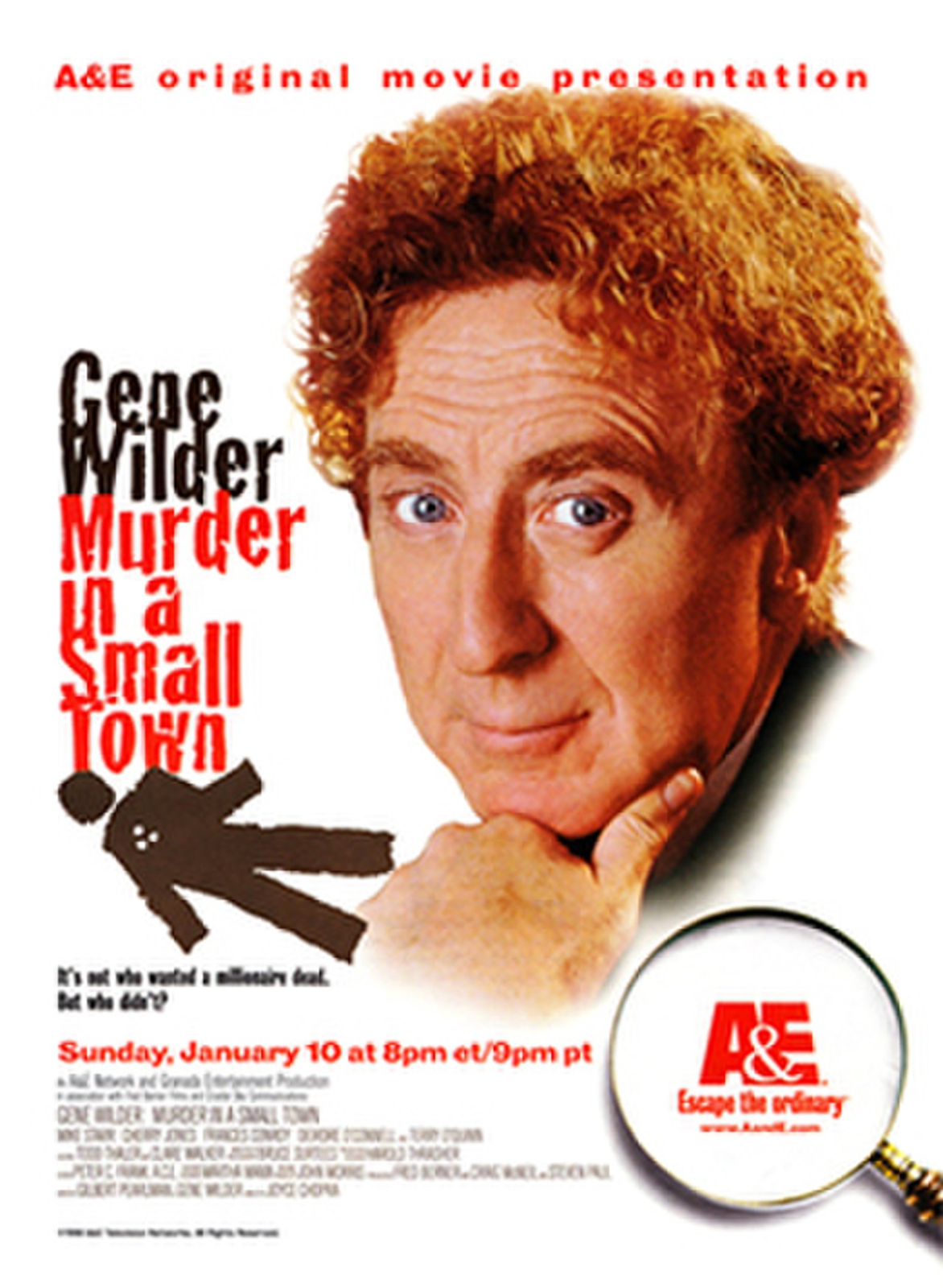
Double-Feature Review: MURDER IN A SMALL TOWN/THE LADY IN QUESTION (1999)

After a string of hits in the 1970s and 1980s, a few of which he either wrote, co-wrote, or directed, Gene Wilder’s fame started to slow down, with a number of critical and box-office disappointments. After a stint on network TV with his own sitcom, Something Wilder (1994-95), and a battle with cancer, which he eventually won, Wilder was content to ease into semi-retirement, appearing in small plays, and doing a number of cameos in TV movies.

Which brings me to Murder in A Small Town and The Lady in Question, two TV movies that aired on A&E in 1999. These two delightful mysteries, co-written and starring Wilder and directed by Joyce Chopra, and set in 1930s Connecticut, allow Wilder to showcase his talents as an actor and writer, and were the last time he ever took a starring role.

Murder in A Small Town, the better of the two features, introduces Wilder as Larry “Cash” Carter, a former actor now working as a director in a local theater, who gets entangled in a complex mystery involving the death of a local millionaire who has a long list of enemies. Wilder, and his charming supporting cast (which includes Cherry Jones and Mike Starr), glide through the film with an easy, likable panache, and the whole affair comes off as classy, stylish, and wonderfully entertaining for fans of classic mysteries.

The second feature, The Lady in Question, is more problematic, but still enjoyable, with its serpentine plot involving Nazis and espionage, large cast, and unexpected denouement. But it comes off as less polished and slightly incoherent, with a meandering script, and surprisingly less focus on Wilder’s character, who somewhat takes a backseat throughout most of the film.

The tone is also less consistent and more self-indulgent. But still, this is a classy piece of work, and a great choice for a winter night.

Both films showcase Wilder at his most versatile and laid-back, and are a must watch for his fans and fans of classic mysteries.

Text © Ahmed Khalifa. 2022.

Video Version:


Ahmed Khalifa is a filmmaker and novelist. He is the writer/director of several short films and a feature, which was released on Netflix, and the author of a number of novels and short stories, including the YA horror novel, Beware The Stranger, available on Amazon. Find him on Twitter @AFKhalifa and on Facebook @Dark.Fantastic.AK·Writer

Monday, January 3, 2022

THE DARK FANTASTIC'S BEST DISCOVERIES - 2021 EDITION

Books:

© Berkley

1- THE VOICE OF THE NIGHT By Dean Koontz. : First published in 1980 under the pseudonym Brian Coffey, and later released under his own name in 1991, The Voice of The Night is one of Dean Koontz’s best, yet least known, novels. It is one of his most understated books, and his only coming-of-age tale. Read or listen to the full review here.

Sunday, January 2, 2022

Book Review: NAMELESS: THE COMPLETE SERIES. By Dean Koontz *** out of *****

© Amazon.

A literary experiment comprised of 12 interconnected novellas, about an amnesiac vigilante who hunts down killers who have escaped the grip of the law. This is Koontz at his darkest and angriest, a side of him that readers rarely get to see, especially in the past 30 years or so. The main character is interesting if too enigmatic for his own good, and the 12 stories vary in quality and style. The first season is more episodic in nature, which makes for a somewhat uneven bunch of tales, but with each installment the main story, of the secrets behind Nameless's mission, gets darker and more exciting, all leading up to an ending that, though not very surprising, is powerful and moving, if a bit troubling in its implication that violence maybe inescapable and comes at a high cost. A must for Koontz fans, and a perfect introduction to readers new to his work.

Text © Ahmed Khalifa. 2022.

Video Version:


Ahmed Khalifa is a filmmaker and novelist. He is the writer/director of several short films and a feature, which was released on Netflix, and the author of a number of novels and short stories, including the YA horror novel, Beware The Stranger, available on Amazon. Find him on Twitter @AFKhalifa and on Facebook @Dark.Fantastic.AK·Writer