Thursday, November 17, 2022

Film Review: LOOKING FOR MR. GOODBAR (1977) ** and a 1\2 out of *****

 
(C) Paramount.
Released to much critical acclaim and box-office success, Looking For Mr. Goodbar (1977) encapsulates everything that was wrong with the excesses of 1970's cinema. Adapted from the controversial novel of the same name, Looking For Mr. Goodbar tells the story of Theresa, a young schoolteacher in 1970's San Francisco, who rebels against her strict Catholic upbringing by slowly descending into a life of casual sex, drugs, and bohemianism.

Richard Brooks, who adapted the novel for the screen, directs with a grimy, uncontrolled style, delivering a film that is morally and psychologically shallow, shrill, and borderline repugnant. Exploitive to the core, every minority under the sun is portrayed as either a victim or unstable, and Brooks' attempt at being "hip", by drowning the film in disco tunes and jump cuts, made the film look dated as soon as it was released.

Much has been said about Diane Keaton's performance as Theresa, the sexually adventurous/aggressive protagonist, and it is true that Keaton delivers a mesmerizing performance, but it is also a smug one, and a portrayal that doesn't wholly gel with the writing, producing a character that is equal parts unlikable and tragic. A young Richard Gere as a hyperactive gigolo, and Tom Berenger as a troubled and sexually confused ex-con, are the true scene-stealers in the film.

The epitome of 1970's "socially-conscious" dramas, this is a dated and unredeeming descent into nihilism and ugliness that is not deserving of its praise. Maybe that's the reason why the film has been so hard to find for many decades.

Text © Ahmed Khalifa. 2022.

Ahmed Khalifa is a filmmaker and novelist. He is the writer/director of several short films and a feature, which was released on Netflix, and the author of a number of novels and short stories, including the YA horror novel, Beware The Stranger, available on Amazon. He is also the host of The Dark Fantastic Podcast. Find him on Twitter @AFKhalifa and on Facebook @DFantasticPodcast

Watch/Listen to Review here:

Sunday, November 13, 2022

Book Review: THE POE SHADOW by Matthew Pearl **** OUT OF *****

(c) Random House.
Whether you are into Poe or not, this novel is nothing short of astounding. After burning through it as quickly as I could (which I ultimately regretted doing, since I was so sad when it was over) because it was so compelling and entertaining, I had to sit back and admire how much Pearl has achieved with this book.

Not only has he attempted to solve the mystery of Edgar Allan Poe's death (a mystery which has proven insolvable for over a century) by using clues and evidence that he has gathered through painstaking research, but he has also written one of the best historical novels of all time.

This is a compelling, brilliantly written, meticulously plotted novel that people will continue to talk and argue about for years to come. And as a bonus, it's also one hell of an entertaining ride. Unmissable.

Text © Ahmed Khalifa. 2008 - 2022.

Ahmed Khalifa is a filmmaker and novelist. He is the writer/director of several short films and a feature, which was released on Netflix, and the author of a number of novels and short stories, including the YA horror novel, Beware The Stranger, available on Amazon. He is also the host of The Dark Fantastic Podcast. Find him on Twitter @AFKhalifa and on Facebook @DFantasticPodcast

Friday, November 11, 2022

Film Review: ROB ZOMBIE'S HALLOWEEN II (2009) *** and a 1\2 out of *****

(c) Dimension
While Rob Zombie's remake of John Carpenter's original was a fierce and stylish film, Zombie's second time out is, well, something else entirely. With Halloween (2007), Zombie proved he could deliver one helluva an entertaining and scary film, and he managed to add enough new touches to the story to make it feel fresh and updated. But the fact remained that Halloween was, more or less, indebted to Carpenter's vision, and followed the same story, yet with what you might call revisions. What Zombie achieves with Halloween II is to make a film that's entirely his own, taking the Michael Myers mythos in a completely new direction, which is, for better or for worse, startlingly original.

The Plot: After barely surviving her battle with her brother, mass murderer Michael Myers, Laurie Strode tries to go on with her life. But her mind has been deeply scarred by her experiences, and after seeing visions of a still living Myers roaming about, continuing his killing spree, she begins to doubt her sanity. Meanwhile, Michael Myers, whose body was never found, turns out to be alive, and as he is haunted by visions of his dead mother and his younger self urging him to finish his work and "go home", he embarks on a journey back to Haddonfield and his sister, Laurie, whom he intends to kill in order for them all to be united in death as a family.

As the synopsis shows, Zombie takes the story in a bizarre direction, turning Laurie and Michael's tale into a twisted psychological drama, with hallucinatory visions and revelations that add an arguably supernatural bent to the story. But, in truth, one is never completely sure what Zombie is trying to do or say with this film, as the plot is confused, confusing and occasionally repetitive, and the tone of the film is unrelentingly grim.

But despite all that, Zombie succeeds in creating a stylish, visually lush, and narratively adventurous film that is unlike anything that has come before it in the long-running series. And the downbeat and disturbing ending packs a wallop and brings the story to a somewhat satisfying close.

Text © Ahmed Khalifa. 2022.

Ahmed Khalifa is a filmmaker and novelist. He is the writer/director of several short films and a feature, which was released on Netflix, and the author of a number of novels and short stories, including the YA horror novel, Beware The Stranger, available on Amazon. He is also the host of The Dark Fantastic Podcast. Find him on Twitter @AFKhalifa and on Facebook @DFantasticPodcast

Film review: ROB ZOMBIE'S HALLOWEEN (2007) *** out of *****

(c) Dimension

Rob Zombie's remake of John Carpenter's classic slasher film, is a strange beast. It tries to distance itself from the original's aesthetics, yet generously borrows from that film's plot devices, especially in the third act. Add to that a mediocre first act, a trashy second, and liberal doses of gratuitous violence and nudity, and you get a mostly uneven film.

That is, until the climax.

Zombie takes the ending of the original, combines it with a plot element from the sequel to Carpenter's original (also penned by Carpenter), and delivers a whopper of an ending.

Also, Zombie's take on Sam Loomis' character (the Van Helsing-type character that was Michael Myers' psychiatrist and, later, the one who hunts him down) is interesting and inventive, and is bolstered by Michael McDowell's charismatic portrayal of the character.

So, is it better or worse than the original? The answer is: it is a stylish, effective, shocking addition to the Michael Myers mythos, and it's way better than most of the sequels to the original.

Text © Ahmed Khalifa. 2022.

Ahmed Khalifa is a filmmaker and novelist. He is the writer/director of several short films and a feature, which was released on Netflix, and the author of a number of novels and short stories, including the YA horror novel, Beware The Stranger, available on Amazon. He is also the host of The Dark Fantastic Podcast. Find him on Twitter @AFKhalifa and on Facebook @DFantasticPodcast

Wednesday, October 19, 2022

Halloweens, Abominations, and Fan Expectations


I remember back in October of 2018, when I was sitting in a movie theater, waiting with bated breath for the lights to go down and the credits to roll. It had been a long wait, a wait of decades, to get the so-called definitive sequel to 1978’s Halloween, endorsed by John Carpenter, and starring the original scream queen herself, Jamie Lee Curtis.

Then the lights dimmed, the movie started, and, well, reality set in. About fifteen minutes into 2018’s Halloween, co-written and directed by David Gordon Green, I started to get this feeling that something was off. The film looked bland, had no discernible style, had no mood, only a kind of ugliness and a nasty attitude that rubbed me the wrong way. And as the end credits rolled, I felt so disappointed it almost hurt.

As a lifelong fan of the Halloween franchise, and of Carpenter’s oeuvre, I found Green’s Halloween to be the antithesis of the original Halloween. Where the original was atmospheric, elegant, stylish, and nuanced, this “reboot” was style-less, crude, vulgar, and smug. And, for the record, I really liked Rob Zombie’s take on Halloween, which was basically a white-trash/American Gothic version of Carpenter’s original, so it wasn’t like I wasn’t open to a little edge, a little grime, to spice things up.

Then came Halloween Kills, a trite, crass follow-up that amps up the violence to sickening levels, throwing everything but the kitchen sink in a cynical attempt to appeal to the lowest common denominator. While Green's Halloween script's left something to be desired, the writing in Halloween Kills is, for the most part, abysmal, with characters speaking stiff dialogue and acting in ways that defy all logic. I’m not even going to get into that timely “message” about mob violence.

Then came the finale, Halloween Ends, a smug, terribly written film which drags the Laurie Strode character through the mud, features one of the most self-indulgent and poorly conceived plotlines in the history of the franchise, and which is executed with the subtlety of a sledge-hammer. Even if Halloween Kills is technically more accomplished and stylistically less crude than its predecessors, it’s still a crushing disappointment, and a terrible ending to an abomination of a trilogy.

I’m being too harsh, you say? Surely, David Gordon Green’s trilogy is better than the bizarre Halloween 5 (1989) or the ludicrously plotted Halloween 6: The Curse of Michael Myers? Not really. Those films were basically low budget, quickly shot sequels without backing from a major studio, and didn’t have any input from Carpenter or Curtis. And they certainly weren’t produced by an Oscar-winning production company.

Gordon’s Halloween trilogy boasts higher budgets, a number of high-caliber screenwriters, backing by Universal and Blumhouse, and “input” from Carpenter himself. Gordon and company had every resource at their disposal to make good movies. They didn’t. What they delivered were three cynical, downbeat films, each worse than the one that came before it. Gordon and his team seem to be more interested in being edgy and abrasive, than in delivering legacy sequels that respect the franchise and the audience.

A big part of the blame has to fall on Carpenter’s shoulders, who has been constantly promoting this trilogy for four years, calling Green a great filmmaker, and praising the films to high heaven, which made fans, like myself, have sky-high expectations. One has to wonder if Carpenter’s self-confessed delight at receiving checks for doing nothing has something to do with it.

For me, after four years of waiting, watching, and enduring these films, I’m going to dim the lights, grab a bowl of popcorn, and watch a film that Carpenter has called an abomination. But, for my money, Halloween II (1981) beats the hell out of Gordon’s trilogy, a real abomination, any day of the week.


Text © Ahmed Khalifa. 2022.

Ahmed Khalifa is a filmmaker and novelist. He is the writer/director of several short films and a feature, which was released on Netflix, and the author of a number of novels and short stories, including the YA horror novel, Beware The Stranger, available on Amazon. He is also the host of The Dark Fantastic Podcast. Find him on Twitter @AFKhalifa and on Facebook @DFantasticPodcast

Tuesday, October 11, 2022

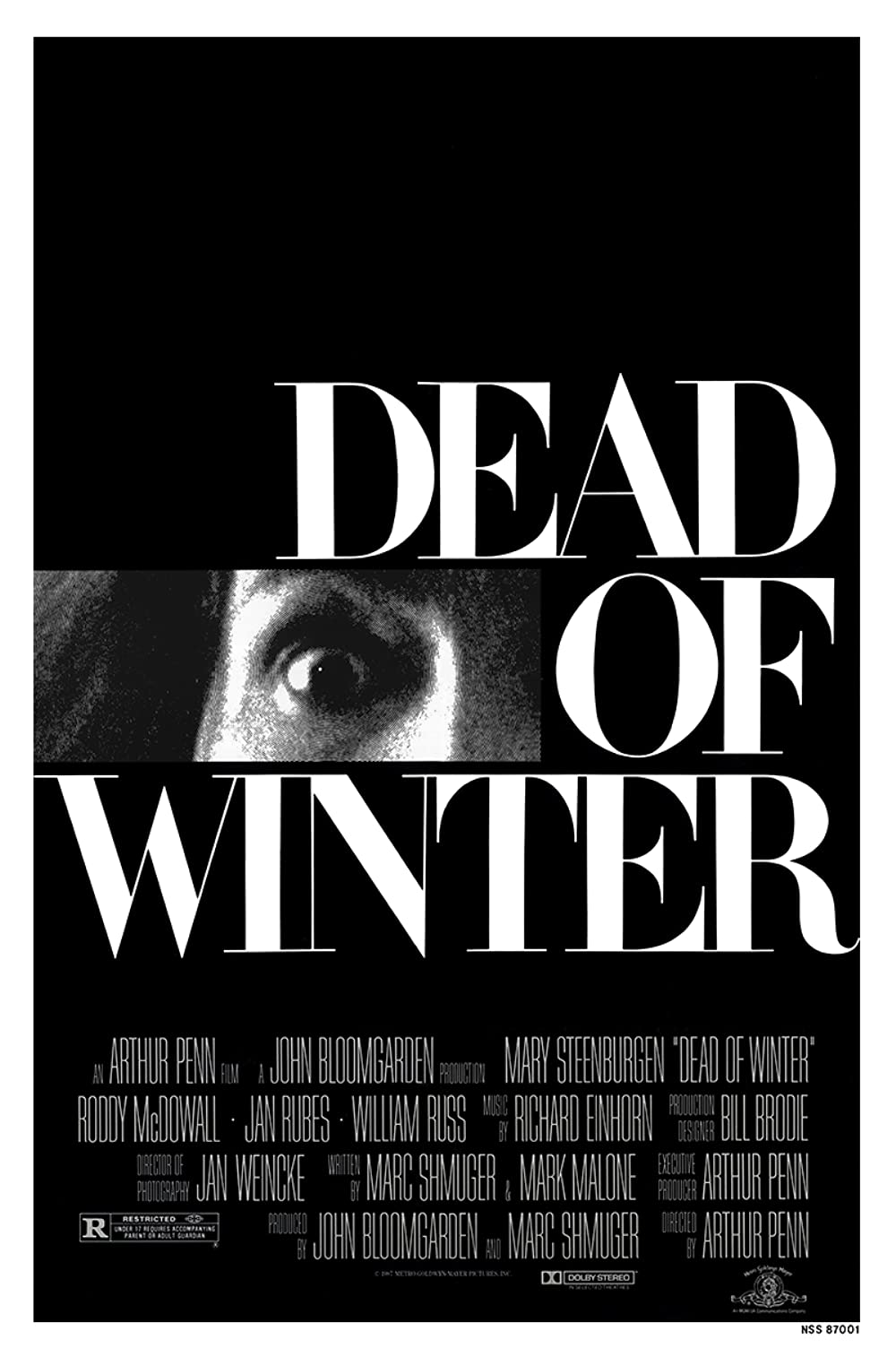
Quick Review: DEAD OF WINTER (1987) *** and a 1\2 out of *****

Compelling, atmospheric Gothic mystery, dripping with mood and menace, about a young, struggling actress getting embroiled with a couple of disturbed elderly men in an isolated old house during a winter storm. Roddy McDowell is terrific as a servile but unhinged assistant to Jan Rubes' charming - and over-the-top - psychopath. Arthur Penn directs with a steady hand, with lots of sly nods to Hitchcock, and Mary Steenburgen gives one of her better performances. The climax goes all-out Gothic shocker, and devolves into silliness, but, overall, this is a timeless suspense piece that is good for a chilly winter's night.


* A loose remake of Joseph H. Lewis's My Name Is Julia Ross (1945).

Text © Ahmed Khalifa. 2022.

Watch/Listen to review here:


Ahmed Khalifa is a filmmaker and novelist. He is the writer/director of several short films and a feature, which was released on Netflix, and the author of a number of novels and short stories, including the YA horror novel, Beware The Stranger, available on Amazon. He is also the host of The Dark Fantastic Podcast. Find him on Twitter @AFKhalifa and on Facebook @DFantasticPodcast

Saturday, August 27, 2022

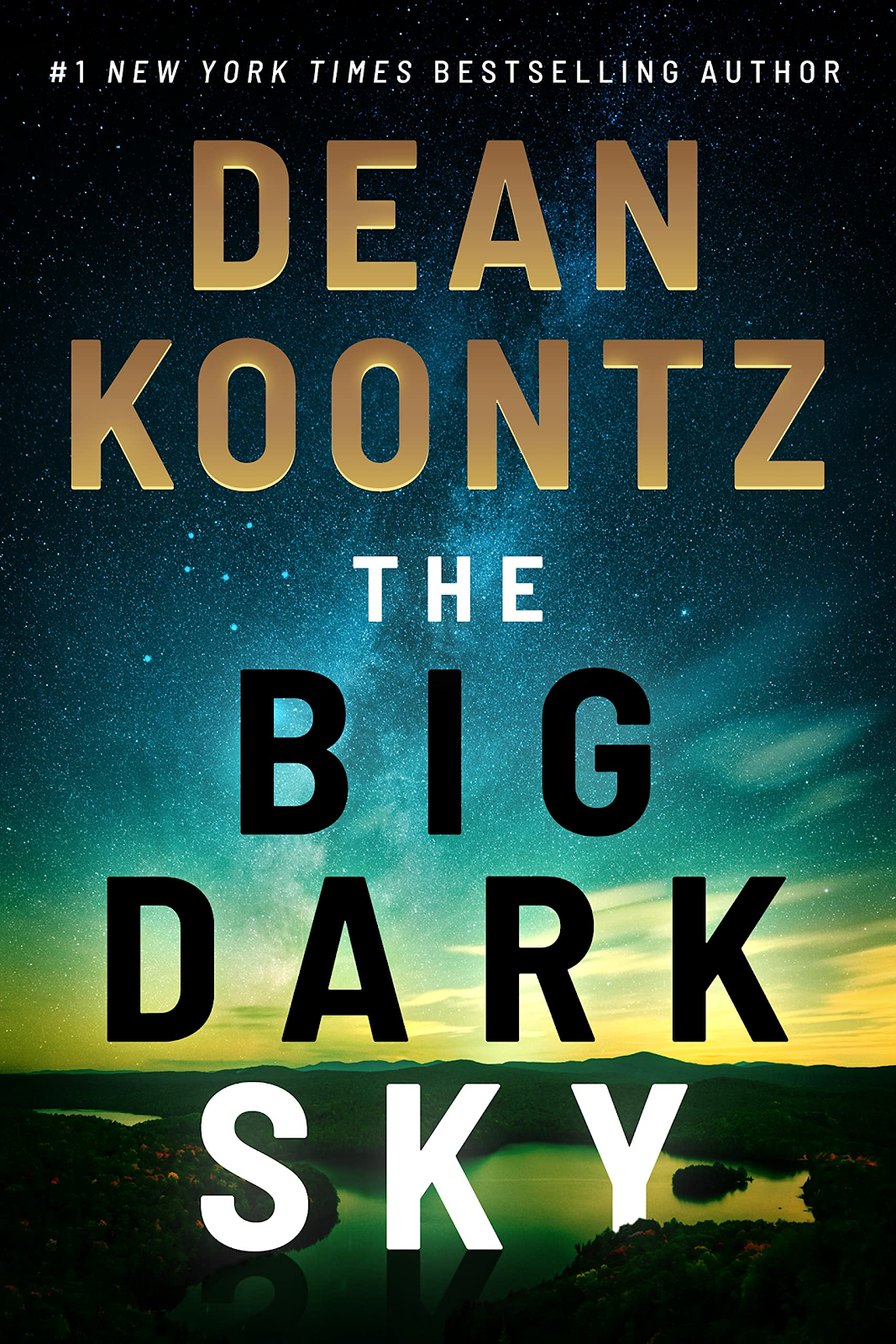
Book Review: THE BIG DARK SKY By Dean Koontz. *** and a 1\2 out of *****

(c) Amazon.

Dean Koontz returns to some of his favorite themes in The Big Dark Sky, letting his obsessions, fears, and hopes all come through loud and clear. And in doing so creates one of his most effective and memorable novels in years. Although Koontz came close with his wonderful novel Devoted, published in 2020, The Big Dark Sky is a better, more nuanced book in many ways. It is also much darker.

The plot: A group of people from different backgrounds has converged at a remote ranch in Montana. Each person has a reason to go there, from facing painful childhood memories, to investigating a series of strange phenomena, to escaping from a seemingly omnipotent killer. Each one of them is haunted, seeking answers to questions they can no longer ignore. Meanwhile, on the outskirts of the ranch, a disturbed visionary works on completing his manifesto of terror and mass murder, unaware that his fate is also connected to the ranch and the people headed there.

With echoes from some of his earlier books, especially Phantoms, Strangers, and Demon Seed, Koontz delivers a tale that is compelling, wondrous, and disturbing. It has a questioning, marveling quality and a nasty, darkly witty edge that have been missing from his books for years.

It isn't a perfect book, though, with a number of slow-going chapters near the beginning of the book, and a short slump around the middle section. But for the most part, the writing is crisp, the main concept fascinating, and the characters likable. And the villain is one of the most terrifying creations of Koontz's career. Highly recommended for fans and newcomers alike.

Watch/Listen to review here:


Text © Ahmed Khalifa. 2022.

Ahmed Khalifa is a filmmaker and novelist. He is the writer/director of several short films and a feature, which was released on Netflix, and the author of a number of novels and short stories, including the YA horror novel, Beware The Stranger, available on Amazon. He is also the host of The Dark Fantastic Podcast. Find him on Twitter @AFKhalifa and on Facebook @DFantasticPodcast