There are writers who write straight horror with populist leanings (Stephen King), and those who write horror that is playful and ebullient (Richard Laymon). There are writers who try to mishmash genres together, and, therefore, don't like to be labeled as "horror" authors (Dean Koontz). There are writers who try to elevate horror to something akin to "literary" fiction" (Peter Straub); and then there is Charles L. Grant.
Charles L. Grant (1942-2006) is, undoubtedly, one of the most underrated horror writers in history. He was prolific, writing dozens of novels and short story collections in numerous genres, as well as editing dozens of anthologies, the most famous of which is Shadows. He treated the genre with the reverence it deserves, and his style was unmistakably his own. He was one of the most flavorful horror writers to ever come out of the United States, his writing was never pretentious, and he basically invented "Quiet Horror", a style that focused more on character and atmosphere, than on graphic violence.
 |
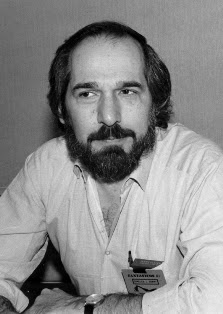
| Charles L. Grant |
During his lifetime, Grant won two Nebula awards, the World Fantasy award, and life achievement awards from The British Fantasy Society and the Horror Writers Association.
Long out of print, Grant's entire body of work is now available again in terrific ebook editions, courtesy of Crossroad Press. If you are a fan of stylish, understated, imaginative horror with memorable characters and which drips with menacing atmosphere, pick any horror title by Grant and it will hit the spot, and then some.
But who was this artist who created these shadowy, autumnal landscapes, who so mastered the art of scaring readers with seemingly little effort? Acclaimed and prolific novelist Kathy Ptacek, who was married to Charles L. Grant from 1982 till his passing in 2006, and who also happens to be one of his biggest fans, tells us all about Grant.
Charles was so prolific, writing under a variety of names, and in so many genres. I know he was mainly known for his horror fiction, but did he have a favorite genre out of all the genres he wrote in?
Well, he loved horror, of course, but I know he really had a fun time writing his humorous fantasy. He didn’t use humor in the dark stuff he wrote, so with his Kent Montana books and the others, he had a chance to develop puns and let people know about that twinkle in his eye that so many people have commented on.
Charles always talked about and championed what he called "Quiet Horror", horror fiction that focuses more on mood and suspense than on gore and gross-out effects. Can you elaborate on what "Quiet Horror" exactly meant to him in terms of language and style?
"Quiet horror" was never in-your-face writing. He wanted the horror, the eerieness to creep up on the readers ... to make them uneasy, unsettled. He thought that was best accomplished by the mood. He was sort of the master of understatement ... He was never explicit in any of the quiet horror ... He wanted the readers to fill in the gaps with their mind. One time, he got a letter from a woman, who talked about how horrible and bloody his work was, and she was so upset, etc. She mentioned this one scene in a book, in particular. Charlie and I looked at each other, because there was no way he provided any graphic details. That was my territory. Anyway, we found the book and the end of the chapter that she mentioned, and I think it was something along the lines of the monster–or whatever–pulled the character’s arm off. That was it. No description whatsoever. But this woman’s mind had painted a bloody scene ... all because, I think, Charlie had laid the groundwork in the earlier part of the chapter. She was so invested, so involved in that storyline, that it played out in her mind ... even if the words weren’t there on the page.
Charles was a very versatile writer and editor, jumping from one genre to the next, and from one form to another. With so many interests, what was his writing schedule like, and how did he choose his projects?
He usually got up later in the morning (he worked until the wee hours of the night), then he would play a computer game ... while he was waking up. He’d put on a CD to listen to while he was playing–and thinking. After he woke up a bit, he would open files and look at what he had written the previous day and night. By the way, the CD was usually the soundtrack to [John Carpenter's] THE FOG. I knew when the music stopped, that he had settled down to work. He worked usually until dinner, then would come downstairs. We might watch a movie or two, and then sometime after 11 or so, he’d go back upstairs to work some more. Of course, if he was on deadline, he might be up there longer.
As to how he chose his projects, I don’t know. I think they chose him. Sometimes, a word or phrase or something he saw in a movie or in real life would spark an idea. He did have a lot of deadlines, so, of course, he worked on those books and short stories first, but sometimes he would have a side project. He kept a steno notebook by his side when he would read downstairs or work in his office. He would jot down words he saw in books; he knew them, of course, but maybe he didn’t use them all that often. Or he’d see a phrase that interested him. And I know that he would review those pages before writing ... I would guess that sometimes a word or phrase would leap out at him then.
Arguably, Charles's most well-known books are the "Oxrun Station" series. Do you know what made him go back again and again to the strange and wonderfully dark world of Oxrun?
I don’t know why he returned to it so often, except he loved that little town. And so did I. I had asked him to write a BIG Oxrun Station novel for me, and he planned on it. But, unfortunately, he ran out of time.
It is astounding to me that with such a wealth of terrific and cinematically written stories under his belt, Charles's work never got the feature film treatment. I know that some of his short stories were adapted for TV, but never as a feature. Why is that?
I don’t understand that, either. The Pet was optioned once, back in the ‘80s, by a well-known director, but he ultimately passed on it because he didn’t know how to make the horse spooky. Well, that’s what we heard, which just astounded me. This was long before CGI, but I could name easily five or six ways to “spook” up the horse ... I am hoping someone from Hollywood gives a holler one of these days about Charlie’s work. I would love to see some of it filmed. I think the Oxrun Station stories and novels would work really well as a TV series. Hint, hint to anyone out there with TV connections! Heh!
The Pet was a big hit for Charles, back in 1986. It's an elegiac, haunting book, and somewhat different from most of his work. It's also one of his longest books. Can you talk a little bit about the success of the book, and what, in your opinion, made it connect with readers to such an extent?
Everyone was a teen at one time, and I think that much of what the boy goes through, what he thinks, how he reacts ... it’s something most people can identify with. I think that it is amazing–and gratifying--that so many people always talk about The Pet when they mention Charlie’s books.
Charles had a special friendship with Stephen King, and King wrote Charles one of the greatest blurbs in all of horror fiction, calling Charles "one of the premiere horror writers of his or any generation." So how did that friendship start, and what was their relationship like?
The two shared the same agent in their early days of writing and publishing, and I guess that’s how they met. I remember that Charlie said that he and Steve and the agent would often go out for a breakfast meeting and that because none of them had much money in those days, they would share the meal.
My introduction to Charles's work was through a copy of "Black Oak: Genesis" [the first in the "Black Oak" series of five books, about a private investigation firm that focuses on the paranormal]. I loved it. It was like reading a contemporary version of those classic short stories about "psychic detectives", like Algernon Blackwood's John Silence, or Seabury Quinn's Jules DeGrandin. I read in an interview that Charles started the series so that he could do in it what he wasn't allowed to do on his "X-Files" tie-in books [Goblins and Whirlwind]. Charles passed away before he could finish the series. Do you know what he had in mind for the future of the series?
I’m glad you enjoyed Black Oak! So many people wrote to him about that ... I still received emails and notes from folks about the series, even after his death.
He did have a sixth book for the series, but it wasn’t finished at the time of his death. I don’t know what he had planned for the future, but I’m in the process of talking to another writer to finish the book.
What were Charles's favorite books of his? And who were some of his favorite writers?
I think all his books were his favorites! Heh! But I do think the three books based on the Universal movie monsters [The Soft Whisper of The Dead (1982), The Dark Cry of The Moon (1986), and The Long Night of The Grave (1986)], and initially published in hardcover by Donald Grant, and now in E-book format from Crossroad Press with the same wonderful covers by Jill Bauman, held special meaning for him. He never listed contemporary writers as his favorites–he did have them, but he really didn’t think it was fair to many authors. But one of his all-time favorites from long, long ago was Nathaniel Hawthorne.
Many of Charles's books have been re-released as e-books through Crossroad Press. They are wonderful editions, and a treasure trove for fans like myself, who were struggling to find copies of his older books and books written under pseudonyms. How did that come about, and what can we look forward to in the future? Any unpublished work, perhaps?
At one time, E-books were brand new ... an emerging form of publishing, and I suspected they would take off, but I had no idea where to turn. I was approached by a number of other presses, and I was really appalled at their options and rates. The royalty rate was sometimes barely half–for the writer!–and one place wanted me to PAY them $300 each for 3 books to be published, and then, supposedly, I would recoup the money via royalties. No, I don’t think so. I took my time and didn’t rush into any deals. I was doing this without the benefit of an agent, and I wanted to make sure I got it right; it really was such a new form of publishing, so there weren’t a lot of people I could turn to for advice; I figured I would let common sense guide my hand. And then Dave [David Niall Wilson, CEO of Crossroad Press] contacted me, and we talked about things. I had worked with him when he was President of the HWA, and I had known him from long before that when he edited his magazine, THE TOME. I liked what I saw on the contract, and signed up, and it has been an incredible experience. I am really thrilled with Crossroad and Dave Wilson and David Dodd. Thank you, guys!
I am still looking for some of Charlie’s unpublished stuff, but there isn’t much, sadly. He sold most of what he wrote, so it’s not like he has a shoebox with unpublished manuscripts lurking under the bed! I wish there were. I was hoping to find more short stories, but I still might.
I want to talk a little about your own work. Did you always know you wanted to be a writer?
Thanks. No. I wanted to be an artist or an archaeologist. But in ninth grade, we had to write a short story for my English class. I didn’t have a typewriter in those days, so I wrote it longhand. It was based on THE MAN FROM U.N.C.L.E., and my teacher loved it and wanted to read it aloud to the class. I was so shy in those days that I said no. Sheesh. But at that point I decided I liked writing, but I didn’t know how I could write fiction and make a living (I was clueless in those days!), so I took journalism after that, and that was my major in college. I still wrote fiction, but not a lot. And I was very fortunate to have a wonderful professor in college who encouraged me to write more. This was the late Tony Hillerman, the bestselling mystery writer. At the time I was in his classes, his very first mystery had just been published. I was so amazed to know a real-life writer at that time. Later, after I sold my first novel, I joined his First Friday luncheons where a lot of other New Mexico writers would get together to have lunch and talk about everything.
You're an eclectic writer, going from monster movie homages like Gila!, to literary horror like Ghost Dance, to Young Adult fiction like The Hunted. How do you choose your next project, and do you enjoy writing in so many genres?
I love to write in the different genres because I love to read so many varied things. I have never read in just one category ... I do read a lot of nonfiction (and I also have had a number of credits in different magazines, including some short fiction about canals in SKYLANDS MAGAZINE) as well. But I am fascinated in just about anything and everything. I have a friend who said to me once that she never knew anyone who was interested in so much. I don’t know if that’s from my journalism training or if it’s just because I’m basically a nosy person ... which goes back to the journalism, I guess.
As for how I choose my next project ... it’s hard to say. I write what strikes me. When historical romances were hot in the ‘80s, I was writing those ... I love history, and this allowed me to do tons of research, which I really enjoy. Actually, most of my novels are historical, even the fantasy.
Who are your favorite writers, and what have you read recently that you recommend to fans of your work?
One of my favorite writers is Charlie, and I think that fans should read his work. It is nothing like mine. In fact, we had thought once about writing an historical romance together, but our styles differed so much and our interests in history didn’t mesh, so we said, never mind! We used to laugh about that ... the book that never was!
What are you working on at the moment?
I’m actually working on a poem. I just started to write poetry in the last few years, and I enjoy it quite a bit. I haven’t written many poems, and I do want to work on more. I like poetry because each word has to say what a paragraph or more would say in a story. It’s a challenge.
And I do have an idea for a novel. I was set to do some research in New York state, but then the virus hit, and I canned the idea of a road trip. But I still might do that. And a short story idea popped into my head yesterday, so I need to find some time to jot down some notes.
What advice would you give to young writers, especially ones who want to write horror and fantasy?
Read, read, read. Read everything and anything; don’t stick to one genre. Same with writing. Just do it. Don’t think you have to have your writing area just so or that you can only do it at a certain time of the day or when the moon is full or whatever ... Just put down those phones, look into the distance, think a bit, then sit down and write. It doesn’t have to be a complete story or chapter from a novel ... Write a sentence ... a phrase. You can come back and expand on it later on.
I have never been an every-day writer, but for several years in February (this year it was February through part of April), I sit down and write the opening sentence to a short story ... I do this every single day in February. Why that month? I don’t know. Sometimes, I’ve struggled to complete a sentence, but on other days I’d have a number of sentences, and sometimes those would become paragraphs and even pages. At the end of the month, I would reread what I wrote. A lot of it will never see the light of day, of course ... but some of it sparked my interest, and I expanded those opening lines into short stories. And then I sent some of those out to various markets and sold them, which was fantastic. I think this is a fun exercise for any writer to try ... Do it for a week if a month is too long. I’ll be doing it again next February, and I invite people to contact me on Facebook to let me know how they’re doing with the exercise.
Oh, and one other piece of advice? Never sneer at another genre that you don’t write in. When I was writing historical romances, I remember that many people had nothing good to say about it, and the same with horror. It’s all writing, and it’s all good, and writers should support each other.
Thanks so much for you time.
Thank you for asking me.
 |
| Charles L. Grant and Kathy Ptacek |
Text © Ahmed Khalifa. 2020.
Ahmed Khalifa is a filmmaker and novelist. He is the writer/director of the feature film Wingrave, released on Netflix, and the author of a number of novels and short stories, including the YA horror novel, Beware The Stranger, available on Amazon. Find him on Twitter @AFKhalifa and on Facebook @Dark.Fantastic.AK·Writer